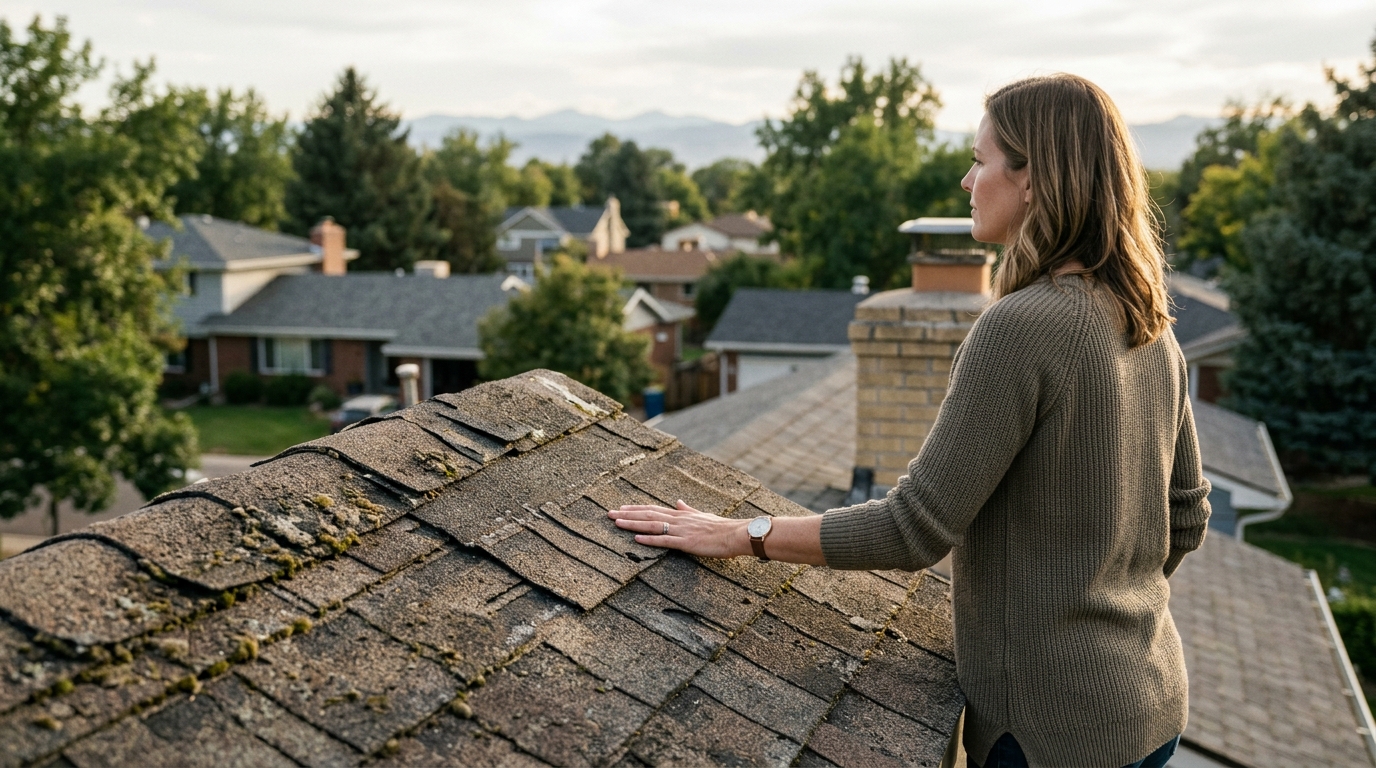
Roof damage in Colorado is rarely subtle. According to the Insurance Institute for Business & Home Safety, hailstorms cause billions of dollars in property damage annually, with the Front Range being a primary target for severe weather events. When your roof takes a hit, the difference between a simple repair and a full replacement often comes down to the age of the system, the extent of the granule loss, and the integrity of the underlying structure. Ignoring these signals can lead to catastrophic interior water damage, mold growth, and significantly higher long-term costs. This guide breaks down the exact indicators that signal it is time to call a professional for a comprehensive assessment. (About Apex Roofing Colorado)
1. Age and Lifespan: Is Your Roof Past Its Prime?
The most straightforward indicator of roof failure is time. Every roofing material has a finite lifespan, and once that window closes, the risk of sudden failure increases exponentially. Asphalt shingles, the most common roofing material in the United States, typically last between 15 and 30 years. However, in high-altitude environments like Colorado, UV exposure and temperature fluctuations can accelerate aging, potentially shortening that lifespan to the lower end of that range.
If your roof is approaching or has exceeded its expected service life, patching individual shingles is merely a temporary fix. The underlying underlayment may also be degrading, leading to leaks that are difficult to trace. At this stage, a full replacement is often the only cost-effective solution to ensure long-term protection for your home or business.
2. Granule Loss and Shingle Condition
Asphalt shingles are coated with ceramic-coated granules that protect the asphalt from UV rays and provide fire resistance. When these granules detach, the shingles become vulnerable to rapid deterioration. Granule loss is a critical warning sign that the roof's protective layer is failing.
How to Check for Granule Loss
- Inspect Your Gutters: After a rainstorm, check your gutters for an accumulation of dark, sand-like granules. While some granule loss is normal in older roofs, excessive buildup indicates active shedding.
- Examine the Shingles: Look for bare spots on the shingle surface where the asphalt is exposed. These areas are prone to cracking and curling.
- Check the Attic: On sunny days, look for daylight piercing through the roof boards. This indicates severe wear and potential structural compromise.
When granule loss is widespread, the shingles lose their ability to reflect sunlight and resist weather. This leads to premature aging, cracking, and eventual failure. If you notice significant granule accumulation in your downspouts, it is time to consider a replacement.
3. Water Damage and Interior Signs
Water intrusion is the most dangerous consequence of roof failure. Unlike cosmetic issues, water damage can compromise the structural integrity of your home and create health hazards. Water damage is defined as the deterioration of building materials caused by the intrusion of moisture, leading to rot, mold, and structural weakness.
Signs of Active Leaks
- Stained Ceilings and Walls: Yellow or brown water stains on ceilings or along interior walls are clear indicators of a leak.
- Dripping Water: Active dripping during or after rainstorms requires immediate attention.
- Mold and Mildew: A musty odor or visible mold growth in the attic or upper floors suggests chronic moisture issues.
- Sagging Roof Deck: A sagging roof deck indicates that the structural components are saturated and weakening, which is a serious safety hazard.
Even small leaks can grow rapidly, especially during heavy snowmelt or intense rain events. If you suspect water damage, do not wait for the leak to worsen. Contact a professional roofer immediately to assess the extent of the damage and determine if a replacement is necessary.
4. Storm Damage and Hail Impact
Colorado is notorious for severe weather, including hail, high winds, and heavy snow. These conditions can cause immediate and visible damage to roofing systems. Hail damage is characterized by bruising, cracking, or puncturing of shingles, which compromises their ability to shed water.
Identifying Hail Damage
- Random Bruising: Hail often leaves random, circular bruises on shingles that feel soft to the touch.
- Exposed Mat: Severe hail can crack the shingle surface, exposing the fiberglass mat underneath.
- Loose Granules: Hail impacts can knock off large amounts of granules, leaving bare spots on the shingles.
Out-of-state storm chasers often target areas with significant hail damage, offering quick repairs that may not address the underlying issues. It is crucial to work with a local roofing contractor who understands the specific weather patterns and building codes in your area. A professional inspection can determine if the damage is superficial or if a full replacement is required to restore the roof's integrity.
5. Repair vs. Replacement: The Cost Analysis
Deciding between repair and replacement can be challenging. While repairs are cheaper upfront, they may not be cost-effective if the roof is near the end of its lifespan. Roof replacement is the complete removal of the existing roofing system and the installation of a new one, providing a fresh start with modern materials and warranties.
When to Choose Repair
- The roof is less than 10 years old.
- The damage is localized to a small area.
- The rest of the roof is in good condition.
When to Choose Replacement
- The roof is over 20 years old.
- There is widespread granule loss or shingle deterioration.
- There are multiple leaks or signs of structural damage.
- Repair costs approach 50% of the cost of a new roof.
Investing in a full replacement can increase your home's value, improve energy efficiency, and provide peace of mind with new warranties. At Apex Roofing, we provide honest assessments to help you make the best decision for your property.
Key Takeaways
- Age Matters: Asphalt shingles typically last 15-30 years, but Colorado's climate can shorten this lifespan.
- Granule Loss: Excessive granules in gutters indicate shingle degradation and reduced UV protection.
- Water Damage: Interior stains, mold, or sagging decks signal urgent need for professional assessment.
- Storm Impact: Hail damage can be subtle but severe, requiring expert inspection to determine repair vs. replace.
- Local Expertise: Working with a local Englewood-based contractor ensures accountability and understanding of regional weather patterns.
- Warranty Benefits: New roofs come with labor warranties, such as the 5-year labor warranty offered by Apex Roofing.
- Insurance Claims: Professional guidance can help navigate insurance claims for storm damage effectively.
Frequently Asked Questions
How do I know if my roof needs a full replacement?
If your roof is over 20 years old, has widespread granule loss, or shows signs of water damage, a full replacement is likely necessary. A professional inspection can provide a definitive answer.
What is the average lifespan of an asphalt shingle roof in Colorado?
While asphalt shingles generally last 15-30 years nationwide, Colorado's high-altitude sun and severe weather can reduce this lifespan to the lower end of that range.
Can hail damage be repaired, or does it require replacement?
Minor hail damage can sometimes be repaired, but widespread bruising or cracking often necessitates a full replacement to ensure the roof's integrity and weather resistance.
How much does a roof replacement cost in Denver?
Roof replacement costs vary based on materials, size, and complexity. Apex Roofing offers free inspections and detailed estimates to help you budget for your project.
Do I need an insurance claim for roof replacement?
If the damage is storm-related, an insurance claim may cover the cost. Apex Roofing provides insurance claim guidance to help you navigate the process.
What is the difference between a GAF Certified Contractor and a regular roofer?
GAF Certified Contractors undergo rigorous training and adhere to high standards of workmanship, offering enhanced warranties like the GAF System Plus Limited Warranty.
How long does a roof replacement take?
Most residential roof replacements are completed within 1-3 days, depending on the size of the roof and weather conditions.
Get Your Free Inspection Today
Don't wait for a small leak to become a major problem. If you suspect your roof needs replacement, contact Apex Roofing for a free, no-obligation inspection. Our local team in Englewood is ready to help you protect your home with honest guidance and dependable work. Visit our homepage to learn more about our services or contact us directly to schedule your inspection.