Water intrusion is one of the most destructive forces facing Colorado properties. According to the National Weather Service, the Denver metro area experiences an average of 23 days per year with hail larger than one inch, which directly correlates with increased roof failure rates in the region. When water breaches your roofing system, it does not stop at the shingles. It penetrates the underlayment, rots the decking, and compromises the structural integrity of your home or business. Ignoring the source of a leak turns a manageable repair into a catastrophic restoration project. This guide outlines the immediate diagnostic steps, temporary mitigation strategies, and the critical decision framework for when to call a certified professional. (About Apex Roofing Colorado)
Step 1: Diagnose the Source of the Leak
Water rarely enters a roof at the exact point where it appears inside your home. Gravity pulls water down rafters, beams, and insulation, causing stains in ceilings or walls that are feet away from the actual breach. To fix a leaking roof effectively, you must locate the entry point. This process requires a systematic inspection of the roof's most vulnerable components.
Inspect Flashing and Valleys
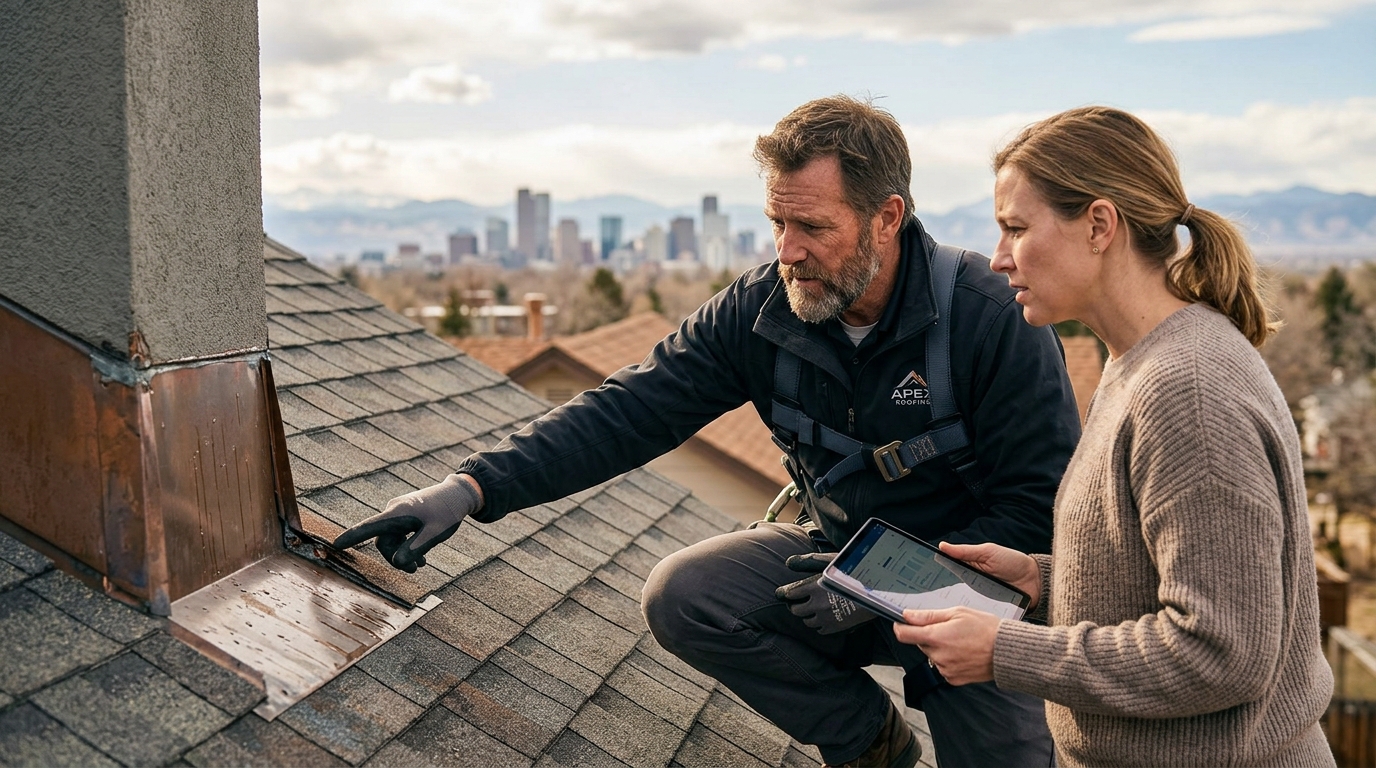
Flashing is the thin metal strip installed at joints to direct water away from seams. Flashing is the primary defense against water intrusion at roof penetrations. Common failure points include chimneys, skylights, vent pipes, and dormers. In Denver, the rapid temperature swings between day and night cause metal to expand and contract. Over time, this movement can crack the sealant or pull the flashing away from the roof surface. If you see rust, gaps, or lifted edges, water is likely entering through these joints.
Roof valleys, where two sloping sections meet, channel the majority of runoff. If the valley metal is corroded or if shingles have been pulled loose by wind, water can back up under the shingles. Look for granule accumulation in gutters, which indicates shingle wear, and check for exposed nail heads in the valley that may have worked loose.
Check Roof Penetrations and Vents
Every pipe, vent, or antenna that pierces the roof membrane creates a potential leak path. The rubber boots or neoprene seals around plumbing vents and exhaust flues degrade under UV exposure. UV degradation is a leading cause of seal failure in high-altitude environments. Colorado's intense sun accelerates the drying and cracking of these rubber components. If the boot is brittle, cracked, or separated from the pipe, water will seep in during rain or snowmelt.
Examine Shingles and Edges
Look for curling, cupping, or missing shingles. Curling often indicates poor ventilation or aging materials. If shingles are lifted, wind can get underneath them, prying them further loose and allowing water to enter. Check the drip edge at the roof perimeter. If the drip edge is missing or bent upward, water can run behind the gutters and rot the fascia board.
Step 2: Apply Temporary Mitigation
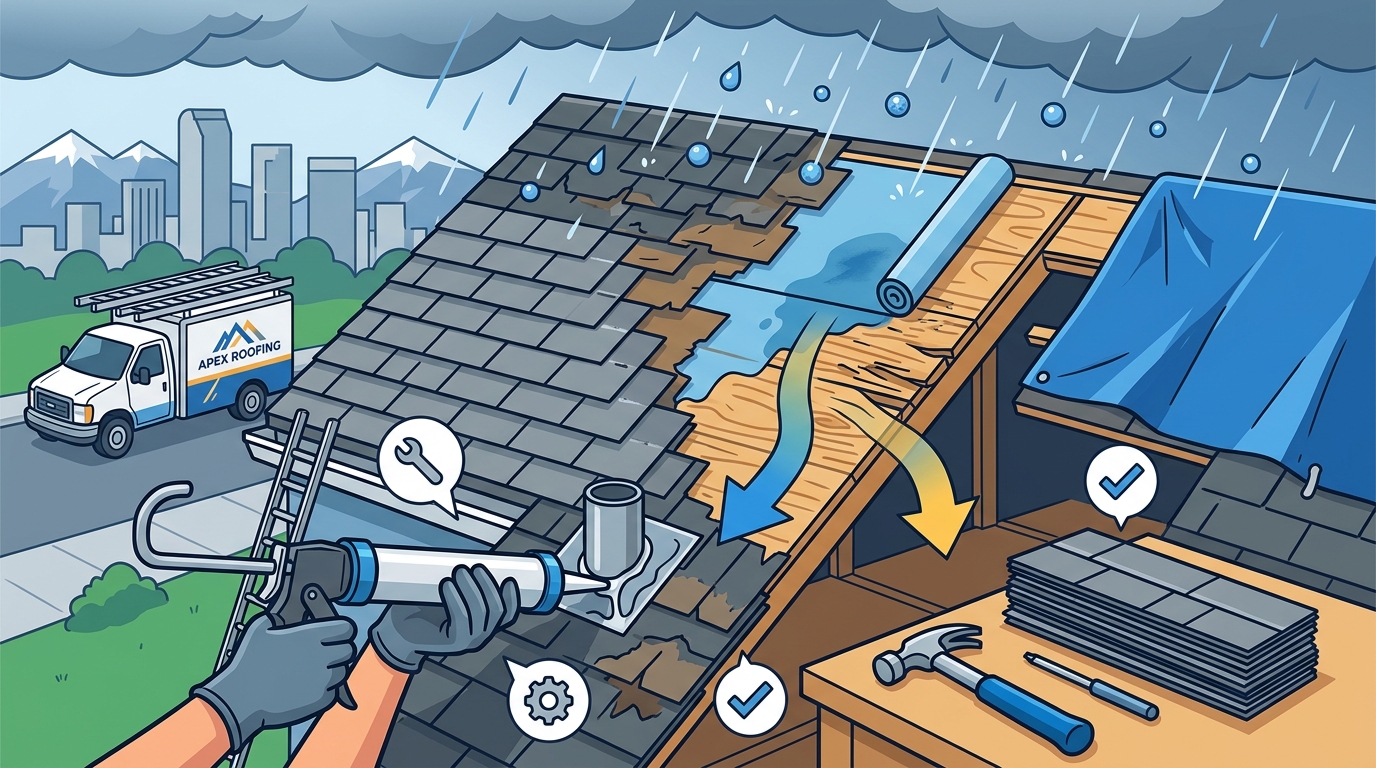
While you diagnose the issue, you must stop the water from causing further damage. Temporary mitigation is not a permanent fix, but it protects your interior assets until professional repairs can be made.
Interior Water Management
Place buckets or containers under active drips. If the water is spreading across a ceiling, poke a small hole in the center of the bulge to allow water to drain into a bucket. This relieves pressure and prevents the ceiling from tearing open. Move furniture and electronics away from the affected area. Turn off electricity to any outlets or fixtures near the leak to prevent short circuits.
Exterior Tarping
If you can safely access the roof, cover the suspected leak area with a heavy-duty tarp. Use 2x4 lumber or roofing nails to secure the tarp to the roof surface. The tarp must extend at least three feet above the leak point to ensure water flows over it and away from the breach. Secure the bottom edge with additional lumber to prevent wind from lifting it. Proper tarping redirects water flow away from the roof deck.
For smaller leaks around vents, you can apply roofing cement or sealant to the base of the vent pipe. This creates a temporary waterproof barrier. However, this method is only effective for minor gaps and will not hold against heavy rain or wind.
Step 3: Evaluate Repair vs. Replacement
Once the immediate leak is addressed, you must determine the scope of the necessary work. Not all leaks require a full roof replacement. The decision depends on the age of the roof, the extent of the damage, and the condition of the underlying structure.
When Repair is Sufficient
Roof repair is viable when the damage is localized and the rest of the roofing system is intact. If you have a few missing shingles, a cracked vent boot, or a small section of damaged flashing, a targeted repair can restore integrity. This is common in newer roofs (less than 10 years old) or roofs that have been well-maintained. Targeted repairs extend the service life of a healthy roof system.
Repair costs are significantly lower than replacement. However, if the roof is near the end of its lifespan, frequent repairs become a money pit. You may find yourself fixing one leak only to discover another nearby. In these cases, replacement is the more cost-effective long-term solution.
When Replacement is Necessary
Roof replacement is required when the damage is widespread or the structural deck is compromised. If you find rot, mold, or soft spots in the roof decking, the underlying wood must be replaced before new shingles can be installed. If more than 30% of the shingles are curled, cracked, or missing, the roof has failed its protective function. Widespread shingle failure indicates systemic aging that cannot be fixed with spot repairs.
Additionally, if your roof is over 20 years old, it is likely nearing the end of its design life. Continuing to patch an aging roof is risky. A full replacement ensures you have a new warranty and a reliable barrier against Colorado's harsh weather for the next two decades.
Comparison of Repair vs. Replacement
| Factor | Roof Repair | Roof Replacement |
|---|---|---|
| Cost | Low to Moderate | High |
| Duration | 1-2 Days | 3-7 Days |
| Warranty | Limited (1-5 Years) | Extended (20-50 Years) |
| Best For | Minor, Localized Damage | Widespread Damage or Aging |
| ROI | Short-Term Fix | Long-Term Asset Protection |
Step 4: Navigating Insurance Claims
In Colorado, many roof leaks are caused by hail or wind damage, which may be covered by homeowners insurance. However, navigating the claims process can be complex. Insurance companies often dispute the cause of damage, arguing it is due to wear and tear rather than a covered peril.
Document the Damage
Take clear photos and videos of the leak, the exterior roof damage, and any interior water damage. Document the date and time of the storm that caused the damage. This evidence is crucial for your adjuster. Thorough documentation supports the validity of insurance claims.
Work with a Local Contractor
Out-of-state storm chasers often push for full replacements that may not be necessary, or they use inferior materials. A local contractor understands the specific weather patterns and building codes in your area. They can provide an accurate assessment of whether the damage is storm-related or due to aging. Local contractors provide unbiased damage assessments.
Apex Roofing offers insurance claim guidance to help homeowners understand their coverage and advocate for fair repairs. We work directly with adjusters to ensure the scope of work reflects the actual damage. This prevents underestimation of repairs and ensures your roof is restored to its pre-loss condition.
Step 5: When to Hire a Pro
While minor repairs can be DIY projects, most roof leaks require professional intervention. Roofing involves working at heights, handling heavy materials, and understanding complex building science. Attempting a repair without the proper skills or safety equipment can lead to injury or further damage.
Safety Risks
Roofs are slippery, especially when wet or covered in dew. Falls from roofs are a leading cause of serious injury. Professional roofers are trained in fall protection and have the proper equipment to work safely. Professional safety protocols prevent workplace injuries.
Warranty Protection
Many shingle manufacturers require professional installation to honor the warranty. DIY repairs can void these warranties, leaving you responsible for future failures. A certified contractor ensures the work meets manufacturer specifications. Certified installation preserves manufacturer warranties.
Long-Term Reliability
A professional repair or replacement ensures the roof is installed correctly, with proper ventilation, flashing, and sealing. This prevents future leaks and extends the life of the roof. Quality installation ensures long-term roof performance.
Key Takeaways
- Water follows the path of least resistance: Leaks often appear far from the actual entry point, requiring systematic inspection of flashing, vents, and shingles.
- UV degradation accelerates in Colorado: High-altitude sun breaks down rubber vent boots and sealants faster than in lower elevations, necessitating more frequent checks.
- Temporary tarping is critical: Securing a tarp over the leak source prevents interior water damage while you arrange for professional repairs.
- Repair vs. Replacement depends on age: Roofs under 10 years old with localized damage are good candidates for repair, while older roofs often need full replacement.
- Insurance claims require documentation: Photos of storm damage and professional assessments are essential for successful insurance payouts.
- Local contractors provide accountability: Companies based in Englewood, like Apex Roofing, offer long-term support and warranty backing that out-of-state crews cannot.
- Safety is paramount: Roof work involves significant fall risks; professional roofers use safety gear and training to prevent injuries.
Frequently Asked Questions
How do I find the source of a roof leak?
Inspect the roof for damaged flashing, cracked vent boots, or missing shingles. Look for water stains on the attic ceiling that align with roof penetrations. Water often travels along rafters, so the leak source may be higher than the interior stain.
Can I fix a roof leak myself?
Minor repairs, such as replacing a cracked vent boot or sealing a small gap with roofing cement, can be DIY projects. However, working on a roof is dangerous, and improper repairs can worsen the leak. For extensive damage, hire a professional.
How long does a roof leak repair take?
Minor repairs typically take one to two days. Full roof replacements can take three to seven days, depending on the size of the roof and weather conditions. Timely repairs prevent further structural damage.
Does homeowners insurance cover roof leaks?
Insurance typically covers leaks caused by sudden, accidental events like hail or wind. It does not cover damage due to wear and tear or lack of maintenance. You must prove the damage was storm-related to receive coverage.
What is the best time of year to fix a roof leak?
Roof repairs can be done year-round, but spring and fall are ideal due to moderate temperatures. Winter repairs are possible but can be difficult if snow or ice prevents safe access. Seasonal timing affects repair safety and efficiency.
How do I know if I need a full roof replacement?
If your roof is over 20 years old, has widespread shingle damage, or shows signs of structural rot, replacement is likely necessary. A professional inspection can determine if repair is sufficient or if replacement is the more cost-effective option.
What is a GAF Certified Contractor?
A GAF Certified Contractor is a roofing company that has met strict training and financial requirements set by GAF, the largest roofing manufacturer in North America. This certification ensures the contractor uses high-quality materials and follows proper installation techniques. GAF certification guarantees adherence to industry standards.
Contact Apex Roofing for Expert Roof Repair
Do not let a small leak become a major disaster. Apex Roofing has been serving the Denver metro area since 2010, providing honest, reliable roofing solutions. Our team is GAF Certified and offers a 5-year labor warranty on new roofs. We specialize in storm damage repair, insurance claim guidance, and comprehensive roof inspections.
Request your free inspection today. Our local experts will diagnose the source of your leak and provide a clear, unbiased recommendation. Whether you need a minor repair or a full replacement, Apex Roofing is here to protect your home.
Contact Apex Roofing to schedule your free inspection or call us at 303-691-5035.