Colorado’s Front Range weather patterns subject residential and commercial properties to extreme stress, including heavy snow loads, high-altitude UV exposure, and violent hail storms. According to National Weather Service data, the Denver metropolitan area experiences an average of 20 to 30 days of hail annually, making proactive roof maintenance a critical component of property preservation. Ignoring early signs of wear can lead to catastrophic interior damage, mold growth, and significantly higher replacement costs down the line. This guide outlines the precise steps to secure a reliable inspection, what to expect during the process, and how to interpret the findings to protect your investment. (About Apex Roofing Colorado)
Understand When You Need an Inspection
Many homeowners assume that a roof inspection is only necessary after a visible leak or a major storm. While storm damage is a primary trigger, routine inspections are equally vital for longevity. A professional roof inspection is a systematic evaluation of your roofing system’s condition, designed to identify minor issues before they become major repairs. In Colorado, the freeze-thaw cycle is particularly destructive. Water seeps into microscopic cracks, freezes, expands, and widens the damage, eventually compromising the structural integrity of shingles and flashing. (Roofing Company Arvada CO)
You should schedule an inspection if you have experienced recent severe weather, if your roof is over 15 years old, or if you notice granules accumulating in your gutters. The EPA notes that mold can begin growing within 24 to 48 hours of water intrusion, making early detection essential for health and safety. Additionally, if you are planning to sell your home, a pre-listing inspection provides leverage in negotiations and builds buyer confidence. (Roofing Company Aurora CO)
Selecting a Certified Local Contractor
Not all roofing companies are equipped to handle the specific demands of Colorado architecture and climate. When searching for a provider, prioritize local accountability and technical certifications. A GAF Certified™ Roofing Contractor has undergone rigorous training and adheres to strict manufacturer standards. This certification ensures that the installer is qualified to offer enhanced warranty options, such as the GAF System Plus Limited Warranty, which protects against material defects and workmanship errors.
Local contractors understand the regional building codes and insurance nuances better than out-of-state storm chasers. The Colorado Division of Insurance regulates how claims are handled, and local experts know how to navigate these regulations effectively. They are also more likely to stand behind their work long-term, providing a 5-year labor warranty on new installations, which is a standard of quality that transient crews rarely match.
The Scheduling and Preparation Process
Scheduling a professional inspection is straightforward but requires clear communication to ensure efficiency. Most reputable companies, including Apex Roofing, offer free inspections for homeowners and businesses. The process typically begins with a digital or phone inquiry where you provide your address and describe any known issues.
1. Initial Contact
Reach out via the company’s online form or direct phone line. Provide your full service address, as this allows the estimator to check local weather history and zoning requirements. Be prepared to answer how you heard about the company, which helps them track their community outreach effectiveness.
2. Time Slot Selection
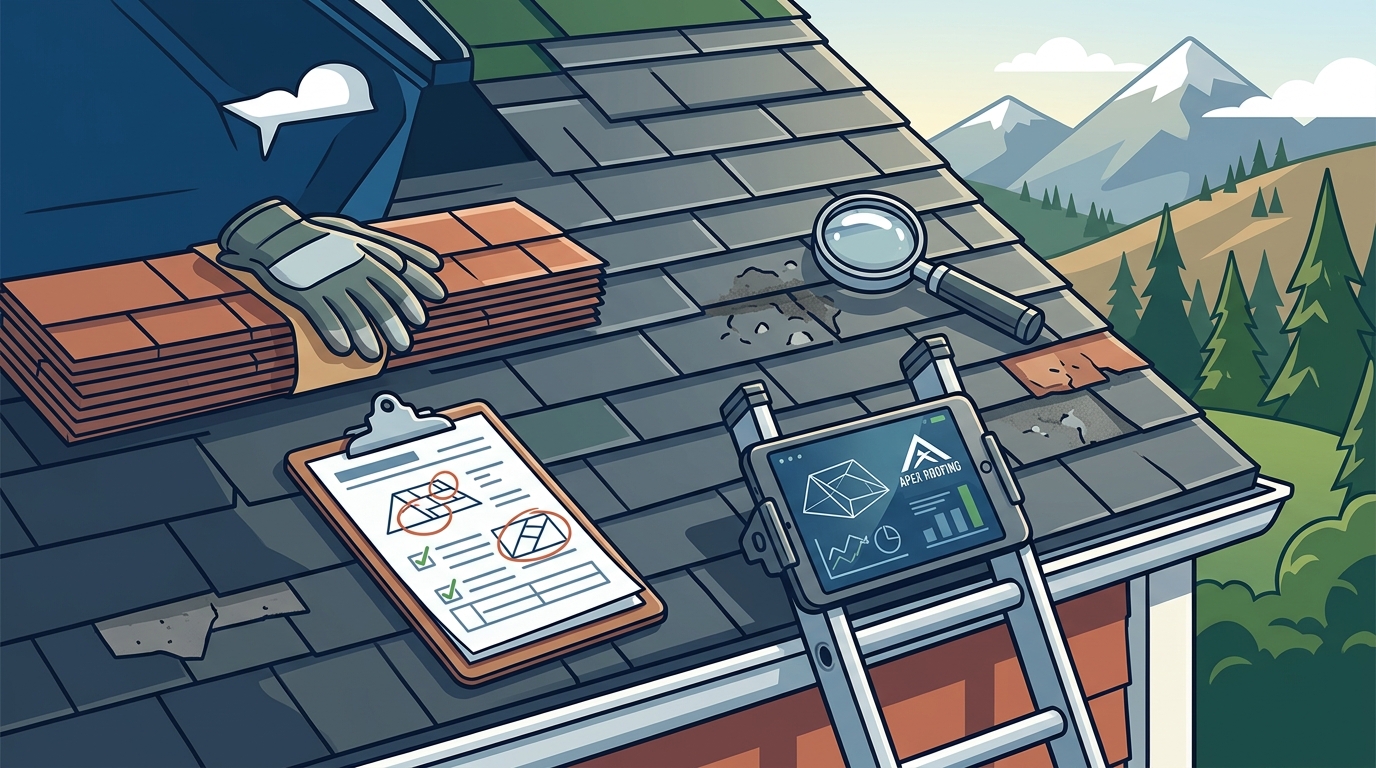
Work with the scheduling team to find a window that works for you. Inspections usually take 45 to 90 minutes depending on the roof’s complexity and size. Ensure that pets are secured and vehicles are moved from the driveway to allow safe access for the crew and their equipment.
3. Pre-Inspection Prep
While the contractor handles the exterior, you should prepare the interior. Move items away from ceilings that show water stains. If you have an attic, ensure it is accessible. Clearing the path helps the inspector work safely and thoroughly.
What Happens During the Inspection
A comprehensive inspection goes beyond a quick glance from the ground. A professional estimator will perform a multi-point assessment to evaluate the entire roofing ecosystem.
Exterior Assessment
The inspector will examine shingles for curling, cracking, or missing granules. They will check flashing around chimneys, vents, and skylights, as these are common failure points. In Denver, wind exposure is a critical factor; local weather data indicates that wind gusts frequently exceed 58 mph during spring storms, which can lift shingle edges and break seals. The inspector will also assess gutters and downspouts to ensure proper water drainage away from the foundation.
Interior and Attic Check
The attic is the first line of defense against leaks. The inspector will look for daylight penetrating through the roof deck, which indicates holes or gaps. They will check for proper ventilation to prevent heat buildup, which accelerates shingle aging. Moisture meters are often used to detect hidden dampness in insulation or wood structures.
Drone Technology
For steep or multi-story roofs, many companies now use drone technology. This allows for high-resolution imaging of hard-to-reach areas without risking safety. Drones provide a detailed visual record that can be used for insurance claims or future reference.
Next Steps and Documentation
After the inspection, you will receive a detailed report outlining the roof’s condition. This document should include photos, a summary of findings, and recommended actions. If repairs are needed, you will receive a written estimate. If a replacement is necessary, the contractor should explain the warranty options and financing plans available.
Understanding your roof’s status is crucial for financial planning. Zillow research suggests that new roofing can recover up to 60% of its cost in increased home value, making it a smart investment. If you have insurance, the contractor can often assist in interpreting the report to support a claim, ensuring that the adjuster understands the extent of the damage.
Key Takeaways
- Local Expertise Matters: Denver’s unique climate requires contractors who understand local weather patterns and building codes.
- Certification Verification: Look for GAF Certified™ status to ensure high-quality installation and warranty coverage.
- Proactive Maintenance: Annual inspections can prevent minor issues from becoming major, costly repairs.
- Documentation is Key: Detailed reports with photos are essential for insurance claims and future reference.
- Warranty Protection: A 5-year labor warranty on new roofs provides long-term peace of mind.
- Free Inspections: Reputable companies offer free inspections, making it easy to assess your roof’s condition.
- Insurance Guidance: Local contractors can help navigate the complex insurance claim process after storm damage.
Frequently Asked Questions
How long does a professional roof inspection take?
A standard residential inspection typically takes between 45 minutes and 90 minutes. Commercial roofs or those with complex architectural features may take longer due to the increased surface area and detailed assessment requirements.
Is a roof inspection really free?
Yes, most reputable local roofing companies offer free inspections as a way to build trust and provide value to homeowners. There is no obligation to proceed with repairs or replacement after the inspection.
What should I look for in a roofing contractor?
Look for local accountability, GAF certification, positive customer reviews, and a clear warranty policy. Avoid out-of-state storm chasers who may disappear after the job is done.
How often should I have my roof inspected?
It is recommended to have your roof inspected at least once a year, preferably in the spring after winter storms. After major hail or wind events, an immediate inspection is advisable.
Can I stay home during the inspection?
You are welcome to stay, but it is not required. If you do stay, ensure that pets are secured and that the inspector has clear access to the attic and exterior of the home.
What happens if my roof needs replacement?
The inspector will provide a detailed report and estimate. You can then choose to proceed with the replacement, seek other quotes, or schedule repairs if the damage is minor. Financing options are often available.
Do I need an inspection for insurance claims?
While not always mandatory, a professional inspection report provides critical documentation that supports your claim. It helps establish the extent of damage and ensures that the insurance adjuster has a clear understanding of the necessary repairs.
Schedule Your Inspection Today
Protecting your home from Colorado’s harsh weather starts with a professional assessment. Don’t wait for a leak to become a disaster. Contact Apex Roofing to schedule your free inspection today. Our team of local experts is ready to provide honest guidance and dependable work. Click here to request your free inspection or call us at 303-691-5035 to get started.