According to the National Association of Realtors, a new roof can increase a home's value by up to 4% while significantly reducing the risk of negotiation breakdowns during sale. However, determining whether your roof requires a full replacement or a simple repair is not always straightforward. Many homeowners delay necessary work until minor issues become catastrophic failures, leading to higher costs and interior damage. This guide provides a clear diagnostic framework to help you evaluate your roof's condition, understand Colorado-specific weather impacts, and make an informed decision about your property's protection.
Diagnostic Checklist: When Repair Isn't Enough
Before calling a contractor, perform a visual inspection from the ground and, if safe, from the attic. Look for these critical failure points that typically signal the end of a roof's serviceable life.
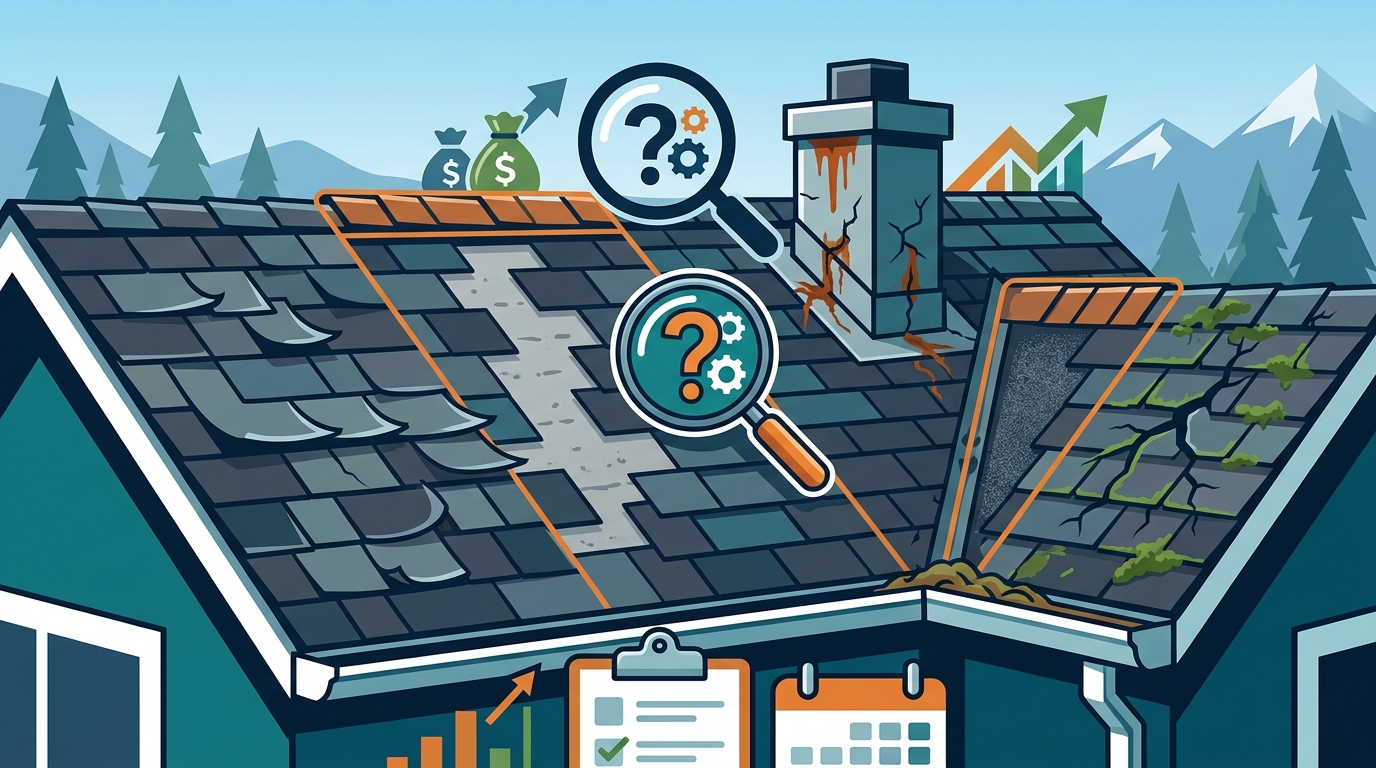
1. Curling, Cupping, or Clawing Shingles
Asphalt shingles are designed to lay flat. When the edges curl upward (cupping) or the center dips while edges rise (clawing), the shingle has lost its structural integrity. This is often caused by prolonged UV exposure or poor ventilation. Once shingles begin to curl, they are no longer effectively shedding water. Roof replacement becomes the only viable option to prevent leaks.
2. Missing Granules and Bald Spots
Granules protect shingles from UV rays and provide fire resistance. If you find excessive granules in your gutters or see bare spots on the shingles, the roof is aging rapidly. This is particularly common in Colorado due to high-altitude sun exposure. Without granules, the asphalt underneath dries out and cracks quickly.
3. Daylight Through the Roof Boards
Go into your attic during the day. If you see any rays of sunlight penetrating through the roof deck, you have a direct pathway for water, pests, and heat loss. While small gaps can sometimes be sealed, widespread daylight indicates structural failure of the roofing system.
4. Sagging Roof Deck
A sagging roof is a critical emergency. It indicates that the decking or structural supports are compromised, often due to long-term water damage or ice damming. This requires immediate professional intervention and almost always necessitates a full replacement to ensure safety.
5. Moss, Algae, and Rot
While moss might seem cosmetic, it traps moisture against the shingles, accelerating rot. In Colorado's freeze-thaw cycles, trapped water expands and contracts, lifting shingles and breaking seals. If the underlying wood is soft or spongy, the roof deck must be replaced.
Roof Age and Material Lifespan
One of the most common questions homeowners ask is, "How old is too old?" The answer depends on the material and the climate. A GAF Certified roofing contractor can provide a precise assessment, but general guidelines exist.
Standard 3-tab asphalt shingles typically last 15 to 20 years. Architectural shingles, which are thicker and more durable, can last 25 to 30 years. Metal roofs can exceed 50 years. However, Colorado's harsh environment often shortens these lifespans. High-altitude UV radiation, temperature swings, and hail can degrade materials faster than in milder climates.
If your roof is approaching or has exceeded its expected lifespan, repairs become less cost-effective. You may find yourself patching one leak only to have another appear elsewhere. A full replacement offers a fresh start with modern, weather-resistant materials and a new warranty.
Colorado Weather: Hail, Wind, and Snow
Colorado's Front Range presents unique challenges for roofing systems. The state experiences frequent hail storms, high winds, and heavy snow loads. These elements work together to stress roofs in ways that other regions do not.
Hail Damage
Hail can cause bruising, cracking, and granule loss on shingles. Even small hail can compromise the shingle's waterproofing layer. Storm and hail damage repair is a specialized service because the damage is often not immediately visible from the ground. A professional inspection is crucial to identify hidden bruising that could lead to premature failure.
Wind Uplift
Strong winds, particularly in areas like Arvada and Boulder, can lift shingle edges and break seals. This allows wind-driven rain to penetrate the roof deck. If multiple shingles are lifted or missing, the roof's wind resistance is compromised. A full replacement ensures proper nailing patterns and sealing techniques are used to withstand future wind events.
Snow and Ice Dams
Heavy snow loads can stress the roof structure. When snow melts and refreezes at the eaves, it forms ice dams that force water under the shingles. Proper insulation and ventilation are key to preventing this, but if the shingles are already damaged, replacement is necessary to restore the barrier.
Insurance Claims and Coverage Nuances
Many homeowners wonder if their insurance will cover a full roof replacement. The answer depends on the cause of damage and the age of the roof.
Storm Damage Coverage
Most homeowners insurance policies cover sudden and accidental damage, such as that caused by hail or wind. If your roof was damaged by a recent storm, you may be eligible for a full replacement claim. Insurance claim guidance is essential to navigate the adjuster process and ensure you receive fair compensation.
Wear and Tear Exclusions
Insurance typically does not cover gradual wear and tear. If your roof is failing due to age rather than a specific storm event, you will likely need to pay out of pocket. However, if the roof is relatively new and damaged by a covered peril, replacement is often fully covered.
The Role of a Local Contractor
Working with a local contractor like Apex Roofing, which has been serving Colorado since 2010, can be beneficial. Local contractors understand the common storm patterns and insurance practices in the region. They can provide detailed documentation and photos to support your claim, increasing the likelihood of approval.
Cost Analysis: Repair vs. Replacement
Deciding between repair and replacement often comes down to cost and long-term value. While repairs are cheaper upfront, they may not be cost-effective in the long run.
| Factor | Repair | Full Replacement |
|---|---|---|
| Upfront Cost | Low ($300 - $1,500) | High ($8,000 - $25,000+) |
| Lifespan Extension | 1 - 5 years | 20 - 30+ years |
| Warranty | Short-term (1-2 years) | Long-term (5-year labor + manufacturer) |
| Home Value Impact | Minimal | Significant (Up to 4% increase) |
| Frequency of Service | Recurring | One-time |
If you are planning to sell your home soon, a new roof can be a powerful selling point. It reassures buyers that they won't face immediate repair costs. Additionally, many buyers' inspections will flag an old roof, potentially derailing the sale. A replacement eliminates this risk.
Key Takeaways
- Visual Inspection: Look for curling shingles, missing granules, and daylight in the attic. These are clear signs of failure.
- Age Matters: If your roof is over 20 years old, repairs are likely a temporary fix. Replacement offers long-term peace of mind.
- Colorado Climate: Hail, wind, and UV exposure accelerate wear. Local expertise is crucial for accurate assessment.
- Insurance: Storm damage is often covered, but age-related wear is not. Document all damage promptly.
- Cost vs. Value: While replacement is expensive, it adds value to your home and prevents costly interior damage.
- Local Contractors: Choose a GAF Certified contractor with a local presence for reliable service and warranty support.
- Free Inspections: Many reputable companies offer free inspections to help you make an informed decision.
Frequently Asked Questions
How do I know if my roof needs a full replacement?
If your roof is over 20 years old, has widespread shingle damage, or shows signs of structural sagging, a full replacement is likely necessary. A professional inspection can confirm the extent of the damage.
Can I just repair my roof instead of replacing it?
Repairs are suitable for minor, localized damage. However, if the roof is near the end of its lifespan or has widespread issues, repairs will be costly and temporary. Replacement is more cost-effective in the long run.
Does insurance cover a full roof replacement?
Insurance typically covers roof replacement if the damage is caused by a covered peril, such as hail or wind. It does not cover damage due to wear and tear or lack of maintenance.
How long does a roof replacement take?
A standard residential roof replacement in Colorado typically takes 1 to 3 days, depending on the size of the roof and weather conditions. Complex roofs or those requiring extensive decking repair may take longer.
What is the best time of year to replace a roof?
Roof replacement can be done year-round in Colorado. However, spring and fall often offer mild weather conditions that are ideal for installation. Summer can be hot, and winter can bring snow delays.
Do I need permits for a roof replacement?
Most municipalities require permits for roof replacements. Your contractor should handle the permit process as part of the service.
What warranty comes with a new roof?
Apex Roofing offers a 5-year labor warranty on new roofs, along with manufacturer warranties that can last 25 to 50 years depending on the materials chosen.
Schedule Your Free Inspection
Don't wait for a leak to determine if your roof needs replacement. Early detection can save you thousands of dollars in repairs and interior damage. Apex Roofing offers free, no-obligation inspections to help you understand your roof's condition. Our team of local experts is ready to provide honest guidance and dependable work.
Contact Apex Roofing today to schedule your free inspection. We serve the Greater Denver area, including Arvada, Aurora, Boulder, and the entire Front Range. Call us at 303-691-5035 or request your inspection online.