Water intrusion is one of the most destructive forces facing Colorado properties, with severe weather reports indicating that hail and freeze-thaw cycles cause millions in annual structural damage across the Front Range. When you discover a leak, immediate action is required to prevent mold growth, insulation failure, and compromised structural integrity. This guide outlines the diagnostic process, temporary mitigation steps, and the critical decision points that determine whether a simple repair or a full replacement is necessary for your home or business. (About Apex Roofing Colorado)
Step 1: Diagnose the Leak Source
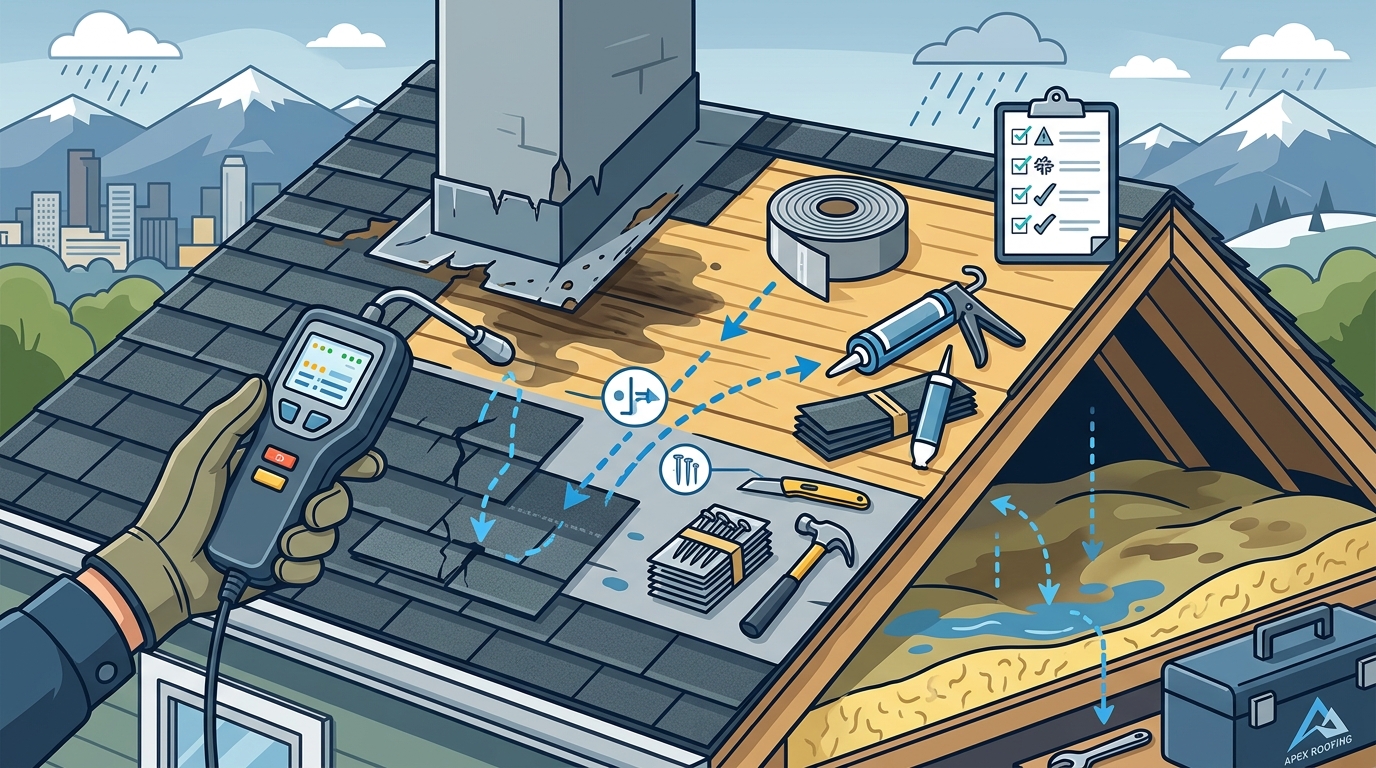
Before attempting any fix, you must identify the entry point. Water often travels along rafters or sheathing before dripping, meaning the stain on your ceiling may be far from the actual breach. Storm damage data shows that hail impacts frequently compromise shingles without immediate visible tearing, allowing water to seep in during subsequent rain events.
Common Entry Points
Flashing Failures are the most frequent cause of leaks. Flashing is the metal strip used to seal joints where the roof meets vertical surfaces like chimneys, skylights, or walls. In Denver, the constant expansion and contraction from temperature swings can crack or lift this metal, creating a direct path for water.
Valley Leaks occur where two roof planes intersect. These areas channel the majority of runoff, and if the underlying waterproofing layer is damaged or the shingles are worn, water can penetrate the roof deck. Regional weather patterns highlight that heavy snowmelt puts immense pressure on these valleys.
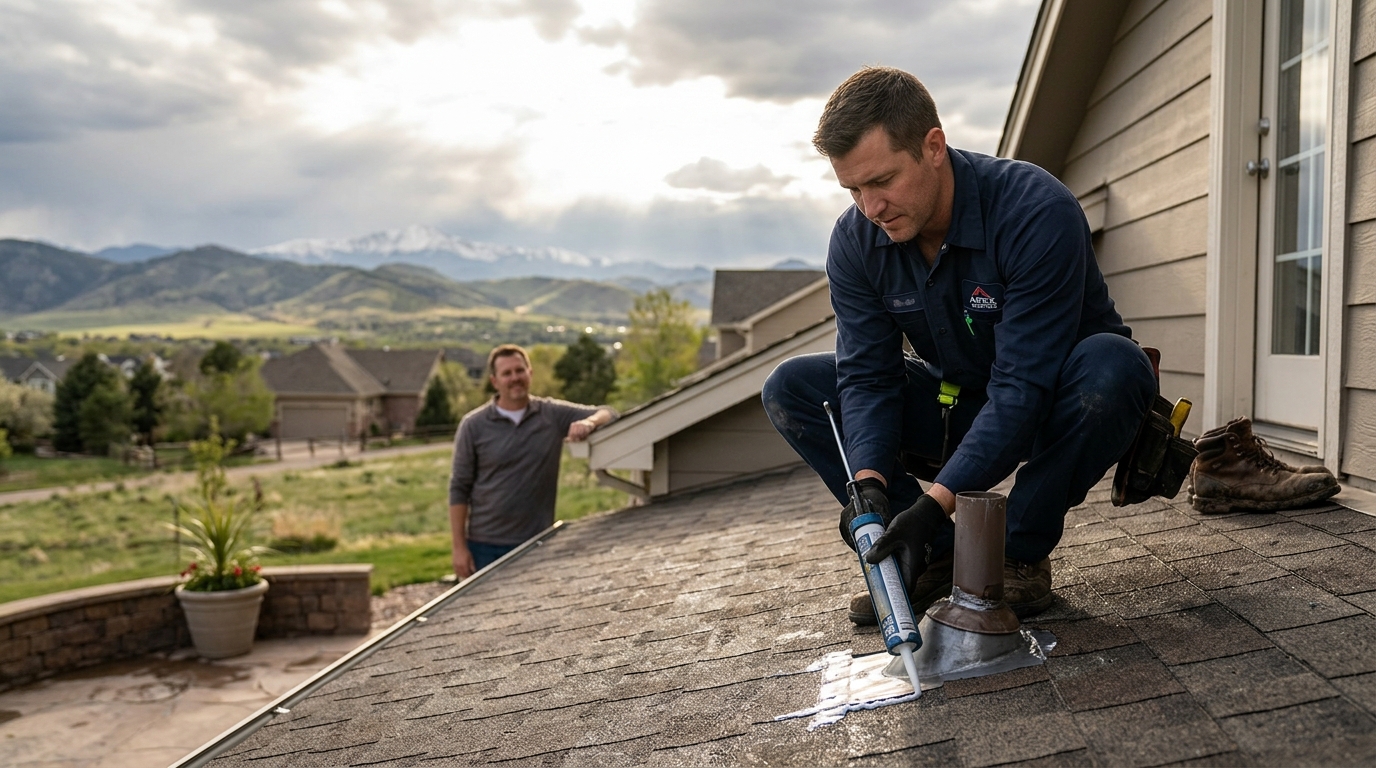
Vent Pipe Seals around plumbing vents and exhaust pipes often degrade over time. The rubber boots or caulking that seal these penetrations can crack due to UV exposure or age, allowing water to enter directly into the attic space.
Step 2: Temporary Mitigation Strategies
If you cannot access a roofer immediately, you must mitigate the damage to protect your interior. Emergency response guidelines suggest that delaying mitigation can double the cost of repairs due to secondary water damage.
Interior Mitigation
Place buckets or containers under active drips. If the water is spreading across the ceiling, puncture the lowest point of the bulge with a screwdriver to release the trapped water into a bucket. This prevents the ceiling drywall from collapsing under the weight. Move furniture and electronics away from the affected area immediately.
Exterior Mitigation
If you can safely access the roof, locate the breach. For small holes or cracked flashing, apply a layer of roofing cement or a specialized roof patching tape. For larger tears in shingles, place a piece of heavy-duty plastic over the damaged area and secure it with a 2x4 board nailed across the shingles above and below the tear. This temporary tarping method buys time until professional repairs can be made.
Step 3: Repair vs. Replacement Analysis
Not all leaks require a full roof replacement. The decision depends on the age of the roof, the extent of the damage, and the condition of the surrounding shingles. Industry standards indicate that roofs over 20 years old often have compromised underlayment, making spot repairs a temporary fix at best.
| Factor | Repair Indicators | Replacement Indicators |
|---|---|---|
| Roof Age | Less than 10 years old | Over 20 years old |
| Damage Scope | Localized to one area (e.g., flashing) | Widespread or multiple leak points |
| Shingle Condition | Curling or granule loss is minimal | Shingles are brittle, cracked, or missing |
| Cost Efficiency | Repair costs less than 30% of replacement | Recurring leaks despite previous repairs |
Roof Repair is the process of fixing specific damaged components, such as replacing individual shingles, resealing flashing, or patching vent pipes. This is cost-effective for newer roofs with isolated issues.
Roof Replacement involves removing the existing roofing system down to the deck and installing a new system. This is necessary when the structural integrity is compromised or the roof has reached the end of its service life.
Step 4: Navigating Insurance Claims
In Colorado, many roof leaks are caused by hail or wind damage, which are typically covered by homeowners insurance. However, the claims process can be complex. Insurance industry reports show that policyholders often face disputes over the cause of damage, requiring professional documentation.
Documentation Steps
Take clear, dated photographs of the damage from both inside and outside the home. Document any personal property damaged by the water. Do not make permanent repairs before the insurance adjuster has inspected the property, as this can complicate the claim. If you must make temporary repairs to prevent further damage, keep receipts for materials and labor.
Working with Adjusters
Insurance adjusters are trained to minimize payouts. Having a professional roofing contractor present during the inspection can help ensure that all damage is accurately assessed. Consumer protection data suggests that homeowners with professional representation are more likely to receive fair coverage for full replacements when necessary.
Step 5: When to Call a Professional
While minor leaks can be managed temporarily, professional intervention is required for structural safety and long-term resolution. Safety guidelines strongly advise against roof work for anyone without proper training and equipment, especially on steep slopes or in wet conditions.
You should contact a licensed roofing contractor immediately if:
- The leak is active and cannot be contained.
- You suspect structural damage to the roof deck or rafters.
- The roof is more than 15 years old and showing signs of widespread wear.
- You need assistance navigating the insurance claims process.
At Apex Roofing, we specialize in diagnosing these complex issues for Denver-area homeowners. Our team provides free inspections to determine the true source of the leak and offers transparent repair or replacement options.
Key Takeaways
- Immediate Action: Mitigate water damage immediately to prevent mold and structural decay.
- Source Identification: Check flashing, valleys, and vent pipes first, as these are common failure points.
- Temporary Fixes: Use roofing cement or tarping for short-term containment, not permanent repair.
- Insurance Awareness: Document all damage and avoid permanent repairs before the adjuster's visit.
- Professional Diagnosis: Hail damage is often hidden; professional inspection is critical for accurate assessment.
- Local Expertise: Colorado's freeze-thaw cycles accelerate roof wear, requiring specialized knowledge.
- Warranty Protection: GAF Certified contractors offer superior warranty options for new installations.
Frequently Asked Questions
How long does it take to fix a leaking roof?
Minor repairs, such as replacing flashing or a few shingles, can often be completed in one day. However, extensive repairs or full roof replacements may take three to five days, depending on weather conditions and material availability.
Can I fix a leaking roof myself?
While you can perform temporary mitigation, permanent repairs require specialized tools and materials. Working on a roof is dangerous, and improper repairs can void warranties or cause further damage. Professional installation ensures longevity and compliance with local building codes.
Does homeowners insurance cover roof leaks?
Insurance typically covers leaks caused by "sudden and accidental" events, such as hail or wind storms. It generally does not cover leaks resulting from normal wear and tear, lack of maintenance, or gradual deterioration. A professional inspection can help determine the cause.
What is the best time of year to replace a roof?
Spring and fall are ideal for roof replacement in Denver, as temperatures are moderate, reducing the risk of material failure during installation. However, emergency repairs should be done immediately regardless of the season.
How can I tell if my roof is leaking?
Signs include water stains on ceilings or walls, damp insulation in the attic, missing or curled shingles, and granules in gutters. Sometimes, leaks are only visible after heavy rain or snowmelt.
What is the difference between roof repair and replacement?
Repair involves fixing specific damaged areas, while replacement involves removing the entire existing roof system and installing a new one. Replacement is recommended when the roof is near the end of its lifespan or has widespread damage.
Why is my roof leaking after it stops raining?
Water can travel along roof decking or rafters before dripping into your home. The leak may appear hours or even days after the rain has stopped, making the original entry point difficult to locate without professional tools.
Contact Apex Roofing for Expert Leak Repair
Do not let a small leak become a major structural disaster. Apex Roofing provides free, no-obligation inspections for homeowners and businesses across the Denver metro area. Our GAF Certified contractors are equipped to handle everything from minor flashing repairs to complete storm damage restoration. Contact us today at 303-691-5035 or request a free inspection online to protect your property.