
How to File a Storm Damage Roof Claim and Get Fast Emergency Repairs in Denver
Denver experiences an average of 23 days per year with hail larger than one inch, creating a high-risk environment for residential and commercial roofing systems. According to the National Weather Service, Colorado ranks among the top states for hail frequency, making rapid response and accurate claim filing critical for property owners. When severe weather strikes, the window to document damage and secure coverage narrows quickly. This guide outlines the exact steps to protect your property, file a successful insurance claim, and coordinate emergency repairs with a trusted local contractor. (About Apex Roofing Colorado)
Immediate Safety and Damage Mitigation Steps
After a storm passes, the first priority is safety. Denver’s high-altitude sun and rapid temperature swings can exacerbate existing weaknesses in roofing materials. Before assessing damage, ensure the structure is safe to approach. Look for signs of interior water intrusion, such as ceiling stains or dripping water, which indicate immediate failure of the roof membrane. (Roofing Company Arvada CO)
If you detect active leaks, place buckets in affected areas and move valuables away from the water path. Do not attempt to climb onto a wet or unstable roof. Instead, use a drone or binoculars from the ground to inspect shingle loss, granule accumulation in gutters, and dents on metal flashing or vents. These are early indicators of hail impact that may not be visible from street level.
Temporary mitigation is crucial to prevent secondary damage. If shingles are torn, you can cover the exposed area with a heavy-duty tarp secured by 2x4 boards. This prevents rain and snow from entering the attic, which can lead to mold growth and structural rot. Contact a licensed roofing professional immediately to perform a permanent repair or secure the site until the insurance adjuster arrives.
Documenting Roof Damage for Insurance
Insurance companies require robust evidence to approve claims for storm damage. Proper documentation creates a clear timeline of events and validates the extent of the loss. Start by taking timestamped photos and videos of the exterior roof, focusing on specific areas of impact. Capture wide shots of the entire roof structure and close-ups of damaged shingles, flashing, and gutters.
Interior documentation is equally important. Photograph any water stains on ceilings, walls, and attics. If items inside the home are damaged, document those as well. Keep a log of all communications with your insurance provider, including dates, times, and the names of representatives you speak with. This paper trail is essential if disputes arise later in the process.
Roof repair is defined as the restoration of existing roofing materials to a watertight condition without replacing the entire system. However, in Denver, hail damage often compromises the structural integrity of shingles, making full replacement necessary. A professional inspection can distinguish between cosmetic damage and functional failure, ensuring you do not under-insure your claim.
Filing Your Insurance Claim Correctly
Filing a claim requires precision and adherence to policy guidelines. Begin by reviewing your homeowner’s insurance policy to understand your coverage limits, deductible, and specific exclusions for wind and hail damage. Many policies have separate deductibles for storm events, which can significantly impact your out-of-pocket costs.
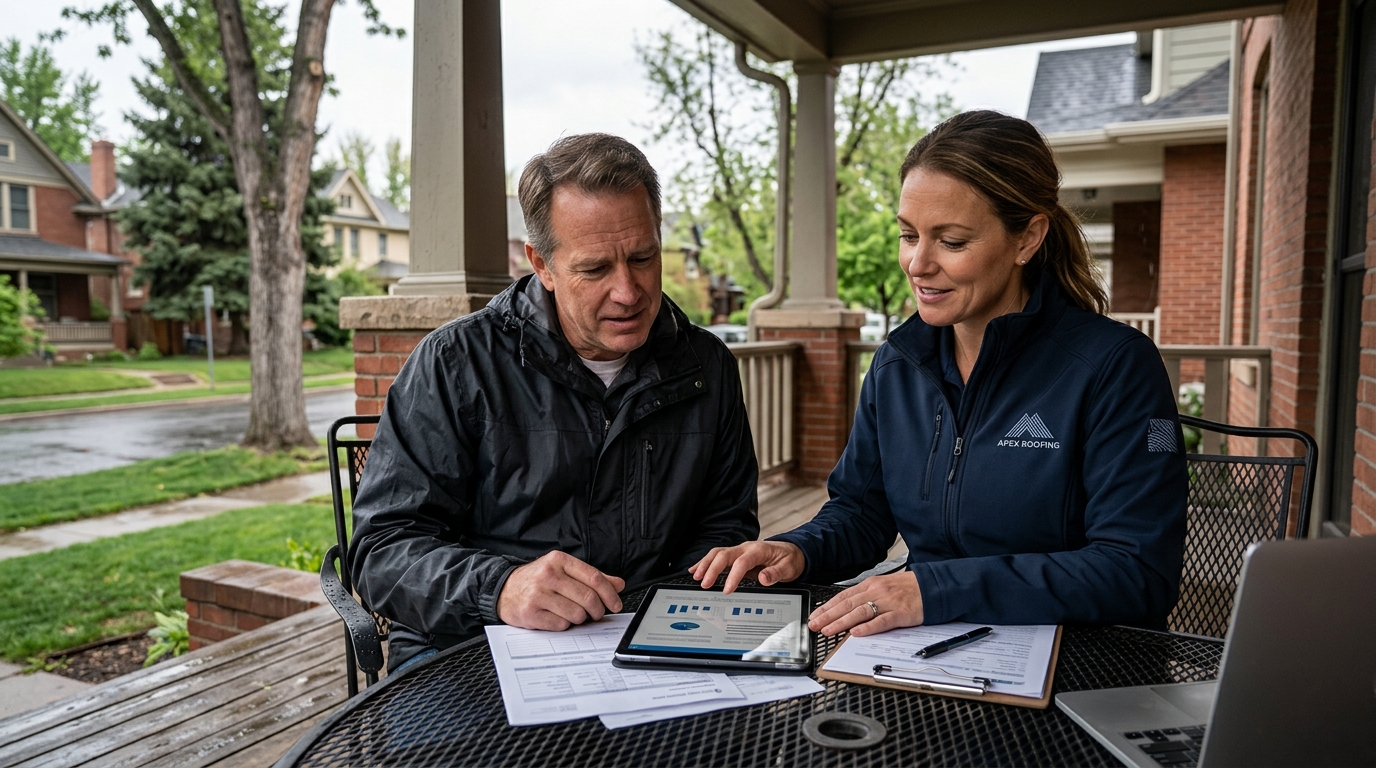
Contact your insurance provider to initiate the claim process. Provide them with the documentation you gathered, including photos, videos, and your incident log. The insurer will assign a adjuster to inspect the property. It is highly recommended that you are present during this inspection to point out visible damage and ensure nothing is overlooked. Adjusters may miss subtle hail impacts that a specialized roofing contractor would identify.
Do not sign any documents that grant the insurance company access to your roof without first having a professional assessment. Some policies include clauses that allow the insurer to direct repairs, which may lead to lower-quality materials or workmanship. Instead, request a detailed estimate from a local, GAF Certified contractor to compare against the insurer’s initial offer. This comparison ensures you receive a fair valuation for the necessary repairs.
Working with Local Roofing Contractors
Choosing the right contractor is the most critical step in the repair process. Out-of-state storm chasers often flood Denver neighborhoods after major hail events, offering quick fixes that fail to meet local building codes. A local contractor understands the specific weather patterns of the Front Range, including the impact of freeze-thaw cycles on roofing materials.
Apex Roofing has served the Denver area since 2010, providing honest guidance and dependable work. As a local Englewood-based company, we prioritize clear communication and warranty-backed work. Our team is trained to identify hail damage that is not immediately obvious, ensuring your claim is supported by accurate technical data.
When selecting a contractor, verify their licensing, insurance, and certifications. Look for GAF Certified status, which indicates adherence to strict manufacturer standards. Additionally, inquire about their warranty offerings. Apex Roofing provides a 5-year labor warranty on new roofs, giving you peace of mind long after the storm has passed. Avoid contractors who demand full payment upfront or refuse to provide written estimates.

Emergency Repairs vs. Full Replacement
Understanding the difference between emergency repairs and full replacement is vital for budgeting and timeline planning. Emergency repairs are temporary measures designed to stop active leaks and prevent further interior damage. These are necessary when a storm causes immediate, severe failure of the roof system.
Full replacement is required when the majority of the roofing system is compromised. In Denver, hail can bruise shingles, reducing their lifespan and making them susceptible to cracking during winter freeze-thaw cycles. If more than 30% of the roof shows signs of hail impact, replacement is often the only viable long-term solution. Attempting to patch individual shingles in a hail-damaged roof rarely addresses the underlying structural weakness.
Commercial properties face additional challenges, including flat roof membranes and complex drainage systems. Storm damage to commercial roofs can lead to significant business interruption if water penetrates the interior. Apex Roofing offers specialized commercial services, including flat roof repair and gutter systems, tailored to the unique needs of Denver businesses. Our team works efficiently to minimize downtime and restore your property’s integrity.
Key Takeaways
- Denver averages 23 days of hail over one inch annually, necessitating rapid response protocols.
- Document all damage with timestamped photos and videos before attempting any temporary repairs.
- Review your insurance policy for specific wind and hail deductibles before filing a claim.
- Always be present during the insurance adjuster’s inspection to ensure all damage is noted.
- Choose a local, GAF Certified contractor like Apex Roofing to avoid out-of-state storm chasers.
- Apex Roofing has served Colorado since 2010, offering a 5-year labor warranty on new installations.
- Emergency repairs are temporary; full replacement is often required for widespread hail damage.
Frequently Asked Questions
How long do I have to file a storm damage roof claim in Colorado?
Most insurance policies require claims to be filed within one year of the storm event. However, immediate notification is recommended to prevent further damage and ensure timely adjuster assignment.
What is the difference between hail damage and normal wear and tear?
Hail damage presents as random, circular bruises or fractures on shingles, often with exposed granules. Normal wear and tear is gradual aging, such as curling edges or loss of flexibility, which occurs over many years.
Can I hire my own roofer if my insurance company recommends one?
Yes, you have the right to choose your own contractor. Insurance company recommendations may be influenced by contractual agreements that prioritize cost over quality. A local expert can provide an unbiased assessment.
What is a GAF Certified Roofing Contractor?
A GAF Certified Contractor is a roofing company that has met strict training and financial requirements set by GAF, the largest roofing manufacturer in North America. This certification ensures high standards of workmanship and material quality.
How does the Denver climate affect roof longevity?
Denver’s high altitude exposes roofs to intense UV radiation, while rapid temperature swings cause materials to expand and contract. This cycle accelerates aging and makes hail damage more likely to result in leaks.
What should I do if my roof leaks during a snowstorm?
Place buckets to catch water, move valuables away, and call a professional immediately. Do not attempt to remove snow from the roof yourself, as this poses a severe fall risk.
Does Apex Roofing help with insurance claims?
Yes, our team provides insurance claim guidance from start to finish. We document damage thoroughly and communicate directly with your adjuster to ensure a fair and accurate claim settlement.
Contact Apex Roofing for Inspection
Do not wait for a leak to appear before addressing storm damage. Early detection can save thousands in repairs and prevent structural issues. Apex Roofing offers free roof inspections for homeowners and businesses across the Denver metro area. Our local team is ready to provide honest assessments and reliable repairs.
Request your free inspection today by calling 303-691-5035 or visiting our contact page. Protect your property with a trusted Colorado roofing contractor.