
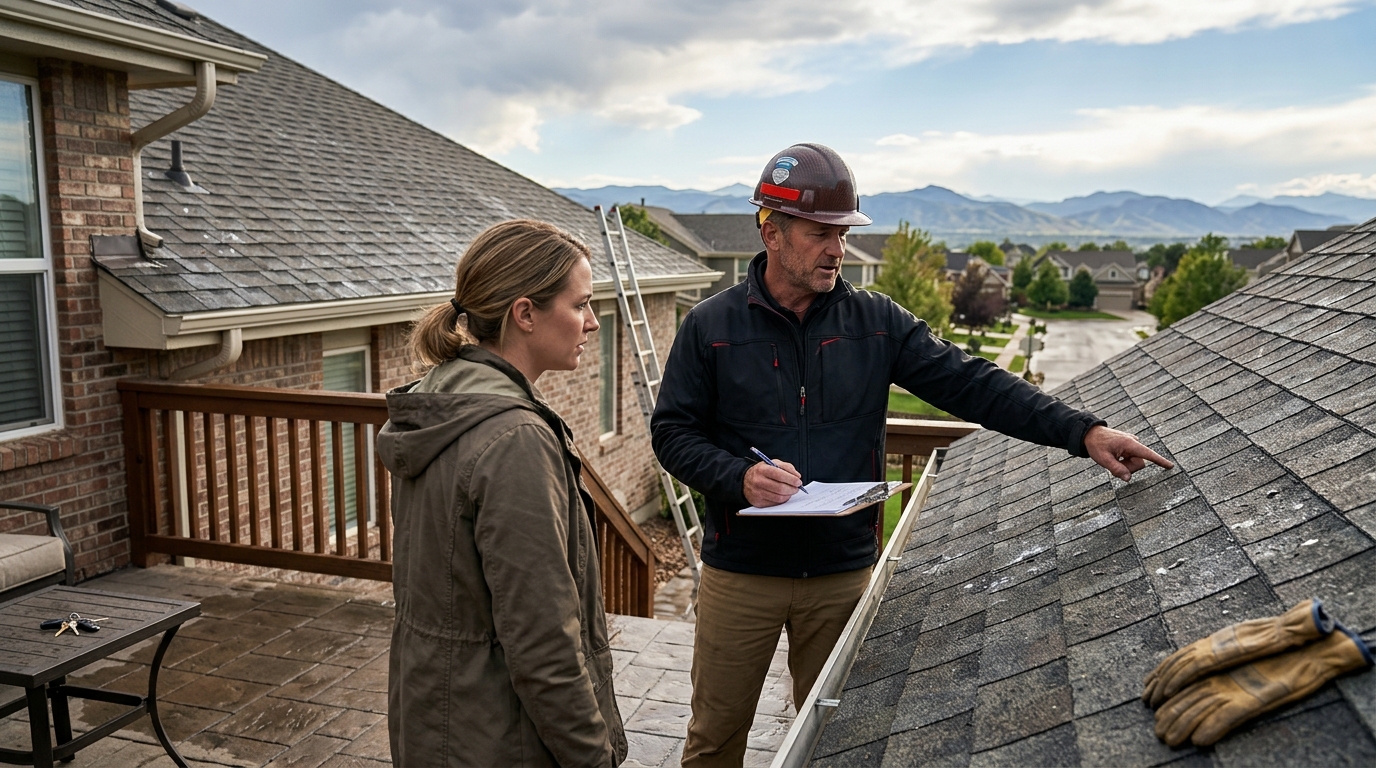
Denver experiences an average of 23 days of hail per year, creating a high-risk environment for residential and commercial roofing systems. According to the National Weather Service, Colorado ranks among the top states for hail frequency, meaning property owners must approach post-storm assessments with extreme caution. Mistakes during these inspections can lead to denied insurance claims, structural deterioration, and costly emergency repairs. This guide outlines the critical errors to avoid and the professional standards required for accurate damage assessment.
Mistake 1: Skipping the Ground Assessment
The most common error homeowners make is immediately climbing onto the roof without first conducting a thorough ground-level inspection. This approach is dangerous and often misses critical evidence. A proper assessment begins with binoculars and a systematic walk around the perimeter of the property.
When inspecting from the ground, look for granules accumulating in gutters and downspouts. These granules are the protective UV shield of your asphalt shingles. Their presence in drainage systems indicates significant wear or impact damage. Additionally, check the lawn for fallen shingle pieces or damaged flashing. If you see debris scattered across the yard, the roof has likely sustained direct impact. Professional roofing experts emphasize that ground assessment provides the initial map of damage before any physical contact is made.
Mistake 2: Unsafe Ladder Usage and Climbing
Attempting to climb a ladder on a wet, slick, or unstable surface is a severe safety hazard. Denver’s weather can shift rapidly, leaving roofs slippery with moisture or ice long after a storm passes. Homeowners often underestimate the risk of falls, which can result in serious injury or death.
If you must inspect the roof, ensure the ladder is on solid, level ground and extends at least three feet above the roofline. However, the safest practice is to hire a licensed contractor. Apex Roofing utilizes specialized safety equipment and training to navigate steep pitches and high-altitude conditions safely. Never attempt to walk on a roof if you are unsure of its structural integrity or if the surface is wet.
Mistake 3: Relying Solely on Visual Checks
Visual inspection alone is insufficient for detecting hidden damage. Hail can dent shingles without breaking the surface, creating weak points that will fail months later. This type of damage is often invisible to the untrained eye.
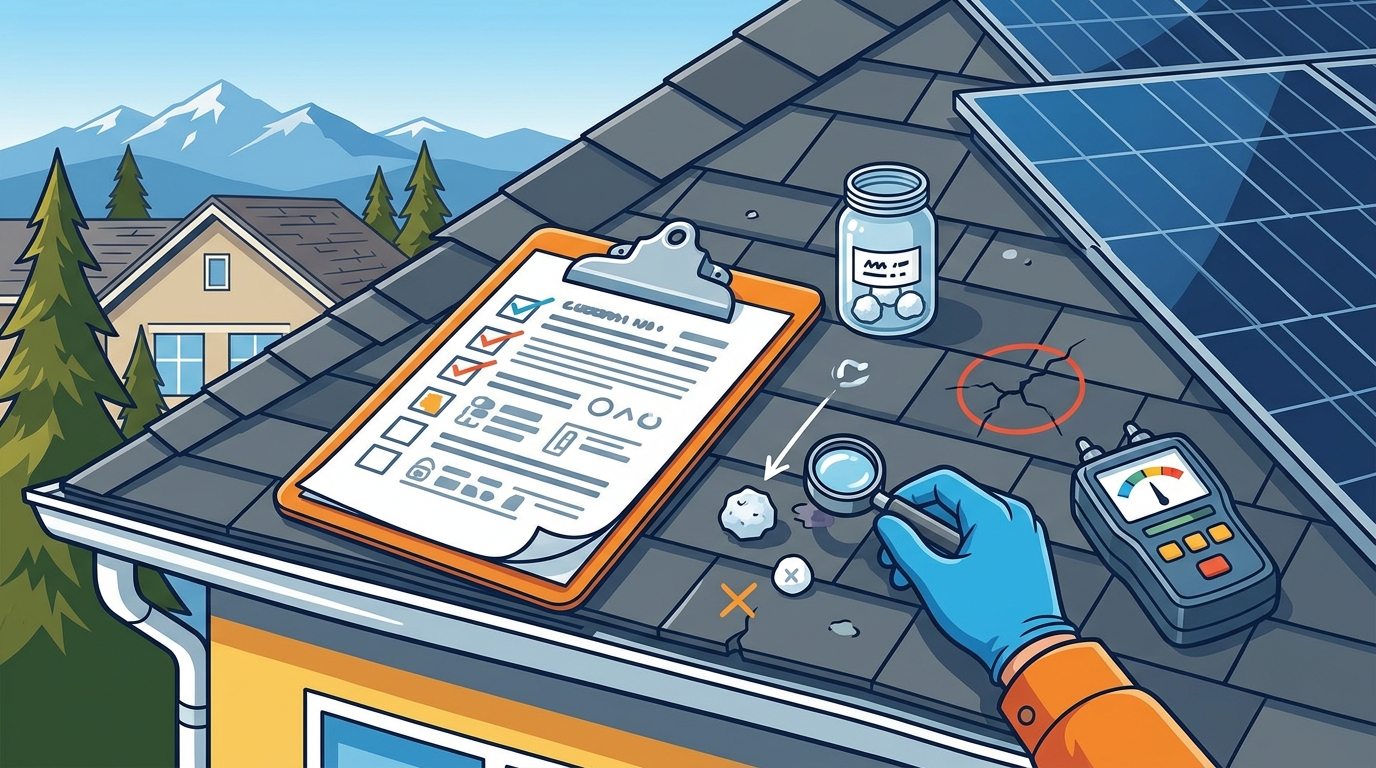
Professional inspectors use tactile methods to identify soft spots in shingles. They press on the shingle tabs to check for loss of granule coverage and structural resilience. Certified roofing contractors also use moisture meters to detect water intrusion in the underlayment and decking. These tools reveal damage that visual checks miss, ensuring that all compromised areas are addressed before they lead to leaks.
Mistake 4: Ignoring Granule Loss and Shingle Denting
Granule loss is a primary indicator of hail damage. When hail strikes a shingle, it dislodges the protective granules, exposing the asphalt to UV radiation. This accelerates aging and reduces the shingle’s lifespan. Denting is another key sign; hail creates circular depressions in the shingles that can crack the matting.
Homeowners often mistake normal wear for storm damage or vice versa. It is crucial to distinguish between random wear and patterned damage. Hail damage typically appears in consistent patterns across the roof, correlating with the storm’s path. Roofing professionals in the Denver metro area use specific criteria to evaluate dent depth and granule loss, ensuring accurate damage assessment for insurance purposes.
Mistake 5: Misdiagnosing Gutter and Drainage Issues
Gutters are often the first line of defense against storm damage, but they are also frequently misdiagnosed. Homeowners may assume that clogged gutters are the only issue, ignoring dents and tears caused by hail impact. Damaged gutters can pull away from the fascia, leading to water damage in the roof edge and interior walls.
Inspect gutters for dents, splits, and loose fasteners. Check the downspouts for alignment and secure attachment. If gutters are damaged, they may not effectively channel water away from the foundation, exacerbating storm-related issues. Local roofing services recommend addressing gutter damage concurrently with roof repairs to ensure comprehensive protection.
Mistake 6: Delaying Insurance Notification
One of the most costly mistakes is waiting too long to file an insurance claim. Many policies have strict time limits for reporting storm damage. Delaying notification can result in denied claims or reduced payouts. Additionally, evidence of damage can degrade over time due to weather exposure.
Notify your insurance provider immediately after a storm. Document all damage with photos and videos before making any temporary repairs. Apex Roofing provides detailed documentation and guidance to help homeowners navigate the insurance claims process efficiently. Early intervention ensures that the full extent of the damage is recognized and covered.
Comparison of Inspection Approaches
| Inspection Method | Accuracy | Safety Level | Insurance Acceptance |
|---|---|---|---|
| DIY Visual Check | Low | High Risk | Often Rejected |
| Professional Ground Assessment | Medium | Safe | Supportive |
| Professional On-Roof Inspection | High | Controlled | Accepted |
| Drone-Assisted Inspection | High | Safe | Increasingly Accepted |
Key Takeaways
- Denver averages 23 days of hail per year, increasing the risk of roof damage.
- Always start with a ground-level inspection using binoculars to identify visible debris and granule loss.
- Never climb onto a wet or unstable roof; use professional services for safety.
- Visual checks alone are insufficient; tactile and moisture testing are required for accurate assessment.
- Granule loss and shingle denting are primary indicators of hail damage.
- Gutter damage often accompanies roof damage and must be addressed simultaneously.
- Notify your insurance provider immediately to avoid claim denials due to delayed reporting.
Frequently Asked Questions
How soon after a storm should I inspect my roof?
You should inspect your roof within 24 to 48 hours after a storm. Early inspection helps document damage while it is fresh and prevents further deterioration from exposure.
Can I inspect my roof myself?
While you can perform a ground-level inspection, climbing onto the roof is dangerous and not recommended for homeowners. Professional inspectors have the training and equipment to assess damage safely and accurately.
What is the most common sign of hail damage?
The most common sign is granule loss in gutters and downspouts, along with circular dents in shingles. These indicators suggest impact from hailstones.
Does Apex Roofing offer free inspections?
Yes, Apex Roofing offers free roof inspections for homeowners in the Denver area. These inspections include a comprehensive assessment of the roof, gutters, and flashing.
How long does a roof inspection take?
A professional roof inspection typically takes 30 to 60 minutes, depending on the size and complexity of the roof. Detailed assessments may take longer.
What if my insurance claim is denied?
If your claim is denied, request a detailed explanation from your insurer. You can then hire a professional roofing contractor to provide a second opinion and additional documentation to support your case.
Are there financing options for roof repairs?
Yes, many roofing companies, including Apex Roofing, offer financing options to help homeowners manage the cost of repairs and replacements.
Get Your Free Roof Inspection Today
Do not risk your safety or your insurance coverage by attempting a DIY inspection. Contact Apex Roofing today to schedule your free, professional post-storm roof inspection. Our certified team is ready to help you protect your home with expert guidance and reliable service.