

Denver homeowners face unique weather challenges that accelerate roof aging. According to the National Weather Service, the Front Range experiences frequent hail events that can cause immediate, invisible damage to shingles and flashing. A professional roof inspection is the only reliable way to identify these issues before they lead to costly interior leaks or structural compromise. This guide explains how free inspections work, what to expect, and why local expertise matters more than generic assessments. (About Apex Roofing Colorado)
Why Free Roof Inspections Are Critical in Colorado
Colorado’s climate is defined by rapid temperature swings, heavy snow loads, and intense hail storms. These conditions create a hostile environment for roofing materials. Shingles can become brittle from UV exposure at high altitudes, while freeze-thaw cycles can lift seams and break seals. Without a professional assessment, minor issues like cracked flashing or loose granules can escalate into major water intrusion problems.
A free roof inspection provides a baseline understanding of your roof’s health. It is not merely a sales tactic but a diagnostic tool. Roofing experts use specialized equipment to detect moisture retention, nail pops, and wind uplift damage that are invisible to the naked eye. For homeowners in Denver, Englewood, and the broader Front Range, this proactive approach saves thousands in emergency repairs.
Local roofing companies understand the specific building codes and material requirements for our region. They know which shingle grades withstand hail best and how proper ventilation mitigates ice dam formation. By choosing a local provider, you ensure that your roof is evaluated against the actual weather patterns of your neighborhood, not generic national standards.
What Happens During a Free Inspection
When you schedule a free roof inspection, you are booking a comprehensive evaluation of your property’s exterior. The process typically begins with a ground-level assessment. The inspector looks for sagging rooflines, missing shingles, and debris accumulation in gutters. This initial view helps identify obvious damage from a distance.
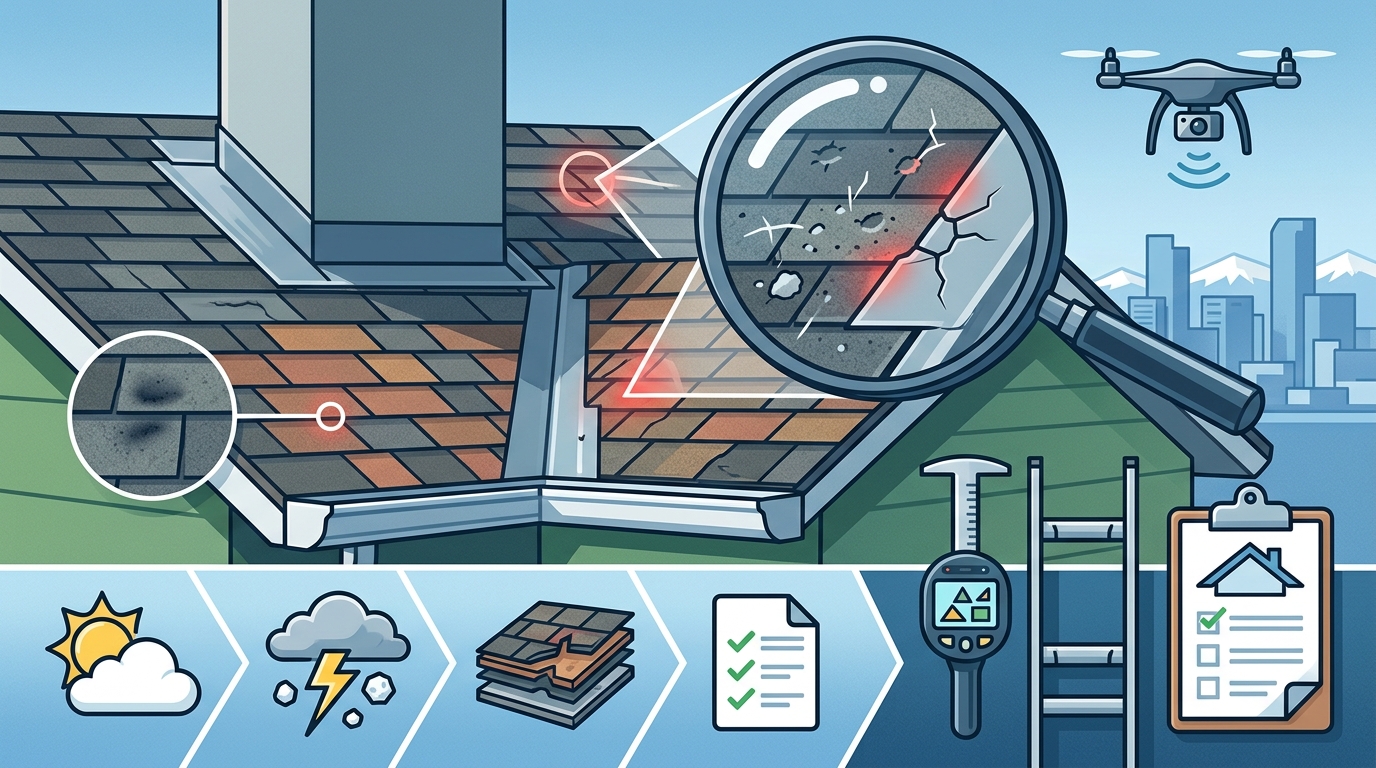
Next, the inspector will safely access the roof surface. They examine the condition of the shingles, checking for curling, cracking, or loss of granules. Granules protect shingles from UV rays, and their presence in gutters often signals advanced wear. The inspector also checks the flashing around chimneys, vents, and skylights. Flashing is the metal barrier that prevents water from seeping into joints, and it is a common failure point in Denver’s windy climate.
Interior checks are also part of a thorough inspection. The inspector may look into the attic for signs of light penetration, water stains, or mold growth. These indicators suggest that water is entering the roof system even if no leak is visible from the ground. A detailed report is then provided, outlining any necessary repairs or replacements.
Types of Roof Inspections Available
Not all inspections are created equal. Understanding the different types helps you choose the right service for your needs. Below is a comparison of common inspection types offered by reputable contractors.
| Inspection Type | Best For | Key Focus Areas |
|---|---|---|
| Standard Free Inspection | Annual maintenance or post-storm checks | Shingle condition, flashing integrity, gutter clearance |
| Storm Damage Assessment | After hail or high-wind events | Dent patterns on metal, bruised shingles, granule loss |
| Pre-Sale Home Inspection | Homebuyers or sellers | Remaining lifespan, warranty status, immediate repair needs |
| Commercial Roof Evaluation | Businesses and HOAs | Membrane integrity, drainage systems, parapet walls |
For residential properties, a standard free inspection is often sufficient for routine checks. However, after a significant storm, a storm damage assessment is crucial. This specialized inspection uses infrared cameras and moisture meters to detect hidden water damage that standard visual checks might miss.
Navigating Insurance Claims After Storm Damage
One of the most valuable aspects of a professional roof inspection is its role in insurance claims. When hail or wind damages your roof, filing a claim can be complex. Insurance adjusters often look for reasons to minimize payouts, and they may miss subtle signs of damage.
A detailed inspection report from a certified contractor provides the evidence needed to support your claim. The report documents the extent of the damage, including photos and measurements of granule loss and shingle bruising. This documentation helps ensure that your insurance company covers the full cost of necessary repairs or replacement.
Local roofing companies like Apex Roofing are experienced in working with insurance adjusters. They understand the language of claims and can advocate for your property. This guidance is particularly important for homeowners who are unfamiliar with the process. By having a trusted expert on your side, you reduce the stress of navigating paperwork and coverage limits.
Red Flags to Avoid When Hiring Roofers
While many companies offer free inspections, not all are trustworthy. It is important to vet potential contractors carefully to avoid scams or subpar work. Here are some red flags to watch for.
First, be wary of contractors who pressure you to sign a contract immediately. A reputable inspector will provide a detailed report and give you time to consider your options. They should never use high-pressure tactics or claim that your roof will leak within days if you do not act.
Second, check for local accountability. Roofing companies that operate out of state may disappear after the storm season ends. Local companies, such as those based in Englewood, have a long-term presence in the community. They are more likely to stand behind their work and honor warranties.
Third, verify certifications and insurance. Look for GAF Certified™ Roofing Contractor status, which indicates that the company meets strict training and financial requirements. Additionally, ensure they carry proper liability insurance and workers’ compensation to protect you from potential accidents on your property.
Key Takeaways
- Climate Impact: Denver’s hail and freeze-thaw cycles cause rapid roof degradation, making regular inspections essential.
- Free Value: Free inspections provide a professional baseline of your roof’s health without upfront costs.
- Insurance Support: Detailed inspection reports are critical for successful insurance claims after storm damage.
- Local Expertise: Local contractors understand regional building codes and weather patterns better than national chains.
- Vetting Process: Always check for GAF certification, local presence, and transparent communication practices.
- Proactive Maintenance: Addressing minor issues early can extend your roof’s lifespan and save money long-term.
- Warranty Coverage: Reputable companies offer labor warranties, such as the 5-year warranty provided by Apex Roofing.
Frequently Asked Questions
How long does a free roof inspection take?
A standard free roof inspection typically takes between 30 to 60 minutes, depending on the size and complexity of your roof. The inspector will examine both the exterior and interior components to provide a comprehensive assessment.
Do I need to be home during the inspection?
It is not strictly necessary for you to be home, but it is helpful. Being present allows you to ask questions and see the inspector’s findings in real-time. If you cannot attend, the inspector will provide a detailed written report and photos.
What is the difference between a repair and a replacement?
A repair addresses specific damaged areas, such as replacing a few shingles or fixing flashing. A replacement involves removing the entire existing roof system and installing a new one. The decision depends on the age of the roof and the extent of the damage.
How often should I get my roof inspected?
It is recommended to have your roof inspected at least once a year, preferably in the spring or fall. Additionally, you should request an inspection after any major storm event to check for hail or wind damage.
Can a free inspection lead to a forced sale?
No, a reputable roofing company will never force you to buy. The inspection is an informational service. You are under no obligation to proceed with any repairs or replacements based on the findings.
What documents do I need for an insurance claim?
You will need the inspection report, photos of the damage, and a detailed estimate of repair costs. Your roofing contractor can often help coordinate with your insurance adjuster to ensure all necessary documentation is provided.
Are free inspections available for commercial properties?
Yes, many roofing companies offer free inspections for commercial properties. These inspections focus on flat roof membranes, drainage systems, and parapet walls, which are critical for business continuity.
Request Your Free Inspection Today
Protecting your home or business starts with a clear understanding of your roof’s condition. Do not wait for a leak to appear before taking action. Schedule a free roof inspection with a trusted local contractor who understands the unique challenges of Colorado weather. Visit Apex Roofing to request your inspection and ensure your property is safe and secure.