
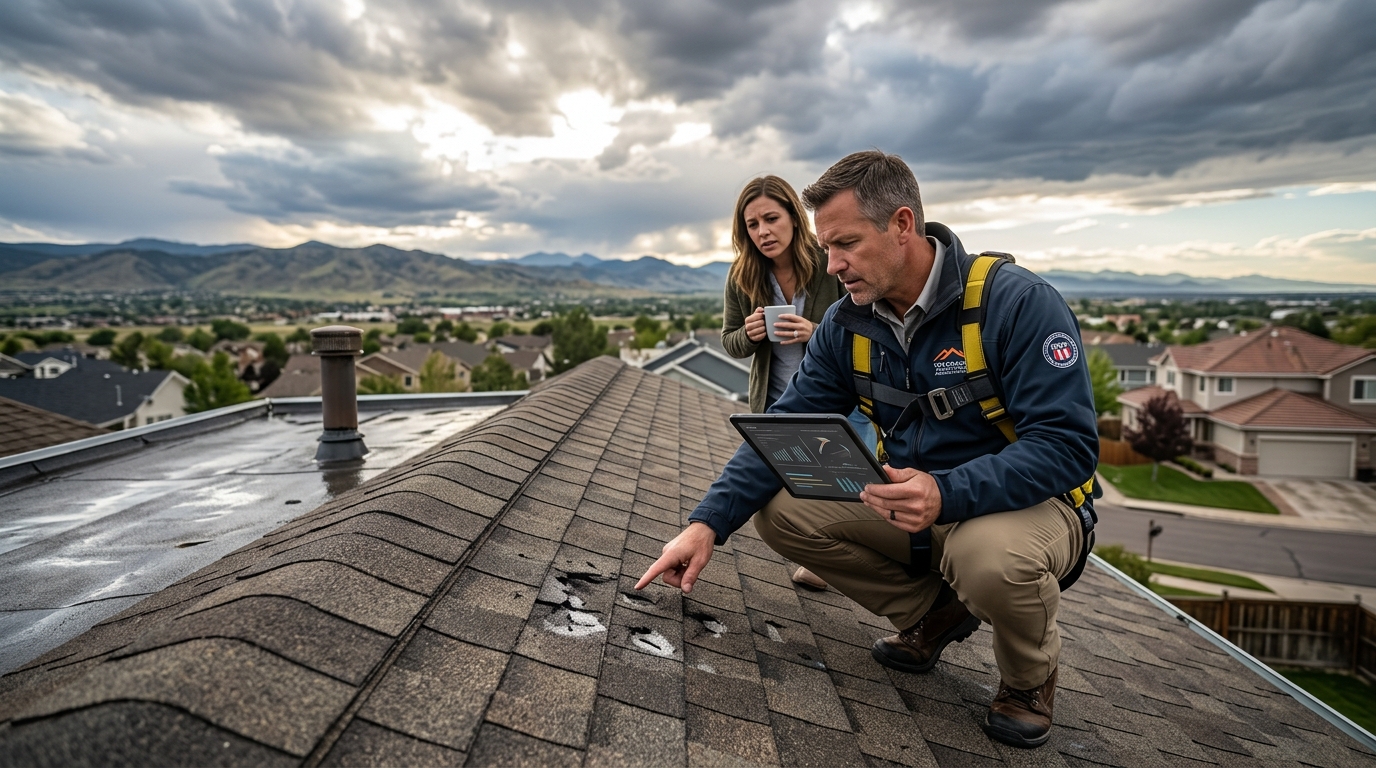
Denver experiences an average of 23 days of hail per year, creating a unique environment where roof integrity is constantly tested by severe weather events. According to the National Weather Service, Colorado ranks among the top states for hail frequency, making standardized post-storm inspections not just a recommendation, but a critical necessity for property protection. When a storm passes, the window to identify subtle damage before it becomes a catastrophic leak is narrow. This guide outlines the professional standards required to evaluate residential and commercial roofs in the Front Range, ensuring that property owners in Denver, Arvada, and Aurora receive accurate assessments and valid insurance guidance. (Blog 8211 apexroofingusa com)
Why Inspection Standards Matter in Colorado
Post-storm roof damage is often invisible from the ground. Hail impacts can fracture the granular surface of asphalt shingles without breaking the mat, leading to premature aging and water infiltration. Without a standardized inspection protocol, these issues are frequently missed until significant interior damage occurs. Professional standards ensure that every component of the roofing system is evaluated against industry benchmarks.
In Denver, the combination of high-altitude UV exposure and rapid temperature swings exacerbates the effects of storm damage. A roof that has sustained minor hail impact may fail years earlier than expected if the structural integrity is compromised. Establishing a baseline through rigorous inspection allows property owners to distinguish between cosmetic wear and functional failure. This distinction is vital for insurance coverage, as many policies cover sudden storm damage but exclude gradual deterioration.
Apex Roofing, a local Colorado roofing company based in Englewood, adheres to strict inspection guidelines to ensure accuracy. Our team is trained to identify the specific types of damage common to the Front Range, including wind uplift and hail bruising. By following established industry standards, we provide homeowners and business owners with the clarity needed to make informed decisions about repairs or replacements.
Safety Protocols for Roof Access
Before any assessment begins, safety is the paramount concern. Roof inspections in Denver often involve navigating steep pitches, wet surfaces, and potential structural weaknesses. Professional inspectors must adhere to Occupational Safety and Health Administration (OSHA) guidelines to prevent falls and injuries. This includes the use of proper fall arrest systems, non-slip footwear, and stable ladder placement.
For commercial flat roofs, access points must be secured to prevent unauthorized entry and ensure the safety of the inspection team. Walkways and protective pads are often used to prevent damage to the roofing membrane during the inspection process. These protocols are not just legal requirements; they are ethical obligations to protect both the inspector and the property.
When evaluating a roof after a storm, it is crucial to avoid walking on the roof if it is wet or if the material is brittle. Hail-damaged shingles can be particularly fragile, and stepping on them can cause further damage that complicates the assessment. In such cases, ground-level inspections using high-powered lenses or drone technology may be employed to gather initial data before any physical access is attempted.
Visual Assessment Standards
A comprehensive visual inspection follows a systematic approach, moving from the perimeter to the center of the roof. The goal is to identify patterns of damage that indicate the direction and intensity of the storm. Inspectors look for specific indicators such as missing granules, exposed matting, and cracked shingles. These signs are critical in determining whether a roof has sustained functional damage or merely cosmetic wear.
One key definition in this process is that hail damage is defined as the impact-induced fracturing of the shingle surface that compromises its weather-resistant barrier. This definition helps distinguish between natural aging and storm-related issues. Inspectors also examine the flashing around chimneys, vents, and skylights, as these areas are particularly vulnerable to wind uplift and water infiltration.
Another critical standard is the evaluation of granule loss, which is the shedding of protective mineral coatings from asphalt shingles due to impact or weathering. Significant granule loss reduces the roof's ability to reflect UV rays and resist water, accelerating the aging process. By documenting the extent of granule loss, inspectors can provide a clear picture of the roof's remaining lifespan.
Finally, wind uplift is the force exerted by wind that can lift and separate roofing materials from the deck. This force can loosen fasteners, crack shingles, and compromise the integrity of the entire roofing system. Inspectors look for signs of uplift, such as curled edges, lifted seams, and exposed nails, to determine the severity of wind damage.
Material-Specific Damage Indicators
Different roofing materials react differently to storm impacts. Understanding these reactions is essential for accurate assessment. Asphalt shingles, the most common roofing material in Denver, show damage through bruising, cracking, and granule loss. Metal roofs may exhibit denting, which can compromise the protective coating and lead to corrosion. Tile roofs can crack or break upon impact, requiring careful replacement of individual units.
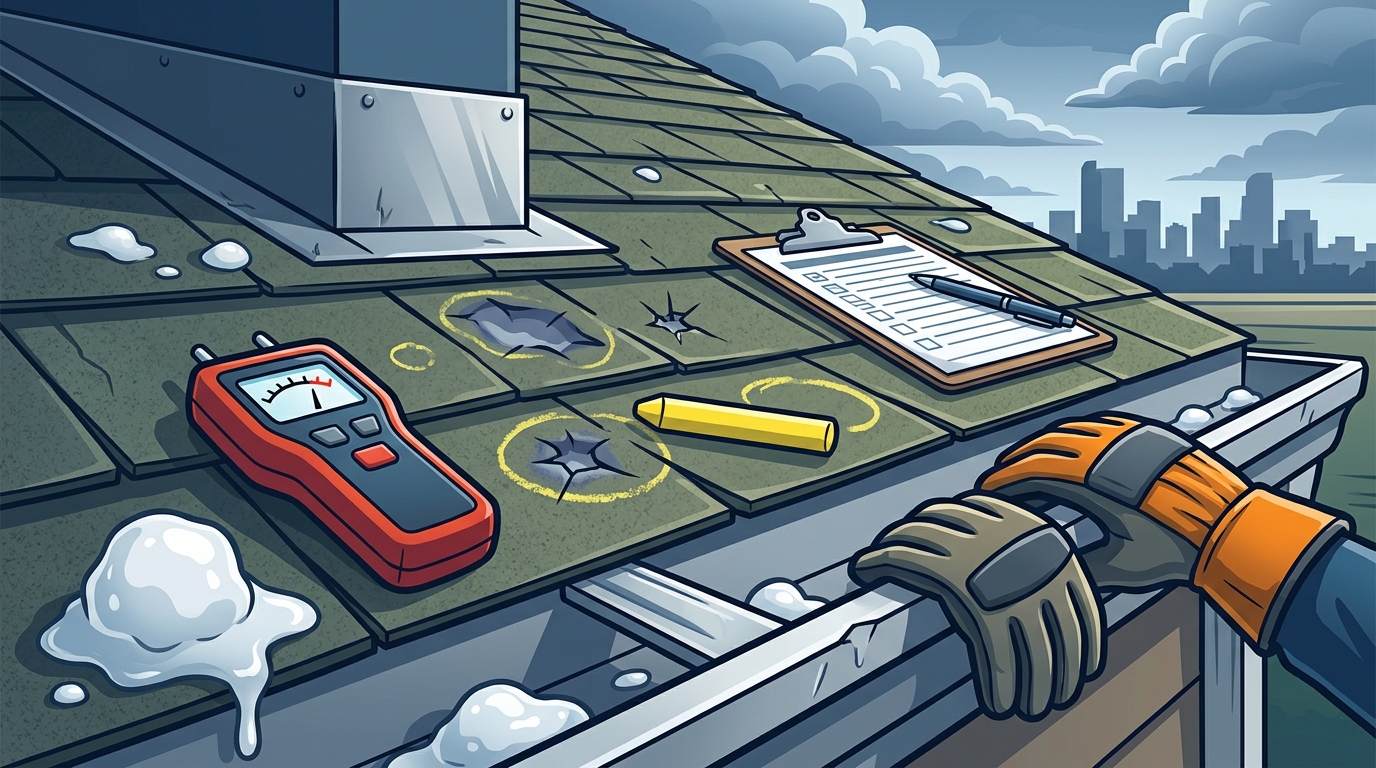
For commercial properties, built-up roofs (BUR) and single-ply membranes are common. These materials are evaluated for punctures, splits, and blisters. Punctures from hail can create direct pathways for water intrusion, while blisters indicate trapped moisture that can lead to membrane failure. Inspectors use moisture meters to detect hidden water damage within the roof assembly, which is not visible to the naked eye.
It is important to note that not all damage is immediately apparent. Some impacts may only weaken the material, leading to failure months or years later. This is why regular inspections are recommended, even if no obvious damage is visible. By identifying potential issues early, property owners can prevent costly repairs and extend the life of their roofing system.
Insurance Claim Documentation
One of the most critical aspects of a post-storm inspection is preparing documentation for insurance claims. Insurance adjusters rely on detailed reports and photographs to determine coverage and payout amounts. Professional inspectors provide a comprehensive report that includes a narrative description of the damage, annotated photographs, and a comparison of pre-storm and post-storm conditions.
The documentation must clearly link the damage to a specific storm event. This involves correlating the date of the storm with the onset of visible damage. Inspectors also identify the direction of the hail and wind to support the claim. This level of detail is essential for ensuring that the insurance company recognizes the damage as a covered event rather than gradual wear and tear.
Apex Roofing offers insurance claim guidance to help property owners navigate this complex process. Our team works directly with insurance adjusters to ensure that all damage is accounted for and that the repair or replacement scope is accurate. This advocacy helps property owners receive the full coverage they are entitled to, reducing out-of-pocket expenses and stress.
Residential vs. Commercial Inspection Differences
While the core principles of roof inspection remain the same, there are significant differences between residential and commercial assessments. Residential roofs are typically steeper and more complex, with multiple valleys, hips, and penetrations. Commercial roofs are often flat or low-slope, with larger surface areas and different material systems.
| Feature | Residential Inspection | Commercial Inspection |
|---|---|---|
| Primary Focus | Shingle integrity, flashing, and granule loss | Membrane punctures, seam integrity, and drainage |
| Access Method | Ladders and roof walking (with caution) | Roof hatches, stairs, and protective walkways |
| Common Materials | Asphalt shingles, tile, wood shake | TPO, EPDM, Built-up roofing (BUR) |
| Damage Indicators | Hail bruising, wind uplift, granule loss | Punctures, blisters, split seams, ponding water |
| Documentation | Photographic evidence of shingle damage | Moisture mapping and core sampling |
Understanding these differences is crucial for property managers and homeowners alike. A residential roof may require a full replacement after a severe hail storm, while a commercial roof might only need localized repairs. By recognizing these distinctions, property owners can avoid unnecessary costs and ensure that the correct repair strategy is implemented.
Key Takeaways
- High Hail Frequency: Denver averages 23 days of hail per year, necessitating rigorous post-storm inspection standards.
- Hidden Damage: Hail impacts can fracture shingles without breaking the mat, leading to premature failure if not detected.
- Safety First: Professional inspectors adhere to OSHA guidelines, using fall arrest systems and non-slip footwear to ensure safety.
- Material Specifics: Different roofing materials show distinct damage patterns, such as bruising in shingles and denting in metal.
- Insurance Advocacy: Detailed documentation linking damage to specific storms is essential for successful insurance claims.
- Local Expertise: Apex Roofing has served Colorado since 2010, providing GAF Certified™ roofing support and clear communication.
- Proactive Maintenance: Regular inspections help identify potential issues before they become costly repairs or replacements.
Frequently Asked Questions
How soon after a storm should I inspect my roof?
It is recommended to inspect your roof within 48 hours of a storm. This allows for the identification of damage before it worsens due to rain or wind. Early detection can also expedite the insurance claim process.
Can I inspect my roof myself?
While ground-level inspections are safe, climbing onto a roof after a storm can be dangerous. Damaged shingles may be brittle, and wet surfaces increase the risk of slipping. Professional inspectors have the training and equipment to assess the roof safely and accurately.
What is the difference between hail damage and normal wear?
Hail damage is characterized by random, circular impacts that fracture the shingle surface. Normal wear is typically more uniform and gradual. Professional inspectors use specific criteria to distinguish between the two, ensuring accurate assessment.
Does Apex Roofing help with insurance claims?
Yes, Apex Roofing provides comprehensive insurance claim guidance. Our team works directly with adjusters to ensure that all storm damage is documented and covered, reducing stress and out-of-pocket costs for property owners.
What types of roofs do you inspect?
Apex Roofing inspects a wide range of roofing systems, including asphalt shingles, tile, metal, and commercial flat roofs. Our GAF Certified™ contractors are trained to evaluate all major roofing materials.
How long does a roof inspection take?
A typical residential roof inspection takes between 45 minutes and an hour, depending on the size and complexity of the roof. Commercial inspections may take longer due to the larger surface area and additional testing requirements.
What happens if my roof is damaged?
If damage is identified, Apex Roofing will provide a detailed report and repair estimate. We can guide you through the next steps, whether that involves minor repairs or a full roof replacement, ensuring your property is protected.
Schedule Your Professional Inspection
Do not wait for leaks to appear before addressing potential roof damage. Post-storm inspections are critical for maintaining the integrity of your property and ensuring valid insurance coverage. Apex Roofing offers free, no-obligation roof inspections for homeowners and businesses across the Denver metro area. Our GAF Certified™ team is ready to provide the expert assessment you need.
Contact us today to schedule your free roof inspection and protect your investment with Colorado's trusted roofing experts.