
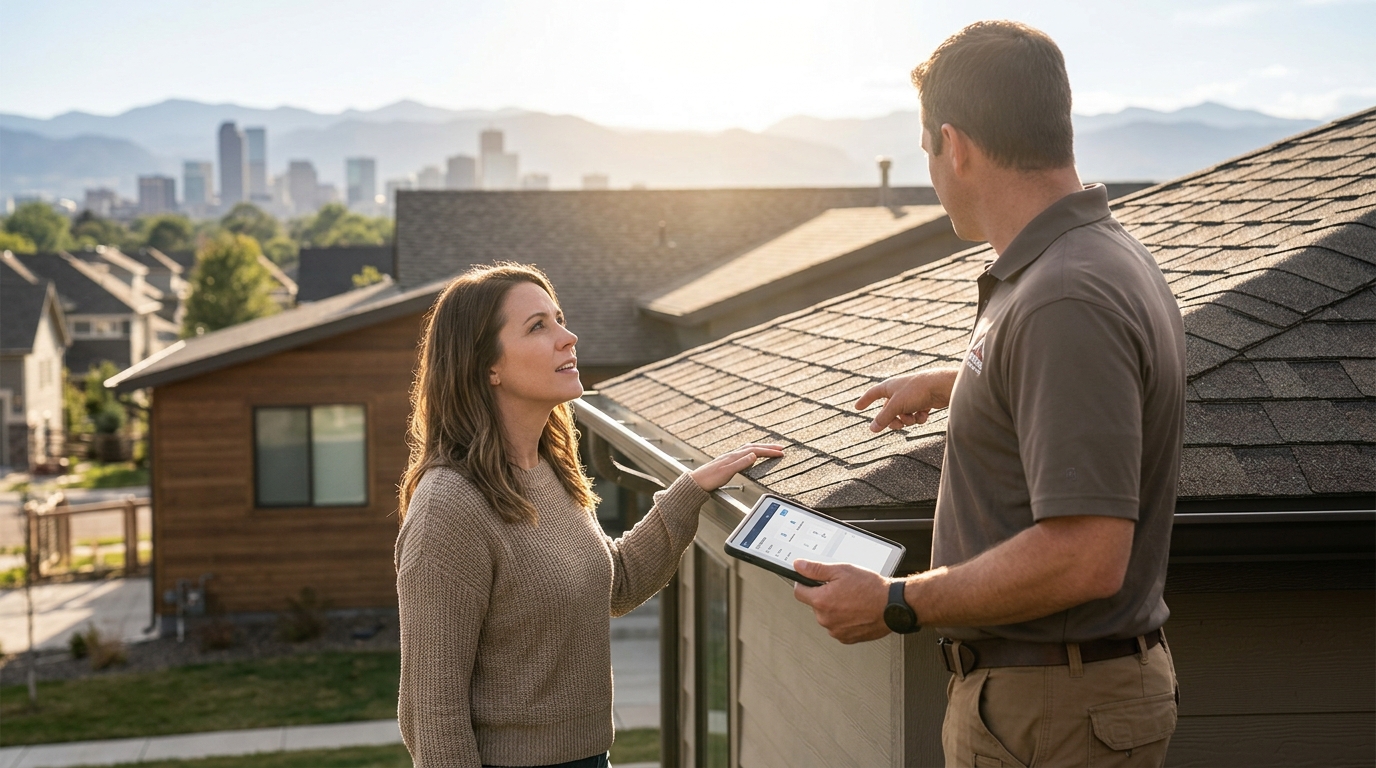
Denver homeowners face one of the most aggressive roofing environments in the United States. According to the National Weather Service, the Front Range experiences an average of 200 days of sunshine annually, combined with frequent hail events that can reach two inches in diameter. This unique climate combination accelerates material degradation, making regular professional assessments not just a recommendation, but a financial necessity for property preservation.
Why Denver Roofs Need Professional Inspections
A roof inspection is a systematic evaluation of your roofing system's condition, identifying existing damage and potential future failures. In Denver, this process is critical due to the extreme weather volatility. The Denver roofing industry
Many homeowners believe that if there is no visible leak, the roof is fine. This is a dangerous misconception. High-altitude UV radiation breaks down the granules on asphalt shingles, while freeze-thaw cycles expand and contract flashing and seams. These issues are often invisible from the ground. A professional inspection reveals these hidden vulnerabilities before they compromise the structural integrity of your home.
Furthermore, local building codes and HOA regulations in areas like Arvada and Aurora often require documented proof of roof condition before approving replacements or major repairs. A professional report provides the necessary documentation to navigate these bureaucratic hurdles smoothly.
What Happens During a Free Inspection?
When you request a free roof inspection from a reputable local contractor, you are scheduling a comprehensive diagnostic session. This is not a quick glance from the driveway. A thorough inspection involves several key steps designed to assess the entire roofing ecosystem.
1. Exterior Roof Assessment
The inspector will examine the shingles for curling, cracking, or missing granules. They will check the flashing around chimneys, vents, and skylights for rust or separation. In Denver, the wind load is significant, so the inspector will specifically look for lifted shingles or loose fasteners that could lead to wind uplift damage during the next storm season.
2. Gutter and Drainage Analysis
Water management is as important as the roof itself. Inspectors evaluate gutters for proper alignment and secure attachment. They check downspouts to ensure water is directed away from the foundation. Clogged or damaged gutters can cause water to back up under the roof edge, leading to rot in the fascia and soffit boards.

3. Interior and Attic Check
A complete inspection includes an attic visit. The inspector looks for signs of water intrusion, such as stained rafters or mold growth. They also assess ventilation to ensure that heat and moisture are escaping properly. Poor ventilation can cause ice dams in winter, which are a primary cause of roof damage in the Denver metro area.
Identifying Hidden Storm Damage
Denver is prone to severe thunderstorms that produce hail and high winds. Hail damage is often subtle. A shingle might look intact from the ground but have lost its protective granule core, exposing the asphalt to rapid UV degradation. This is known as "bruising." Only a trained eye can identify these bruises accurately.
Wind damage is another critical factor. High winds can lift shingle tabs, breaking the sealant strip. Once the seal is broken, the shingle becomes a sail, catching the wind and eventually tearing off. This process can happen gradually, meaning damage from a storm six months ago might only become apparent during the next weather event.
For homeowners in Boulder or other Front Range communities, understanding these subtle signs is vital. A professional inspection report will document these issues with photographs, providing clear evidence of the roof's condition. This documentation is essential for determining whether a repair or a full replacement is the most cost-effective solution.
The Role of Inspections in Insurance Claims
One of the most valuable aspects of a professional roof inspection is its role in the insurance claims process. When a storm causes damage, navigating the insurance company can be complex. Adjusters often look for reasons to minimize payouts, and without detailed documentation, homeowners may receive insufficient funds to cover the full cost of repairs.
A certified roofing contractor can act as an advocate during this process. By providing a detailed inspection report, the contractor helps the homeowner understand the extent of the damage. This report serves as a technical basis for the claim, ensuring that all damaged components are accounted for. According to industry data, homes with professional inspection reports prior to filing claims often experience faster approval times and more accurate settlement amounts.
It is important to note that not all damage is covered by insurance. Wear and tear, such as aging shingles or poor installation, is typically excluded. A honest inspector will clearly distinguish between storm damage and normal aging, saving homeowners from filing frivolous claims that could affect their premiums.
How to Choose a Reliable Roofing Contractor
Not all inspection services are created equal. When selecting a contractor for a free roof inspection, consider the following criteria to ensure you receive accurate and unbiased advice.
| Criteria | What to Look For | Why It Matters |
|---|---|---|
| Local Presence | Physical office in Colorado | Ensures accountability and long-term support |
| Certifications | GAF Certified™ or similar | Indicates advanced training and manufacturer backing |
| Reviews | Verified Google Reviews | Provides insight into customer satisfaction and reliability |
| Warranty | Labor warranty offered | Protects your investment in workmanship |
Local contractors like Apex Roofing have a vested interest in maintaining their reputation within the community. They are more likely to provide honest assessments because they know they will be around to honor any warranties or address future issues. Out-of-state storm chasers, on the other hand, may provide inflated estimates to secure immediate work, only to disappear when warranty claims arise.
Additionally, verify that the contractor is licensed and insured in Colorado. This protects you from liability in case of accidents on your property. A reputable company will gladly provide proof of insurance upon request.
Key Takeaways
- Climate Impact: Denver's high-altitude sun and hail require proactive roof maintenance to prevent accelerated aging.
- Hidden Damage: Storm damage is often invisible from the ground; professional inspections reveal critical vulnerabilities.
- Insurance Advocacy: Detailed inspection reports strengthen insurance claims and help secure fair settlements.
- Local Accountability: Choosing a local contractor ensures long-term support and community reputation.
- Cost Savings: Early detection of minor issues prevents costly major repairs or premature full replacements.
- Documentation: Professional reports provide necessary evidence for HOA approvals and insurance adjustments.
- Free Value: Free inspections offer a no-risk opportunity to assess your roof's health and get expert advice.
Frequently Asked Questions
How often should I get a roof inspection in Denver?
It is recommended to have a professional roof inspection at least once a year, ideally in the spring or fall. After severe storm events, such as hail or high winds, an immediate inspection is crucial to identify damage before it worsens.
Is a free roof inspection really free?
Yes, reputable local contractors offer free inspections as a standard service. They do not charge for the assessment or the report. The cost is covered as part of their marketing and customer acquisition strategy.
What happens if my roof needs replacement?
If the inspection reveals that replacement is necessary, the contractor will provide a detailed estimate. They will also guide you through the insurance claim process if the damage is storm-related, helping you understand your coverage options.
Can I stay home during the inspection?
You are welcome to stay home if you wish to observe the process or ask questions. However, it is not required. The contractor will provide a comprehensive report afterward, detailing all findings and recommendations.
How long does a roof inspection take?
A thorough inspection typically takes between 45 minutes to an hour, depending on the size and complexity of the roof. This includes both the exterior assessment and the interior attic check.
Do you inspect commercial roofs in Denver?
Yes, professional roofing companies offer inspections for commercial properties as well. Commercial roofs, such as flat or low-slope systems, require different inspection techniques to check for ponding water, membrane integrity, and flashing conditions.
What is a GAF Certified Contractor?
A GAF Certified Contractor is a roofing company that has met strict criteria set by GAF, the largest roofing manufacturer in North America. This certification indicates advanced training, adherence to high-quality installation standards, and access to enhanced warranty options.
Schedule Your Free Inspection
Don't wait for a leak to discover your roof's condition. Protect your home and your investment with a professional assessment from a trusted local expert. Apex Roofing offers free, no-obligation roof inspections for homeowners and businesses across the Denver metro area. Our team of certified professionals is ready to provide the honest guidance and detailed reporting you need to make informed decisions about your roofing system.
Contact us today to schedule your free inspection and experience the difference of working with a local Colorado roofing company that values integrity and quality.