
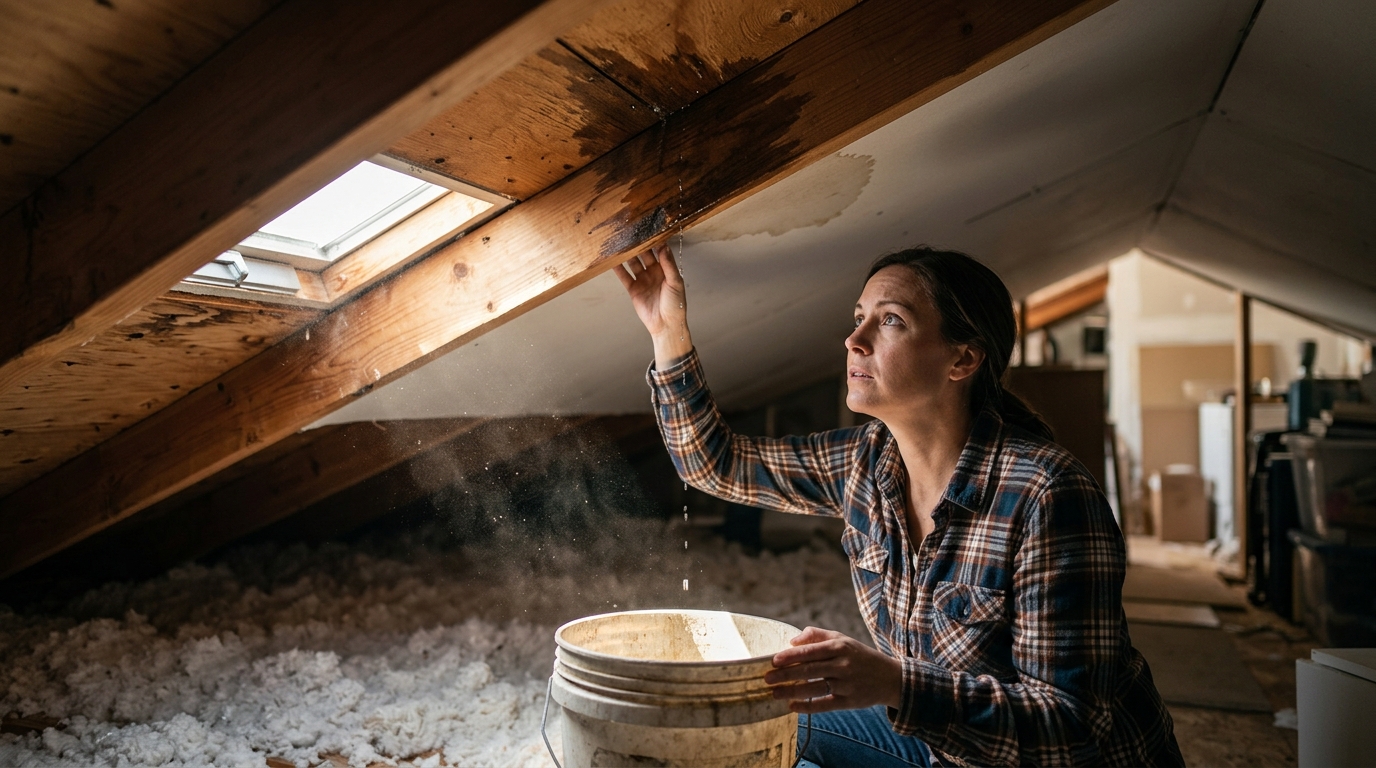
Water intrusion is one of the most destructive forces facing Colorado properties, with severe weather reports indicating that hail and freeze-thaw cycles compromise roofing integrity faster than in most other U.S. regions. When you notice a drip in your ceiling or water stains on your walls, immediate action is critical to prevent structural rot, mold growth, and insulation failure. This guide provides a clear framework for diagnosing the source of your leak, understanding when DIY repairs are viable, and knowing exactly when to call a certified professional for a permanent solution.
Step 1: Diagnose the Leak Source
Water rarely enters your home exactly where it appears on your ceiling. Gravity pulls water along rafters, beams, and pipes, meaning the point of entry is often several feet away from the visible stain. Accurate diagnosis is the first step in fixing a leaking roof effectively.
Check Flashing and Penetrations
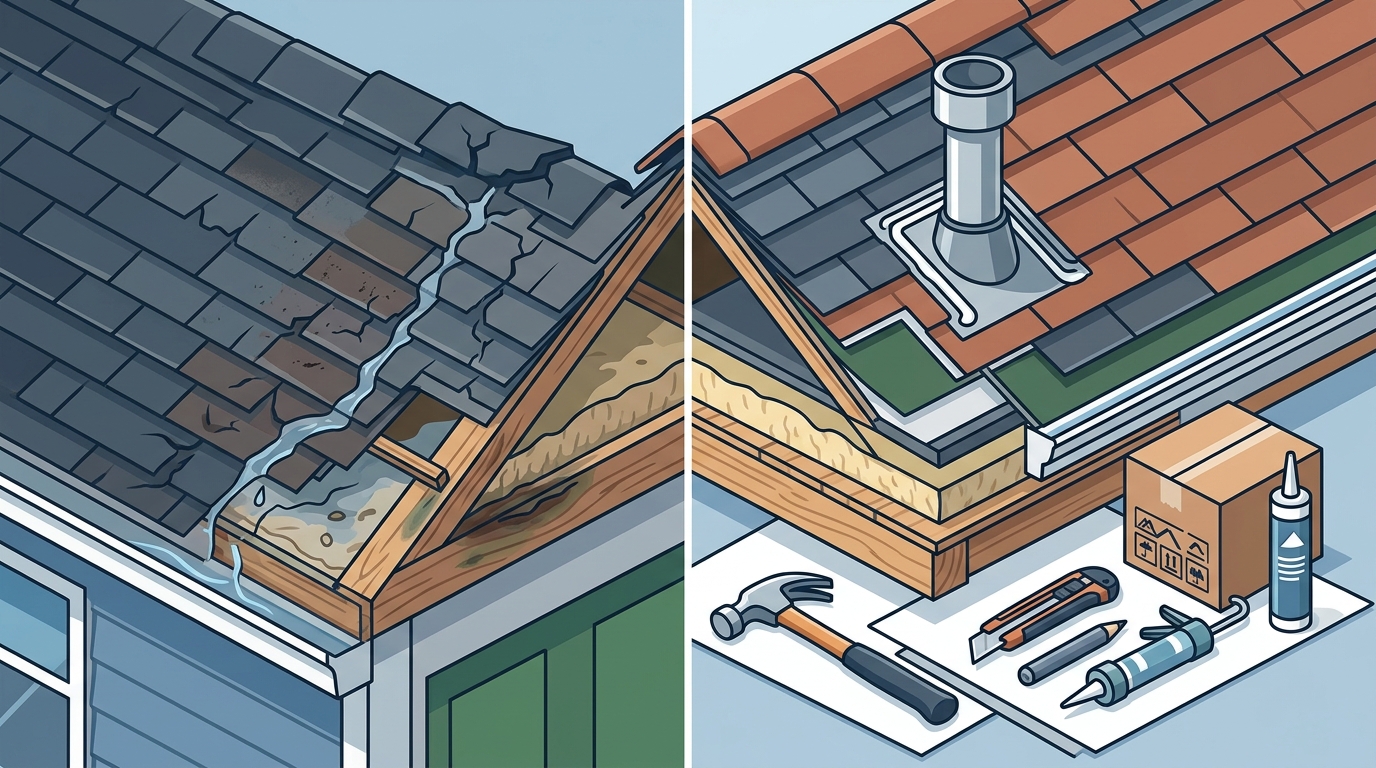
Flashing is the thin metal strip installed around roof penetrations like chimneys, vents, and skylights to direct water away. In Denver, where temperature swings are extreme, flashing can loosen or crack due to thermal expansion and contraction. Inspect the sealant around these areas for gaps, cracks, or rust. If the sealant is brittle or missing, water can easily seep underneath the shingles.
Inspect Shingles and Roof Edges
Look for shingles that are curled, cracked, or completely missing. Hail damage often creates "bruises" on shingles that are not immediately visible from the ground but weaken the material over time. Check the roof edges and valleys, where water converges. If shingles are lifted or granules are accumulating in your gutters, the roof surface is deteriorating and requires professional attention.
Examine Gutters and Downspouts
Clogged or damaged gutters cause water to back up under the roof edge, leading to fascia rot and interior leaks. Ensure your gutters are clear of debris and securely attached. In areas like Arvada, where wind exposure is high, loose gutters can pull away from the roofline, creating a direct path for water intrusion.
Step 2: Temporary Mitigation Strategies
If you discover a leak during a storm or before a professional can arrive, immediate mitigation can save your home from extensive damage. These steps are temporary fixes, not permanent solutions.
Contain the Water
Place buckets or containers under active drips. Move furniture and electronics away from the affected area. If the ceiling is bulging, use a screw to poke a small hole in the center of the bulge to release trapped water into a bucket, preventing the ceiling from collapsing.
Apply Temporary Roof Patching
If you can safely access the roof, apply roofing cement or a temporary patching tape over the suspected entry point. For larger gaps, place a piece of heavy-duty plastic over the damaged area and secure it with 2x4 boards nailed into the roof framing. This prevents further water entry until a professional repair can be made.
Document the Damage
Take clear photos and videos of the leak, the water damage inside your home, and any visible roof damage. This documentation is crucial for insurance claims and for contractors to assess the scope of work required.
Step 3: Common Repair Scenarios
Understanding the specific type of leak helps determine the appropriate repair method. Below is a summary of common roofing issues and their typical solutions.
| Issue Type | Common Causes | Typical Repair Solution | Urgency Level |
|---|---|---|---|
| Flashing Failure | Loose sealant, rust, or separation around chimneys/vents | Replace or reseal flashing with high-quality roofing cement | High |
| Shingle Damage | Hail impact, wind uplift, or age-related wear | Replace individual shingles or sections of the roof | Medium to High |
| Gutter Overflow | Clogs, improper pitch, or downspout blockages | Clean gutters, repair downspouts, or install guards | Medium |
| Sky-light Leaks | Deteriorated sealant or flashing around the unit | Reseal or replace the sky-light flashing assembly | High |
| Valley Leaks | Missing granules, cracked valley metal, or poor installation | Repair or replace valley flashing and surrounding shingles | High |
Step 4: When to Call a Professional
While minor repairs can be handled by skilled DIYers, most roof leaks require professional intervention. The complexity of modern roofing systems and the risks associated with working at height make professional diagnosis essential.
Complex Roof Structures
If your home has multiple valleys, steep pitches, or complex architectural features, DIY repairs are risky and often ineffective. Professionals have the equipment and expertise to navigate these challenges safely.
Warranty Considerations
Attempting DIY repairs can void your manufacturer's warranty. GAF Certified contractors are authorized to perform repairs that maintain warranty coverage, ensuring your investment is protected.
Insurance Claim Requirements
Most insurance companies require a professional assessment before approving claims for roof damage. A certified contractor can provide the detailed documentation and estimates needed to navigate the claims process successfully.
Step 5: Navigating Insurance Claims
For Denver homeowners, storm damage is a common cause of roof leaks. Understanding the insurance process can reduce stress and ensure you receive fair compensation.
Document Everything
Provide your insurance adjuster with the photos and videos you took during the initial inspection. Include a detailed list of damaged items and any temporary repairs made to prevent further loss.
Work with a Reputable Contractor
Choose a contractor who has experience working with insurance companies. They can help interpret your policy, communicate with the adjuster, and ensure the repair scope matches the damage assessment.
Understand Your Coverage
Review your policy to understand your deductible, coverage limits, and any exclusions related to wear and tear or specific types of damage. Apex Roofing provides guidance on insurance claims for storm and hail damage, helping homeowners understand their rights and options.
Key Takeaways
- Water travels: The source of a leak is often not directly above the visible stain. Inspect flashing, vents, and gutters thoroughly.
- Act quickly: Temporary mitigation can prevent extensive interior damage, but professional repair is essential for a permanent fix.
- Colorado weather impact: Hail, wind, and freeze-thaw cycles accelerate roof deterioration, making regular inspections critical.
- Warranty protection: DIY repairs can void manufacturer warranties. Use certified contractors to maintain coverage.
- Insurance support: Professional documentation and contractor assistance are vital for successful insurance claims.
- Local expertise: Contractors familiar with Denver's specific weather patterns can provide more accurate assessments and repairs.
- Preventative maintenance: Regular gutter cleaning and roof inspections can identify issues before they become leaks.
Frequently Asked Questions
How can I tell if my roof is leaking?
Signs include water stains on ceilings or walls, damp insulation in the attic, mold or mildew odors, and visible water droplets or streaks on roof decking during a storm.
Can I fix a roof leak myself?
Minor repairs to flashing or shingles can be DIY projects if you are comfortable working on a roof. However, complex leaks or widespread damage require professional assessment to ensure the repair is effective and safe.
How long does it take to fix a leaking roof?
Minor repairs can often be completed in a few hours. Major repairs or full roof replacements may take several days to a week, depending on the scope of work and weather conditions.
Does homeowner's insurance cover roof leaks?
Insurance typically covers sudden and accidental damage, such as that caused by hail or wind. Wear and tear, lack of maintenance, or gradual deterioration are usually excluded. Consult your policy and a professional contractor for specifics.
What is the best time of year to repair a roof?
Roof repairs can be performed year-round, but mild weather conditions in spring and fall are ideal for material adhesion and worker safety. Emergency repairs are necessary regardless of season.
How do I choose a reliable roofing contractor?
Look for licensed, insured, and certified contractors with local experience. Check reviews, ask for references, and verify their warranty offerings. Apex Roofing is a GAF Certified contractor serving the Denver area with a commitment to quality and customer satisfaction.
What is flashing and why is it important?
Flashing is a thin metal material installed at roof joints and penetrations to direct water away. It is critical for preventing leaks at vulnerable points like chimneys, vents, and valleys.
Request Your Free Inspection
Don't let a small leak become a major problem. If you suspect your roof is leaking, contact Apex Roofing for a free, professional inspection. Our team of certified experts will diagnose the issue, provide a clear repair plan, and help you navigate any insurance claims. Protect your home with trusted, local roofing support.