
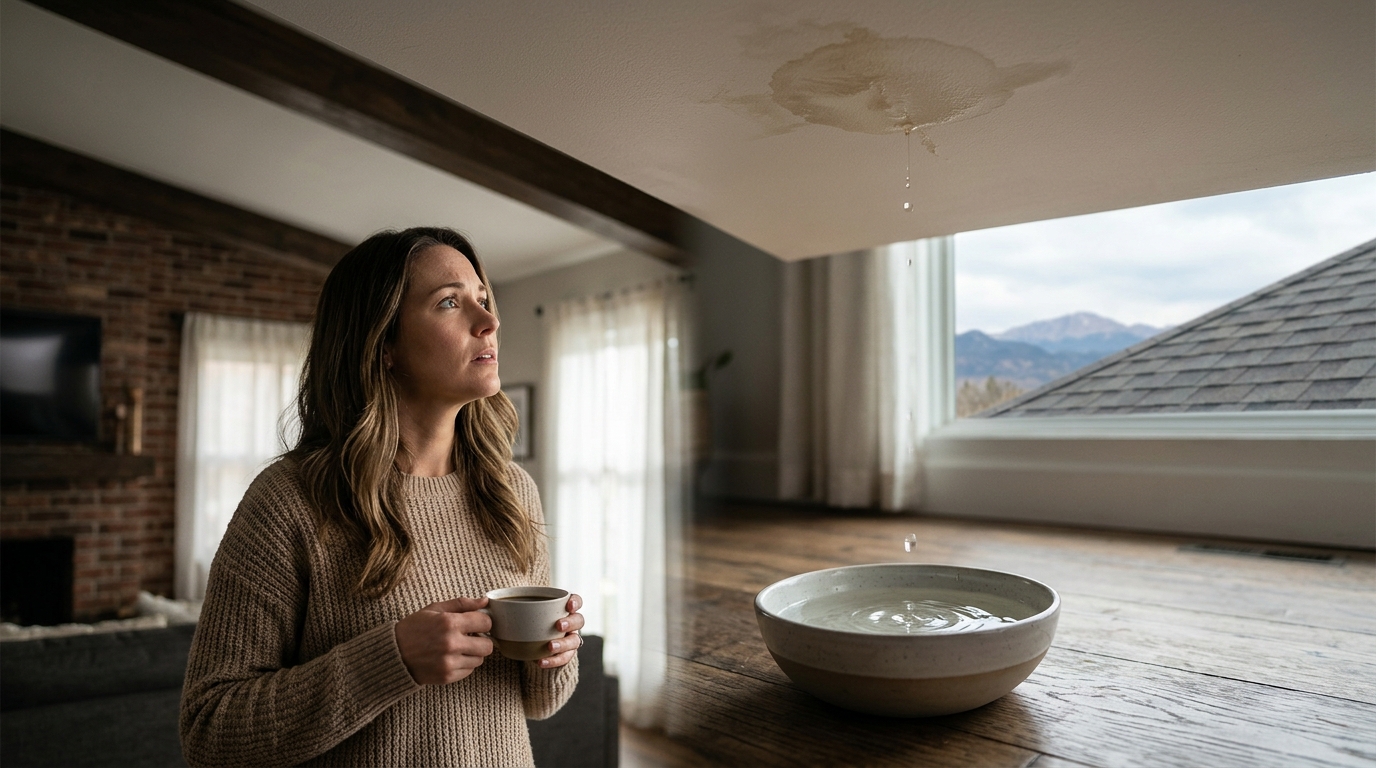
Water intrusion is one of the most destructive forces acting on residential and commercial structures in the Front Range. According to the Insurance Information Institute, water damage and freezing are among the top five home insurance claims filed annually, with the average claim costing thousands of dollars in repairs. When you notice a stain on your ceiling or hear dripping during a storm, immediate action is required to prevent structural rot, mold growth, and compromised insulation. This guide outlines the diagnostic process, temporary mitigation strategies, and the critical decision points that determine whether a DIY repair is viable or if professional intervention is necessary. (Roofing Company Arvada CO)
Step 1: Diagnose the Leak Source
Before attempting any repair, you must identify the entry point. Water often travels along rafters, flashing, or sheathing before dripping into your home, meaning the visible stain is rarely the actual breach. In Denver and the surrounding Front Range communities, specific weather patterns create unique failure points.
Inspect Flashing and Valleys
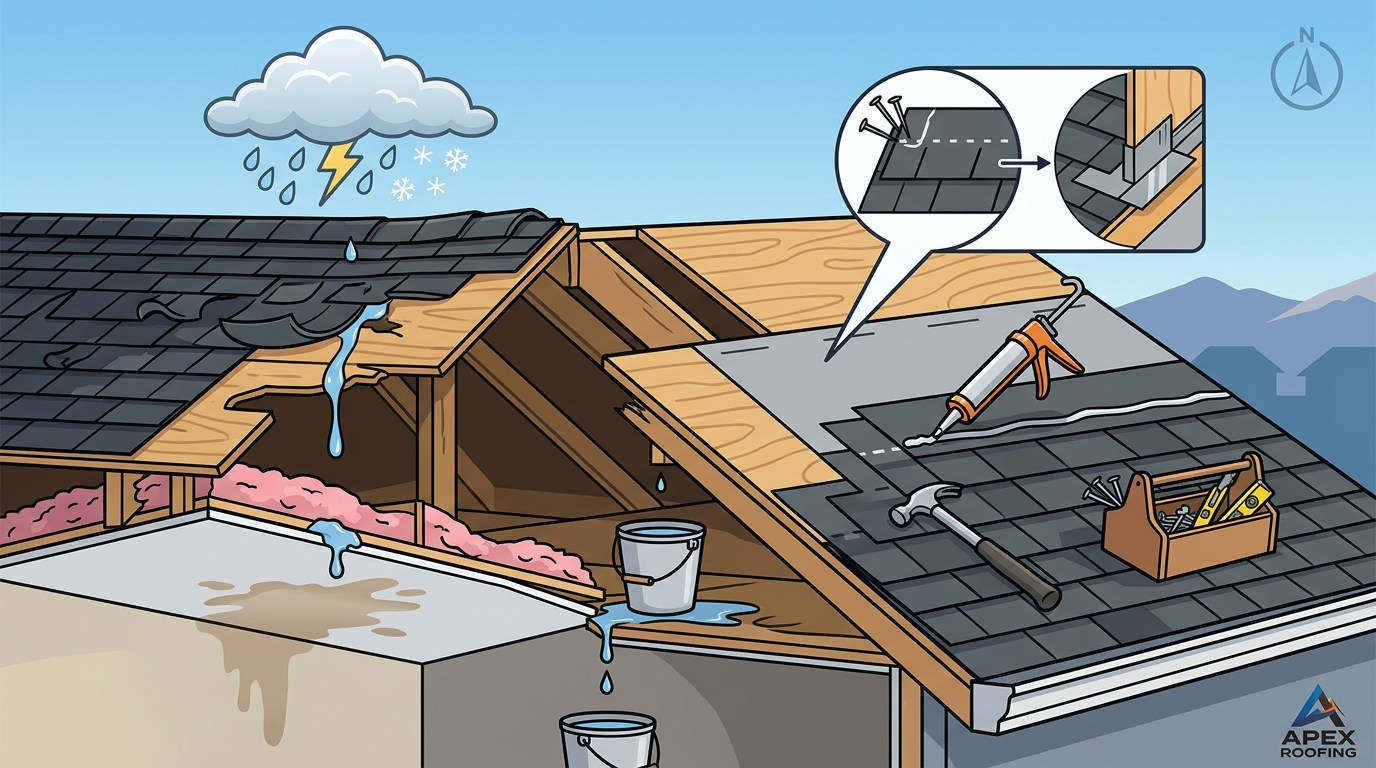
Flashing is the thin metal material installed at joints to direct water away from vulnerable areas. Flashing is a metal strip installed at roof joints to prevent water intrusion. Common failure points include chimneys, skylights, and vent pipes. If the flashing is corroded, loose, or missing sealant, water will seep underneath the shingles. Valleys, where two roof slopes meet, are also high-risk areas for debris accumulation that can force water upward under the roofing material.
Check for Hail and Wind Damage
Colorado experiences severe weather events that compromise roof integrity. Hail can crack shingles and dent metal vents, creating micro-fractures that allow water entry. Wind can lift shingle edges, breaking the adhesive seal. If you have recently experienced a storm, inspect your roof for granule loss in gutters or bruised shingles that feel soft to the touch.
Examine Gutters and Downspouts
Clogged gutters cause water to back up under the roof edge, leading to rot in the fascia and soffit. Ensure your drainage system is clear of leaves and debris. Proper water management is essential for maintaining the longevity of your roof system.
Step 2: Temporary Mitigation Strategies
If you cannot access your roof safely or immediately, take steps to minimize interior damage. These measures are temporary and do not replace professional repair.
Contain the Water
Place buckets or containers under active drips. If the water is spreading, stretch a tarp across the ceiling to channel the water into a single collection point. Puncturing the bulge in the drywall with a screwdriver can relieve pressure and prevent catastrophic ceiling collapse.
Reduce Attic Moisture
If safe to enter, go into your attic during daylight hours. Look for sunlight piercing through the roof deck, which indicates a direct hole. Use a chalk or pencil to mark the spot from the inside. This helps professionals locate the breach from the exterior. Ensure your attic ventilation is not blocked, as poor airflow can exacerbate moisture issues.
Step 3: Common Repair Methods
Depending on the severity and cause of the leak, different repair methods are applicable. Always prioritize safety and use proper fall protection equipment when working on a roof.
Shingle Repair
For damaged or missing shingles, the repair process involves lifting the surrounding shingles, removing the nails securing the damaged piece, and replacing it with a new shingle of the same type. Apply roofing cement under the edges of the surrounding shingles to re-seal them. This method is effective for minor wind damage or isolated hail hits.
Flashing Repair
If flashing is the culprit, remove the old sealant and any corroded sections. Clean the surface thoroughly and apply a high-quality roofing cement or replace the flashing entirely with new galvanized steel or aluminum. Ensure the new flashing is integrated correctly under the shingles to direct water away from the joint.
Sealant Application
For small cracks around vent pipes or chimneys, apply a urethane-based roofing sealant. This material remains flexible and adheres well to various surfaces, providing a watertight barrier against minor leaks.
Step 4: When to Call a Professional
While minor repairs can be DIY projects, certain situations require the expertise of a licensed roofing contractor. Attempting complex repairs without proper knowledge can void warranties and lead to further damage.
Extensive Water Damage
If the leak has been active for an extended period, the underlying roof deck may be rotting. Replacing rotted wood requires structural knowledge and tools. Additionally, mold remediation may be necessary, which is a health hazard best handled by professionals.
Steep or High Roofs
Working on steep slopes or multi-story buildings poses significant fall risks. Professional roofers have the necessary safety equipment and training to work at heights safely.
Insurance Claim Requirements
If the damage is storm-related, your insurance company may require an inspection by a certified contractor. Apex Roofing provides comprehensive insurance claim guidance to help navigate the paperwork and adjuster meetings, ensuring you receive fair compensation for repairs.
Step 5: Navigating Insurance Claims
Understanding your policy is crucial for managing repair costs. Most homeowners' insurance policies cover sudden and accidental damage, such as that caused by hail or wind. However, they typically exclude damage resulting from lack of maintenance or wear and tear.
Document Everything
Take photos and videos of the damage from multiple angles. Keep records of any temporary repairs made and receipts for materials purchased. This documentation supports your claim and helps professionals assess the extent of the damage.
Work with Certified Contractors
Using a GAF Certified™ Roofing Contractor can streamline the claims process. These contractors are trained to identify storm damage accurately and provide detailed estimates that align with insurance standards. They can also advocate on your behalf during adjuster meetings.
Understand Your Coverage
Review your policy details regarding deductibles, coverage limits, and specific exclusions. If you are unsure, consult with your insurance agent or a roofing professional who can explain the implications of your coverage.
Key Takeaways
- Immediate Action: Address leaks promptly to prevent structural rot and mold growth.
- Diagnosis First: Identify the entry point, often flashing or valleys, before attempting repairs.
- Temporary Fixes: Use tarps and buckets to mitigate interior damage until professional help arrives.
- Safety First: Avoid working on steep or high roofs without proper safety equipment.
- Professional Help: Engage licensed contractors for extensive damage or insurance claims.
- Insurance Support: Document damage thoroughly and work with certified contractors for smoother claims.
- Local Expertise: Denver's weather patterns require specific knowledge of hail and wind damage repair.
Frequently Asked Questions
How can I tell if my roof is leaking?
Signs include water stains on ceilings or walls, damp insulation in the attic, dripping sounds during rain, and granules in gutters. Early detection prevents extensive damage.
Can I fix a leaking roof myself?
Minor repairs like resealing flashing or replacing a few shingles can be DIY projects. However, extensive damage or steep roofs require professional intervention for safety and effectiveness.
How long does a roof repair take?
Minor repairs may take a few hours, while larger replacements can take several days. The timeline depends on the extent of the damage and weather conditions.
What is the best material for repairing a leak?
Roofing cement and urethane sealants are effective for small leaks. For larger areas, matching shingles or metal flashing may be necessary. Always use materials compatible with your existing roof.
Does homeowners insurance cover roof leaks?
Insurance typically covers sudden damage from storms or wind. Damage from wear and tear or lack of maintenance is usually excluded. Check your policy details for specifics.
How do I find a reliable roofing contractor in Denver?
Look for licensed, insured, and certified contractors with local experience. Check reviews and ask for references. Apex Roofing offers free roof inspections to help you assess your situation.
What should I do if I suspect storm damage?
Document the damage with photos and contact a professional inspector immediately. Do not attempt repairs until an adjuster has assessed the claim to avoid coverage issues.
Contact Apex Roofing for Expert Roof Repair
Don't let a small leak become a major structural issue. Apex Roofing provides expert diagnosis, transparent estimates, and high-quality repairs for residential and commercial properties across the Denver metro area. Our team is dedicated to restoring your roof's integrity and protecting your home from Colorado's harsh weather. Contact Apex Roofing today to schedule your free inspection and secure your property with trusted, local expertise.