
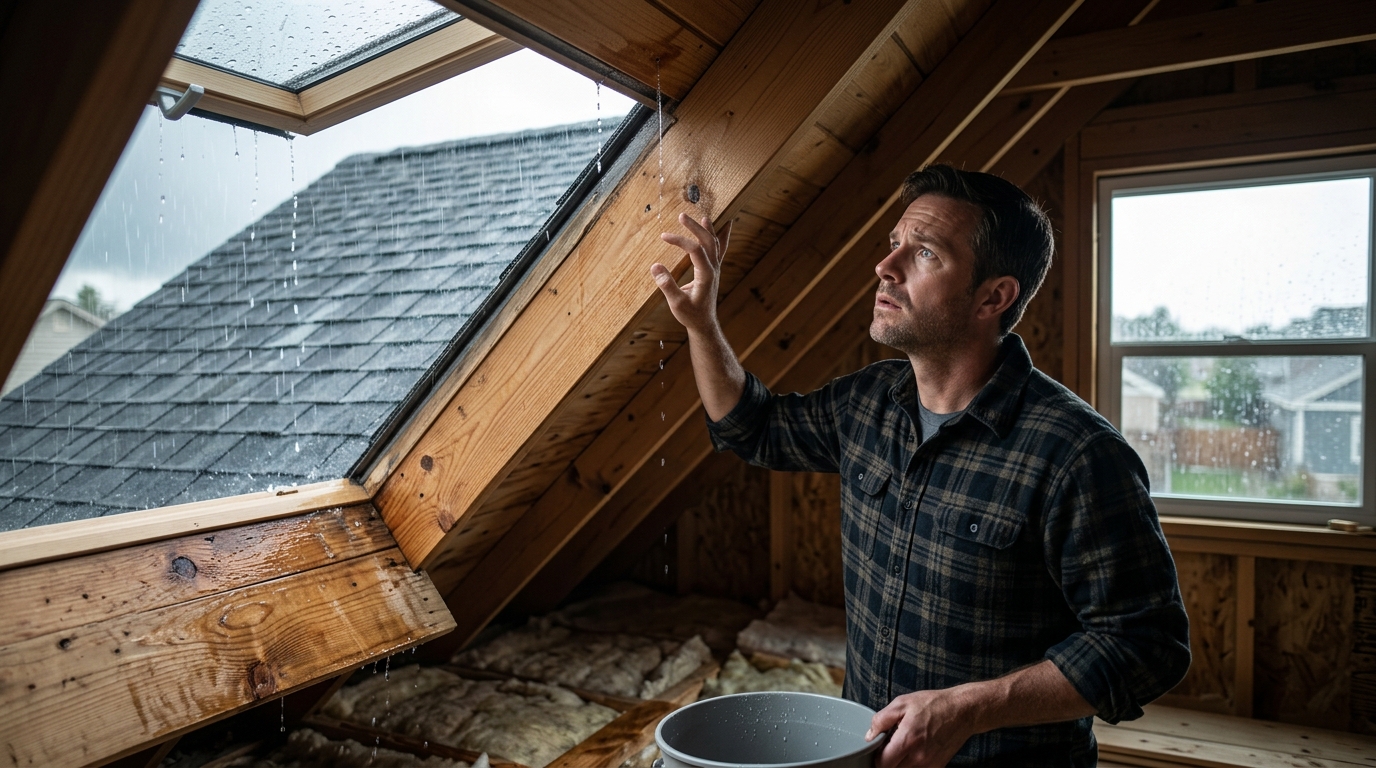
Water intrusion is one of the most destructive forces facing Colorado properties. According to the National Weather Service, the Denver metro area experiences an average of 23 days per year with measurable precipitation, including heavy snow loads and intense hail events that compromise roofing integrity. When a leak appears, it signals a breach in your home’s primary defense system. Ignoring it allows moisture to rot structural framing, ruin insulation, and create mold hazards. This guide outlines the immediate diagnostic steps, temporary containment methods, and professional repair pathways available to homeowners in the Greater Denver area. (About Apex Roofing Colorado)
Step 1: Diagnose the Leak Source
Before calling a contractor, you must locate the entry point. Water travels. The spot where water drips on your ceiling is rarely the spot where it entered the roof. In Denver’s high-altitude climate, thermal expansion and contraction cause materials to shift, creating gaps that allow water to migrate along rafters.
Common Entry Points
Flashing Failures are the most frequent cause of leaks. Flashing is the thin metal strip installed at joints to direct water away from seams. If the flashing around chimneys, vent pipes, or skylights is cracked or lifted, water will seep directly into the attic. Valley Leaks occur where two roof slopes meet. If the valley metal is exposed or the shingles are worn, water can overwhelm the drainage path during heavy rain.
Shingle Damage is another critical factor. Hail storms in Colorado can bruise or crack asphalt shingles, breaking the waterproof seal. Look for missing granules in your gutters or shingles that appear curled or buckled. Gutter Issues also contribute to roof leaks. When gutters are clogged with pine needles or debris, water backs up under the roof edge, rotting the fascia and soffit. This is known as ice damming in winter or overflow in spring.
Attic Inspection
Go into your attic during daylight hours with a bright flashlight. Look for dark streaks on the wood sheathing or daylight piercing through the roof deck. Mark these areas with tape. If you find wet insulation, press it with a dry cloth. If the cloth comes away damp, the leak is active. Do not attempt to climb onto a wet or steep roof to find the source. Stay in the attic and document what you see.
Step 2: Implement Temporary Repairs
If you cannot call a professional immediately, you must stop the water from damaging your interior. Temporary repairs are not permanent solutions. They are emergency measures to buy time until a certified roofer arrives.
Interior Mitigation
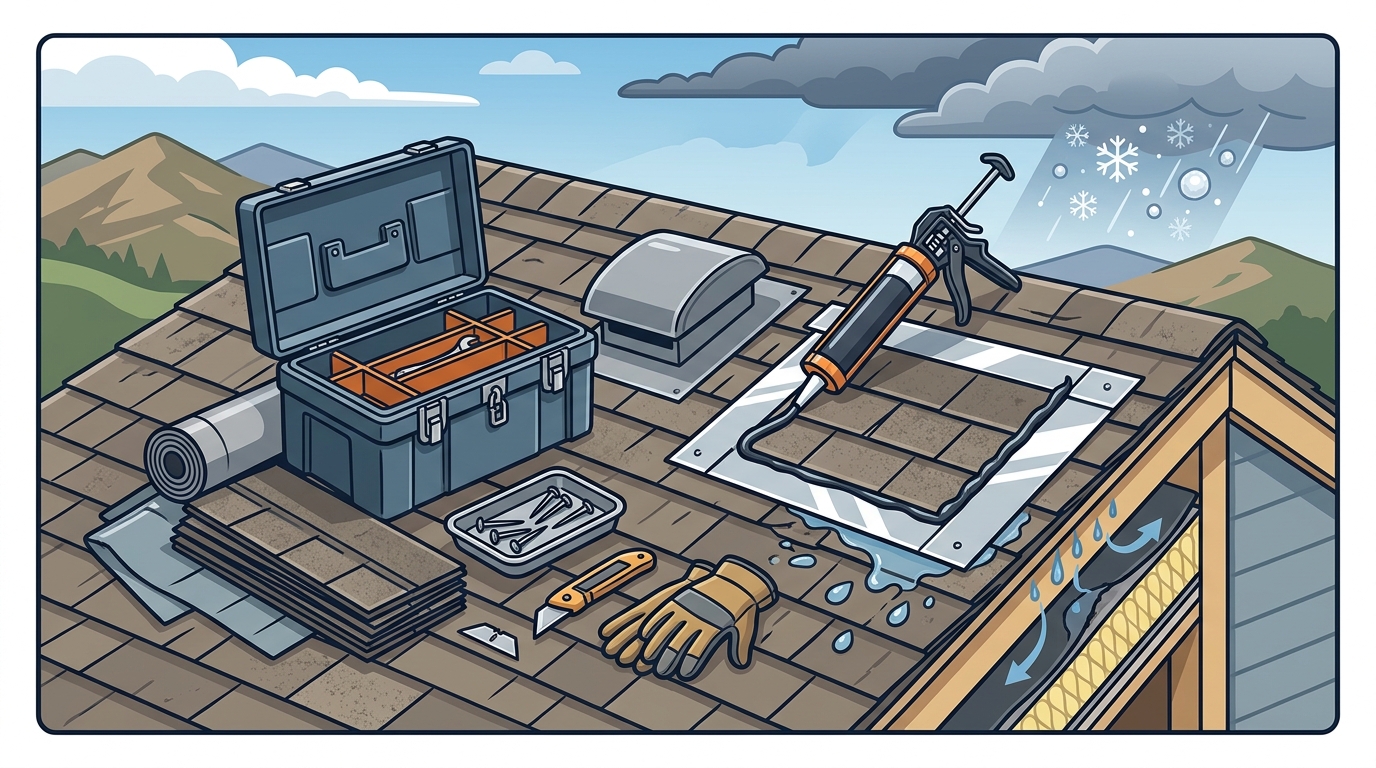
Place a bucket under the drip. If the water is spreading, stretch a tarp across the attic floor to catch it. Move furniture and electronics away from the affected area. If the ceiling bulge is large, puncture it with a screwdriver to release the trapped water. This prevents the drywall from tearing and causing a larger mess. Turn off electricity to the affected room if the leak is near light fixtures.
Exterior Emergency Patching
If you can safely access the roof, look for the source identified in your attic. For small holes or cracked flashing, apply a generous amount of roofing cement. Use a putty knife to spread it over the breach and extend it two inches beyond the damage on all sides. For larger tears in shingles, place a piece of metal flashing underneath and seal the top with cement. Roofing tape can also be used for quick fixes on flat sections, but it is less durable than cement in extreme temperatures.
Never use standard duct tape or household glue. These materials will fail within days under UV exposure and temperature swings. If the roof is steep, icy, or too high to reach safely, do not attempt exterior repairs. The risk of falling outweighs the benefit of a temporary patch. Contact a local contractor immediately.
Step 3: Professional Assessment & Insurance
Once the immediate water threat is contained, you need a professional evaluation. In Colorado, storm damage is often covered by homeowners insurance, but the claims process is complex. Apex Roofing provides free inspections to determine if your leak is due to wear and tear or a covered storm event.
When to Call a Pro
You should call a professional if:
- The leak persists after temporary patching.
- You see sagging in the roof deck or ceiling.
- The roof is over 15 years old.
- You suspect hail or wind damage.
Professional roofers use moisture meters and infrared cameras to detect hidden water damage. They can identify compromised underlayment that is not visible to the naked eye. This thorough assessment ensures that the repair addresses the root cause, not just the symptom.
Insurance Claim Guidance
If the leak is storm-related, your insurance company may cover the repair. Apex Roofing assists homeowners with the entire claims process. We document the damage, provide detailed estimates, and communicate directly with your adjuster. This advocacy ensures that the scope of work matches the actual damage, preventing underpayment or denied claims.
Step 4: Choosing the Right Repair Method
Once the source is identified, the repair method depends on the extent of the damage. Minor leaks may only require spot repairs, while widespread damage necessitates a full replacement.
Repair vs. Replacement
Here is a comparison of common scenarios:
| Issue Type | Typical Cause | Recommended Solution | Longevity |
|---|---|---|---|
| Small Flashing Gap | Thermal Expansion | Reseal or Replace Flashing | 10+ Years |
| Missing Shingles | Wind Damage | Shingle Replacement | 5-10 Years |
| Valley Leak | Wear & Tear | Valley Metal Repair | 7-15 Years |
| Widespread Granule Loss | Aging | Full Roof Replacement | 20-30 Years |
Material Considerations
For repairs, match the existing material. If you have architectural shingles, use architectural shingles for the patch. Mismatched materials can look unsightly and may not seal correctly. For full replacements, consider impact-resistant shingles. These are rated to withstand hail, which is common in Denver. They often qualify for insurance discounts and provide better protection against future leaks.
Key Takeaways
- Water Travels: The leak entry point is rarely directly above the interior stain. Always inspect the attic first.
- Flashing is Critical: Check metal seals around chimneys and vents. These are the most common failure points in Colorado.
- Temporary Fixes: Use roofing cement, not household glue. Only attempt exterior repairs if it is safe to do so.
- Insurance Advocacy: Apex Roofing guides clients through the insurance claims process to ensure fair coverage for storm damage.
- Local Expertise: Denver’s freeze-thaw cycles accelerate roof aging. Regular inspections are vital for longevity.
- Professional Assessment: Moisture meters and infrared cameras reveal hidden damage that visual inspections miss.
- Warranty Coverage: Apex Roofing offers a 5-year labor warranty on new roofs, providing peace of mind for homeowners.
Frequently Asked Questions
How long does it take to fix a leaking roof?
Minor repairs, such as resealing flashing or replacing a few shingles, can be completed in a few hours. More extensive repairs or full roof replacements typically take one to three days, depending on the size of the roof and weather conditions.
Can I fix a roof leak myself?
You can perform temporary interior mitigation and safe exterior patching for minor issues. However, permanent repairs require specialized tools and materials. Attempting complex repairs on steep or high roofs is dangerous and often voids warranties. Professional repair ensures the leak is fully resolved.
Does homeowners insurance cover roof leaks?
Insurance typically covers leaks caused by sudden, accidental events like hail or wind storms. It does not cover leaks resulting from normal wear and tear, lack of maintenance, or age. Apex Roofing helps determine if your damage is covered.
What is the best time of year to repair a roof?
emergency repairs should be done immediately regardless of season. For planned replacements, spring and fall are ideal in Denver. These seasons offer moderate temperatures, which help roofing materials seal properly. Summer heat can make asphalt shingles too soft, while winter cold can make them brittle.How do I know if my roof needs replacement instead of repair?
If your roof is over 20 years old, has widespread granule loss, or has multiple leaks, replacement is likely more cost-effective. Frequent repairs add up and may not address underlying structural issues. A professional inspection will provide a clear recommendation based on your roof’s condition.
What is flashing and why does it leak?
Flashing is thin metal installed at roof joints to direct water away. It leaks when it becomes loose, cracked, or corroded. Thermal expansion and contraction in Colorado’s climate can pull flashing away from the roof surface, creating gaps for water to enter.
How much does it cost to fix a roof leak?
Costs vary widely based on the damage. Minor repairs may cost a few hundred dollars, while major structural repairs or full replacements can cost thousands. Apex Roofing provides free inspections and detailed estimates to help you budget accurately.
Contact Apex Roofing for Expert Roof Repair
Do not let a small leak become a major disaster. Apex Roofing is a trusted Denver roofing contractor with over a decade of experience protecting Colorado homes. We offer free inspections, insurance claim guidance, and warranty-backed work. Call us at 303-691-5035 or contact us online to schedule your free roof inspection today.