
Denver homeowners face unique weather pressures that dictate when a roof needs fixing versus replacing. According to the National Weather Service, Colorado experiences some of the most frequent hail events in the United States, with Front Range communities seeing significant storm damage annually. This environmental reality means that minor leaks can quickly escalate into systemic failures if the underlying criteria for repair versus replacement are not carefully evaluated. Understanding these distinctions protects your investment and ensures you do not waste money on temporary fixes for problems that require total reconstruction. (About Apex Roofing Colorado)
Age and Lifespan of Your Roofing Materials
The chronological age of your roof is the first and most critical data point in determining whether to repair or replace. Asphalt shingles, the most common roofing material in the Denver metro area, typically last between 15 and 25 years. However, the high-altitude sun exposure in Colorado can accelerate UV degradation, potentially shortening that lifespan by several years compared to lower-altitude regions. (Roofing Company Boulder CO)
If your roof is approaching or has exceeded its expected lifespan, repairs become a temporary bandage rather than a solution. Roof replacement is the only viable option when the underlying structure is compromised by age. Continuing to patch an aging roof often leads to a cycle of recurring leaks, as the surrounding shingles become brittle and prone to failure.
At Apex Roofing, we assess the remaining life expectancy of your current system during every free inspection. If your roof is less than 10 years old, repair is often a cost-effective strategy. If it is older than 15 years, we strongly advise evaluating replacement options to avoid unexpected failures during the next storm season.
Scope and Severity of Damage
Not all damage is created equal. The distinction between a repairable issue and a full replacement often lies in the percentage of the roof surface affected and the type of damage present. Localized damage, such as a few missing shingles or a small leak around a chimney, is typically repairable. However, widespread granule loss, curling edges, or multiple leaks across different zones indicate systemic failure.
Hail damage is particularly deceptive. It can cause bruising to shingles that does not leak immediately but weakens the material's integrity. According to industry standards from the National Roofing Contractors Association, if more than 30% of your roof is damaged, replacement is usually more economical than repair. This threshold exists because patching scattered hail damage often results in a mismatched appearance and continued vulnerability.
Wind damage is another critical factor. If your roof has lost significant portions of its wind resistance due to lifted edges or torn shingles, a repair may not restore the original wind rating. In these cases, a full replacement ensures your home meets current building codes and withstands future Front Range wind events.
Navigating Insurance Claims and Coverage
For many Denver homeowners, the decision between repair and replacement is heavily influenced by insurance coverage. Storm damage, such as that from hail or wind, is often covered by homeowners insurance policies. However, insurance companies typically require a thorough assessment to determine if the damage justifies a full replacement or if a repair is sufficient.
Apex Roofing provides specialized insurance claim guidance to help property owners navigate this complex process. We work directly with adjusters to document damage accurately, ensuring that you receive the coverage you are entitled to. In many cases, what appears to be a repairable leak from the inside is actually widespread hail damage that qualifies for a full replacement under your policy.
It is crucial to have a professional advocate on your side. Without expert documentation, insurers may approve only repairs, leaving you to pay out-of-pocket for hidden damage that fails later. Our team ensures that all visible and hidden damage is accounted for, protecting your financial interest and ensuring the longevity of your roof.
Long-Term Cost Analysis: Repair vs. Replace
While repairs are cheaper in the short term, they can be more expensive over time. The concept of "repair fatigue" is real in roofing. If you repeatedly fix the same roof, the cumulative cost of multiple repairs can eventually exceed the cost of a single replacement. Furthermore, each repair disrupts your home and requires additional contractor visits.
Consider the following financial perspective: a roof repair might cost a few hundred dollars, but if it fails in six months, you pay again. A new roof, while a larger initial investment, provides 20 to 30 years of protection. This long-term value includes increased home resale value and improved energy efficiency.
When evaluating costs, also consider the value of your time and peace of mind. Dealing with recurring leaks and temporary fixes is stressful. A new roof eliminates these worries and provides a clean, warranty-backed solution. Apex Roofing offers transparent estimates and financing options to make the transition to a new roof manageable for any budget.
Energy Efficiency and Material Upgrades
One often overlooked criterion for replacement is energy efficiency. Older roofs lack the reflective properties and insulation standards of modern roofing systems. Upgrading to cool roof materials or improved underlayment can significantly reduce your home's cooling costs, especially during Denver's hot summers.
Modern roofing materials also offer better durability against freeze-thaw cycles. These cycles, common in the Colorado Front Range, cause materials to expand and contract, leading to cracks and leaks. Newer shingles are engineered to resist this movement, providing superior protection against temperature fluctuations.
If your current roof is old and inefficient, replacement offers an opportunity to upgrade your home's performance. This is not just about fixing a leak; it is about enhancing your home's overall resilience and comfort. Apex Roofing uses premium GAF Certified™ materials that are designed to withstand Colorado's harsh climate while maximizing energy savings.
Service Comparison Summary
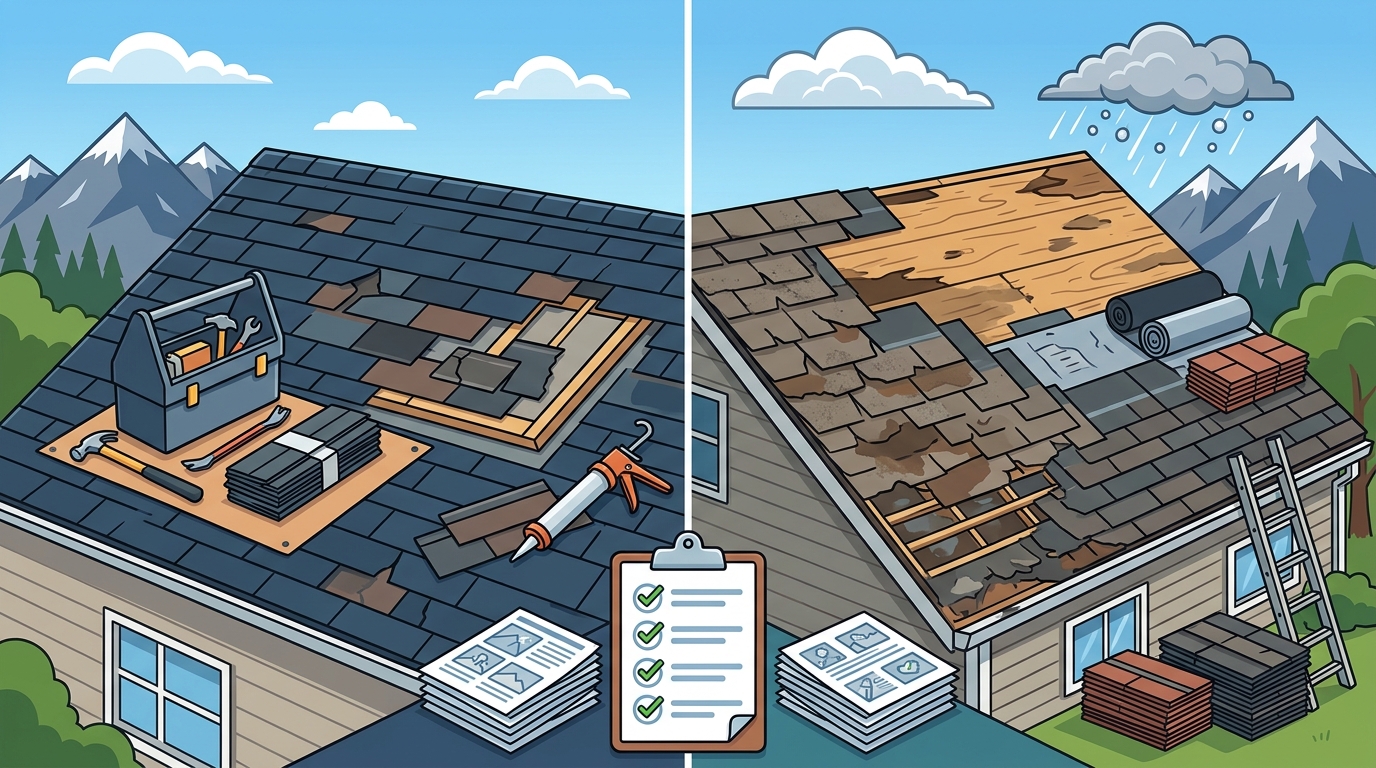
The table below summarizes the key differences between roof repair and replacement to help you make an informed decision.
| Criteria | Roof Repair | Roof Replacement |
|---|---|---|
| Best For | Minor, localized damage; roofs under 10 years old | Widespread damage; roofs over 15 years old |
| Cost | Lower upfront cost | Higher upfront cost, better long-term value |
| Lifespan | Extends life by 2-5 years | Provides 20-30 years of new protection |
| Insurance | Often requires high deductibles or out-of-pocket | Often fully covered by storm damage claims |
| Efficiency | No improvement in energy efficiency | Opportunity to upgrade to energy-efficient materials |
Key Takeaways
- Age Matters: If your roof is over 15 years old, replacement is likely more cost-effective than repeated repairs.
- Damage Threshold: If more than 30% of the roof is damaged, replacement is the standard industry recommendation.
- Insurance Advocacy: Professional documentation can turn a denied repair claim into a covered replacement.
- Local Expertise: Denver's hail and wind require specific materials and installation techniques to ensure longevity.
- Warranty Protection: Apex Roofing offers a 5-year labor warranty on new roofs, providing long-term peace of mind.
- Energy Savings: Newer roofing materials can significantly reduce cooling costs in the Colorado climate.
- Free Inspections: A professional assessment is the only way to accurately determine your roof's condition.
Frequently Asked Questions
How do I know if my roof needs repair or replacement?
The age of your roof and the extent of the damage are the primary factors. If your roof is less than 10 years old and has isolated damage, repair is usually sufficient. If it is older than 15 years or has widespread damage, replacement is recommended.
Can hail damage always be covered by insurance?
Hail damage is typically covered by homeowners insurance, but the extent of the damage must meet your policy's deductible and coverage limits. A professional inspection can help determine if the damage qualifies for a full replacement claim.
What is the average lifespan of a roof in Denver?
Due to high-altitude sun exposure and frequent weather changes, asphalt shingle roofs in Denver typically last 15 to 20 years, which is shorter than the national average of 20 to 25 years.
Is it cheaper to repair or replace a roof?
Repairs are cheaper upfront, but replacement offers better long-term value. If you find yourself repairing the same roof multiple times, the cumulative cost will exceed the price of a new roof.
How long does a roof replacement take?
A standard residential roof replacement in the Denver area typically takes 1 to 3 days, depending on the size of the home and the complexity of the roof. Commercial projects may take longer.
Do you offer financing for roof replacements?
Yes, Apex Roofing offers flexible financing options to make roof replacements affordable for homeowners and businesses across the Front Range.
What is a GAF Certified Contractor?
A GAF Certified Contractor is a roofing company that has met strict standards for training, experience, and financial stability. This certification allows them to offer enhanced warranties, such as the GAF System Plus Limited Warranty.
Schedule Your Free Inspection
Do not wait for a leak to become a major problem. Whether you need a quick repair or a full replacement, Apex Roofing provides the local expertise and honest guidance you need. Our team is ready to assess your roof and provide a clear, transparent recommendation.
Contact Apex Roofing today to schedule your free roof inspection. We serve Denver, Arvada, Aurora, and the entire Colorado Front Range. Call us at 303-691-5035 to get started.