
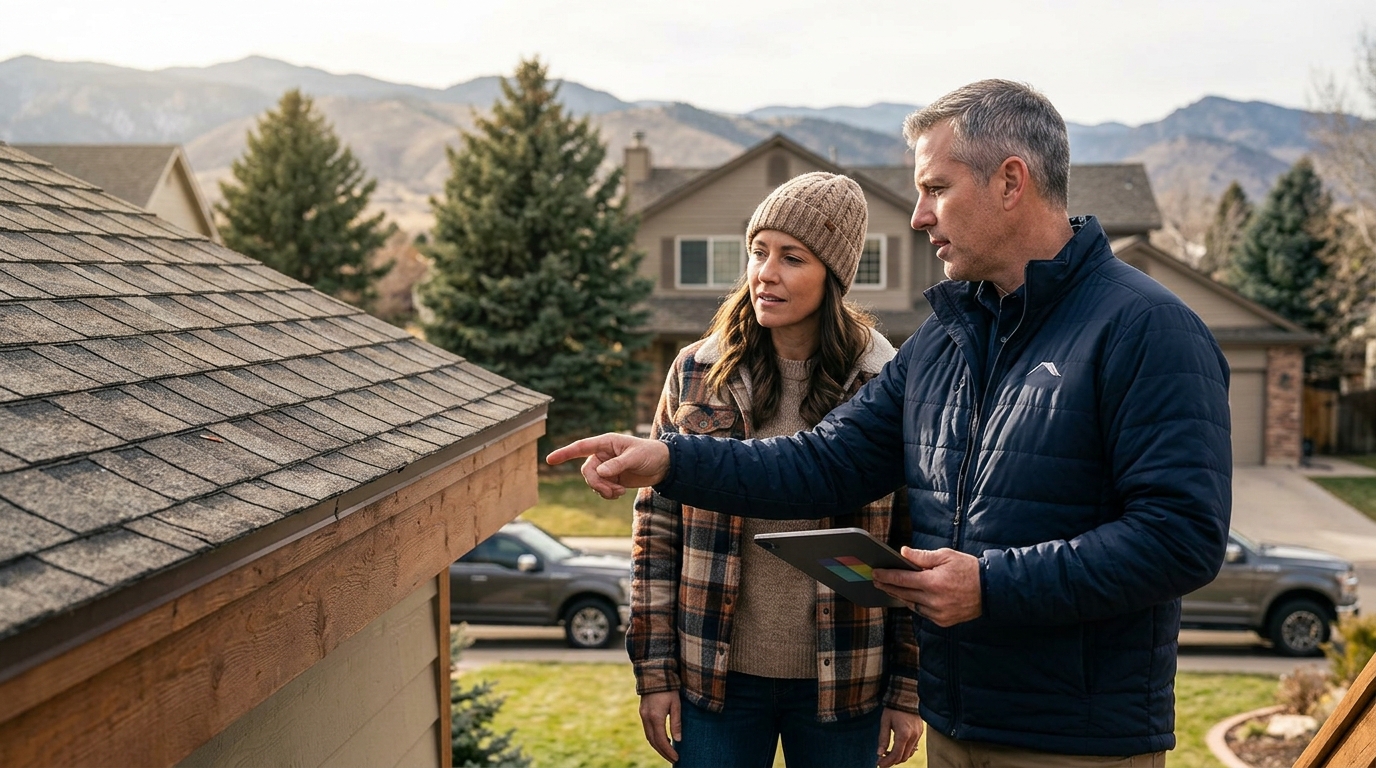
Homeowners in Colorado face a unique set of environmental pressures that accelerate roof degradation. According to recent industry data, hail storms in the Front Range cause an average of $2 billion in property damage annually, making proactive assessment not just a maintenance task but a financial necessity. When a roof reaches the end of its functional life, the decision to replace rather than repair requires a rigorous evaluation of structural integrity, material lifespan, and local climate impacts. This guide outlines the critical assessment standards necessary to make an informed roofing replacement decision, ensuring that property owners in Denver, Arvada, and the broader Colorado Front Range invest in long-term protection.
Understanding Roof Lifespan and Material Degradation
The first standard in any critical assessment is determining the age and expected lifespan of the current roofing system. Different materials degrade at varying rates depending on exposure to ultraviolet radiation, temperature fluctuations, and precipitation. Asphalt shingles, the most common roofing material in residential Colorado homes, typically last between 15 and 25 years. However, high-altitude sun exposure can reduce this lifespan by up to 20 percent compared to lower elevations.
Asphalt shingles are a composite roofing material made of a fiberglass or organic mat saturated with asphalt and coated with mineral granules. When these granules are lost due to hail impact or wind uplift, the underlying asphalt is exposed to UV rays, leading to rapid brittleness and cracking. Metal roofing systems, often used in commercial applications or modern residential designs, can last 40 to 70 years if properly maintained. Flat commercial roofs, such as TPO or EPDM membranes, generally have a lifespan of 10 to 20 years before requiring full replacement.
Apex Roofing, a GAF Certified™ Roofing Contractor based in Englewood, emphasizes that age alone is not the sole indicator for replacement. A 10-year-old roof that has suffered significant hail damage may require immediate replacement, while a 20-year-old roof in a sheltered area might have several years of service life remaining. The key is to correlate material age with current physical condition.
Identifying Critical Damage vs. Cosmetic Wear
Distinguishing between cosmetic wear and structural failure is the most critical step in the assessment process. Cosmetic wear includes minor granule loss, slight discoloration, or isolated missing shingles that do not compromise the roof's water-shedding ability. Critical damage, however, indicates that the roof system has failed to protect the underlying structure.
Hail and Wind Impact Assessment
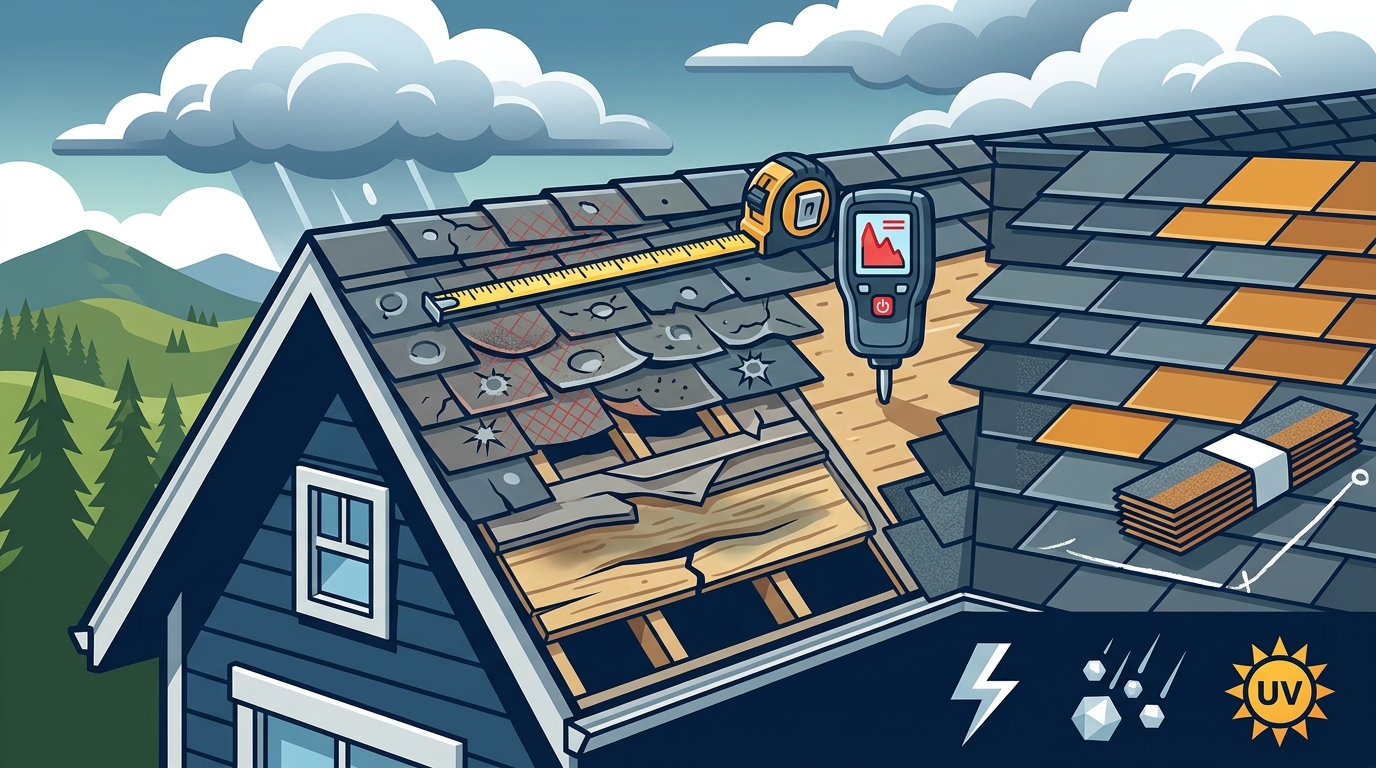
Colorado's Front Range is prone to severe hail storms that can cause immediate and hidden damage. Critical assessment involves looking for bruising on shingles, which appears as dark spots where the granule layer has been dislodged, exposing the asphalt mat. Wind uplift can cause shingles to lift, crack, or detach completely from the nail line. If more than 30 percent of the roof surface shows signs of hail bruising or wind damage, a full replacement is often more cost-effective than repeated repairs.
According to the Insurance Institute for Home and Business Safety, hail damage is the leading cause of premature roof failure in the United States. Out-of-state contractors often exploit this by offering quick repairs that do not address the underlying material fatigue. Apex Roofing provides comprehensive storm damage inspections to identify these critical issues accurately.
Leakage and Interior Signs
Water intrusion is the ultimate failure of a roof system. Critical assessment must include an inspection of the attic for daylight penetration, water stains on rafters, or mold growth. Even if the exterior appears intact, compromised flashing around chimneys, vents, or valleys can allow water to seep into the home. Flashing is a thin material used to prevent water from entering the joints and seams of a roof. If flashing is corroded, loose, or improperly sealed, it represents a critical failure point that often necessitates a full roof replacement to ensure long-term integrity.
Structural and Ventilation Analysis
A roof is a system, not just a surface. The condition of the underlying structure and the ventilation system are critical standards for replacement decisions. Poor ventilation can cause heat and moisture to build up in the attic, leading to premature aging of shingles and rotting of the roof deck.
Roof Deck Integrity
During a replacement assessment, the condition of the roof deck (sheathing) must be evaluated. If the plywood or OSB boards are soft, spongy, or show signs of widespread rot, a simple shingle replacement is insufficient. The deck must be replaced to provide a solid base for the new roofing system. This is particularly common in older homes in areas like Arvada's Olde Town, where original construction materials may have degraded over decades.
Ventilation Balance
Proper ventilation requires a balance of intake (soffit) and exhaust (ridge or gable) vents. If the ventilation is blocked or inadequate, the roof can experience "thermal shock," where extreme temperature swings cause materials to expand and contract rapidly, leading to cracking and fastener failure. Apex Roofing ensures that every residential roofing project includes a ventilation audit to prevent future premature failure.
Insurance and Warranty Implications
The financial aspect of roof replacement is heavily influenced by insurance coverage and existing warranties. Understanding these factors can significantly impact the decision to replace now or later.
Insurance Claim Viability
If the roof damage is caused by a covered peril, such as hail or wind, homeowners may be eligible for an insurance claim. However, insurance companies often require a certain level of damage to approve a full replacement. For example, if less than 15 percent of the roof is damaged, they may only approve repairs. A professional assessment can determine if the damage meets the threshold for a full replacement claim. Apex Roofing offers insurance claim guidance to help property owners navigate this complex process.
Warranty Transferability
Existing manufacturer warranties may still be active, but they often require professional installation and maintenance to remain valid. If the original installer is no longer in business or the warranty has expired, the cost of replacement falls entirely on the property owner. GAF Certified contractors, like Apex Roofing, can offer enhanced warranties such as the GAF System Plus Limited Warranty, which provides coverage for both materials and workmanship for up to 25 years.
Comparing Replacement Options
Once the decision to replace is made, selecting the right materials and service provider is crucial. The following table compares common roofing options available for Colorado properties.
| Roofing Material | Average Lifespan | Cost Range (Per Square) | Best For | Warranty Support |
|---|---|---|---|---|
| Asphalt Shingles | 15-25 Years | $90-$150 | Most Residential Homes | GAF System Plus |
| Metal Roofing | 40-70 Years | $150-$300 | High-Wind Areas | Manufacturer + Labor |
| Flat Roof (TPO/EPDM) | 10-20 Years | $80-$120 | Commercial Properties | System Warranty |
| Tile (Clay/Concrete) | 50+ Years | $300-$600 | Historic/High-End Homes | Limited Lifetime |
Choosing the right material depends on budget, architectural style, and local building codes. For commercial properties, commercial roof replacement often involves evaluating energy efficiency and durability against heavy snow loads. Residential homeowners should consider the aesthetic impact and resale value of their choice.
Key Takeaways
- Age is Not Absolute: A roof's age must be evaluated alongside its physical condition and exposure to Colorado's harsh weather.
- Hail Damage is Critical: Bruising and granule loss from hail are primary indicators that a roof is nearing the end of its life.
- Ventilation Matters: Poor attic ventilation can reduce roof lifespan by up to 20 percent and cause premature shingle failure.
- Insurance Thresholds: Most insurance policies require a minimum percentage of damage (often 15-20 percent) to approve a full replacement.
- Local Expertise is Vital: Local contractors like Apex Roofing understand the specific freeze-thaw cycles and wind patterns of the Front Range.
- Warranty Protection: Using a GAF Certified contractor ensures access to enhanced warranties that protect your investment.
- Professional Assessment: A free, professional inspection is the only way to accurately determine if replacement is necessary.
Frequently Asked Questions
How do I know if my roof needs replacement or just repair?
If more than 30 percent of your shingles are damaged, curled, or missing, or if you see daylight through your roof boards in the attic, replacement is likely necessary. Minor, isolated damage can often be repaired.
What is the average lifespan of a roof in Colorado?
Due to high-altitude UV exposure and severe weather, asphalt shingle roofs in Colorado typically last 15 to 25 years, which is shorter than the national average of 20 to 30 years.
Can hail damage be repaired instead of replaced?
Minor hail damage can be repaired, but if the granule loss is widespread or the shingles are brittle, repairs will not extend the roof's life significantly. A full replacement is often more cost-effective in the long run.
Does Apex Roofing offer insurance claim assistance?
Yes, Apex Roofing provides comprehensive insurance claim guidance to help homeowners navigate the process from inspection to final approval, ensuring you receive the coverage you are entitled to.
What is a GAF Certified Contractor?
A GAF Certified Contractor is a roofing company that has met strict standards set by GAF, the largest roofing manufacturer in North America. This certification allows them to offer enhanced warranties like the GAF System Plus Limited Warranty.
How long does a roof replacement take?
Most residential roof replacements in the Denver area are completed within 1 to 3 days, depending on the size of the home and the complexity of the roof structure.
What should I look for in a roofing contractor?
Look for a local, licensed, and insured contractor with a physical office in Colorado, such as Apex Roofing in Englewood. Avoid out-of-state storm chasers who may disappear after the job is done.
Get Your Professional Roof Assessment
Do not wait for a leak to determine that your roof needs replacement. The critical assessment standards outlined in this guide provide a framework for making an informed decision. Apex Roofing offers free, no-obligation roof inspections to homeowners and businesses across the Denver metro area, including Arvada, Aurora, and Boulder. Our team of GAF Certified professionals will evaluate your roof's condition, explain your options, and help you navigate insurance claims if applicable.
Contact Apex Roofing today to schedule your free roof inspection and protect your property with confidence. Call us at 303-691-5035 or visit our contact page to get started.