
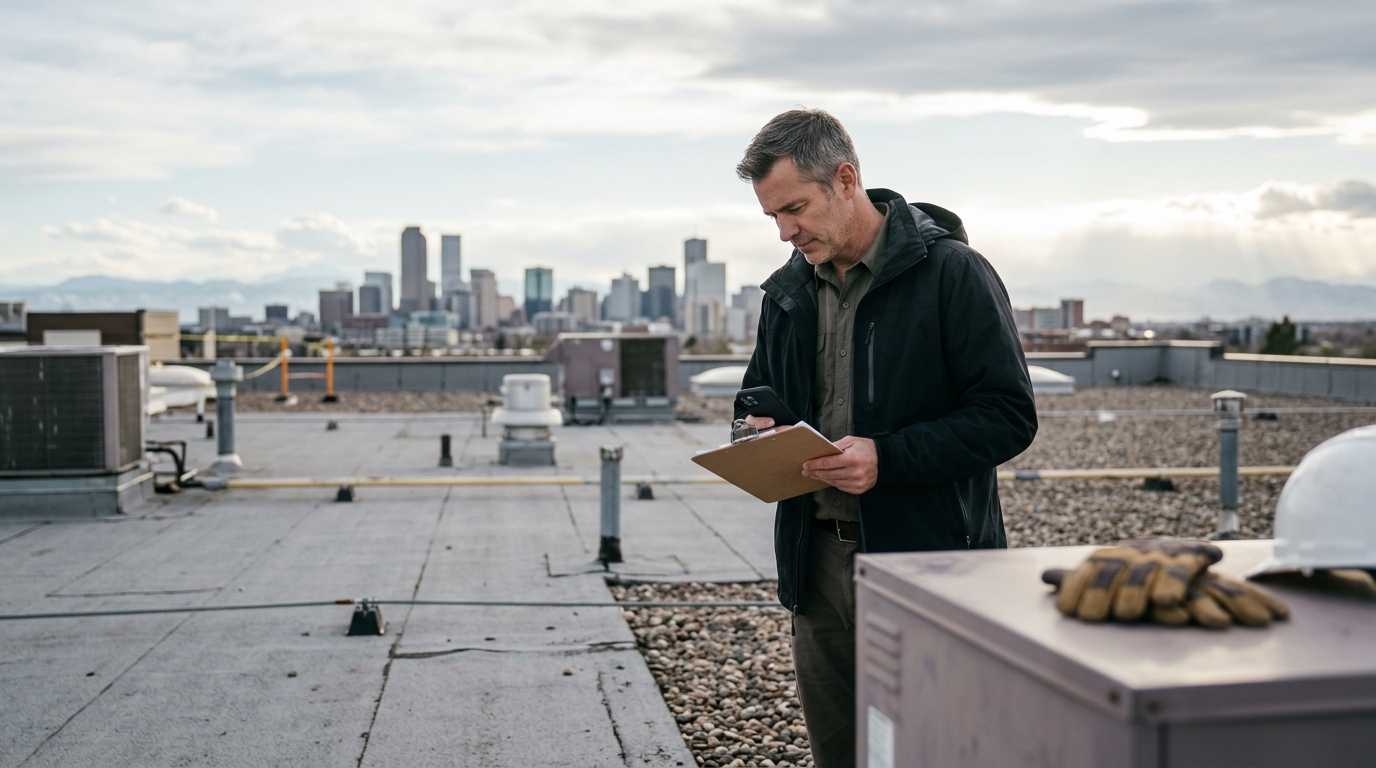
DIY Commercial Roof Inspection Checklist for Denver Property Owners
Commercial property owners in the Denver metro area face unique challenges that residential homeowners rarely encounter. According to the National Weather Service, the Front Range experiences an average of 23 days per year with hail larger than one inch, creating a high-risk environment for commercial roofing systems. This relentless weather pressure means that proactive maintenance is not just a recommendation, it is a financial necessity. By following a structured inspection protocol, you can identify minor issues before they escalate into costly emergency repairs or premature roof replacement. (About Apex Roofing Colorado)
Safety Precautions and Access
Before you begin any inspection, safety must be your absolute priority. Commercial roofs are often flat or low-slope, which can hide hazards like wet surfaces, fragile skylights, or unstable parapet walls. Never walk on a commercial roof without proper fall protection equipment. If your building lacks permanent anchor points, use a harness system tied off to a secure structural element. (Roofing Company in Denver)
Ensure you have a stable ladder with rubber feet to prevent slipping. Check the weather forecast before heading up; never inspect a roof during rain, high winds, or extreme heat. The goal is to observe, not to risk injury. If the roof is steep, heavily textured, or located on a high-rise building, limit your inspection to ground-level observations using binoculars or a drone if available. (Blog 8211 apexroofingusa com)
Exterior Visual Inspection
The exterior of your commercial roof is the first line of defense against Colorado’s severe weather. Start by walking the perimeter of the roof, if safe to do so, or use binoculars from the ground. Look for the following critical components: (Roofing Company Arvada CO)
Roof Membrane Condition
Whether you have a TPO, EPDM, or modified bitumen system, look for signs of wear. Blistering, wrinkling, or bubbling in the membrane indicates trapped moisture or poor installation. These defects can lead to leaks within months. Check for any visible tears, punctures, or splits in the material. Even small holes can allow significant water intrusion during a heavy storm.
Flashing and Edge Details
Flashing is the metal or material used to seal joints and edges where the roof meets walls, vents, or parapets. In Denver, freeze-thaw cycles can cause flashing to separate from the roof surface. Look for gaps, rust, or loose fasteners. Pay special attention to the perimeter edges, where wind uplift can peel back the membrane. If the flashing is pulled away from the wall, water can seep behind it and damage the structural deck.
Penetrations and Vents
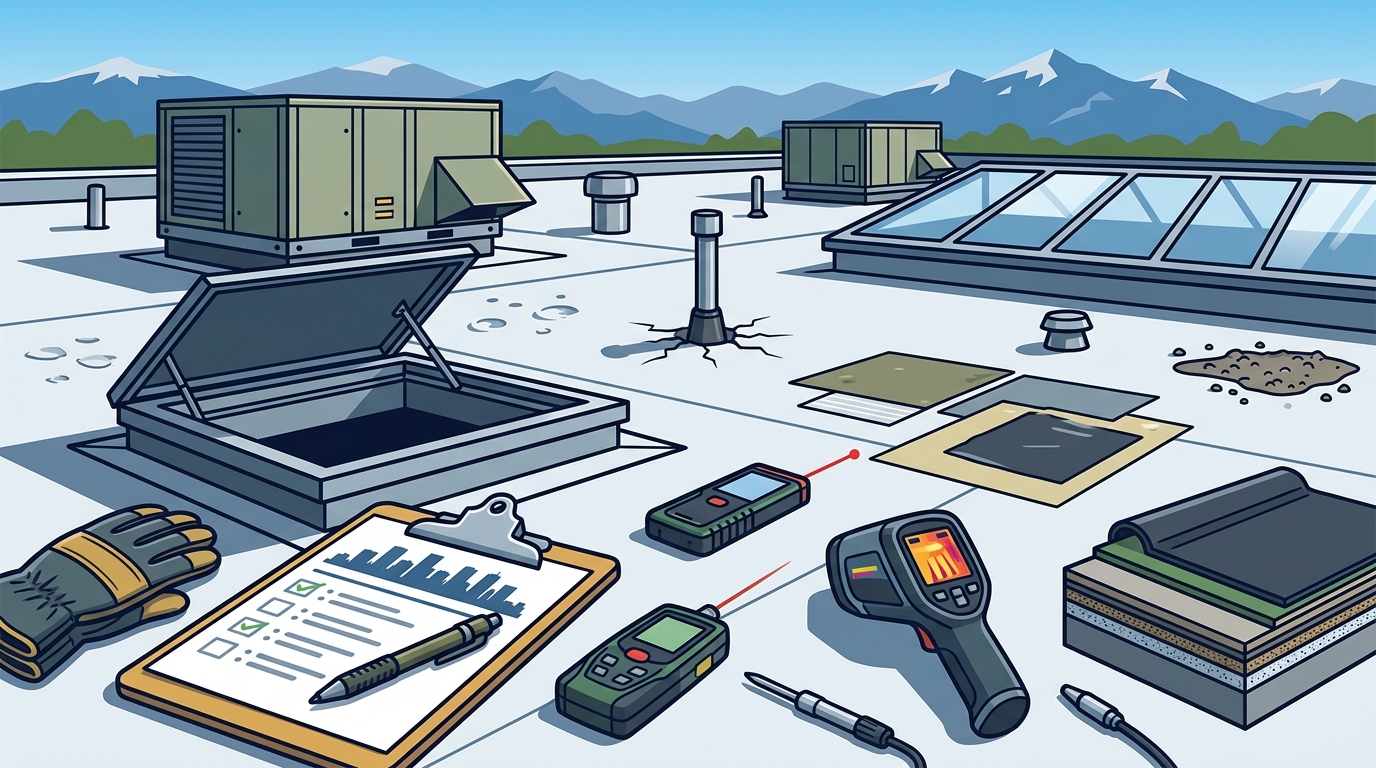
Commercial roofs are dotted with penetrations for HVAC units, exhaust vents, and plumbing stacks. These are the most common sources of leaks. Inspect the sealant around each penetration. Is it cracked, brittle, or missing? Sealant degrades over time due to UV exposure and temperature swings. Replacing old sealant with a fresh, compatible compound can extend the life of your roof significantly.
Membrane and Sealant Integrity
Beyond the initial visual check, you need to assess the health of the roofing materials themselves. Membrane integrity is the core determinant of your roof’s remaining lifespan. Look for areas where the material has become thin or translucent. This is a sign of UV degradation, which is common in high-altitude locations like Denver.
Check for "alligatoring" on built-up roofs, where the surface cracks into small, rectangular pieces resembling alligator skin. This indicates the roof is nearing the end of its service life. For single-ply membranes, look for shrinkage. If the membrane has pulled away from the edges or fasteners, it is no longer providing adequate protection against wind-driven rain.
Drainage and Gutter Systems
Water management is critical for commercial properties. Standing water, or "ponding," is a major enemy of flat roofs. Ponding water accelerates membrane degradation and adds excessive weight to the roof structure. After a rainstorm, check if water remains on the roof for more than 48 hours. If it does, your drainage system is compromised.
Scuppers and Drains
Inspect all roof drains and scuppers for debris. Leaves, dirt, and construction materials can clog these outlets, causing water to back up. Ensure that the drain strainers are secure and not loose. If the strainer is missing, small debris can enter the plumbing system and cause blockages deep within the building.
Gutter Maintenance
While commercial roofs often rely on internal drains, perimeter gutters are still common. Ensure they are clear of debris and securely attached to the building. Clogged gutters can cause water to overflow and run down the exterior walls, damaging siding, insulation, and the foundation. In Denver, ice dams can form in gutters during winter, leading to water backing up under the roof edge.
Interior Indicators of Damage
Do not neglect the interior of your building. Signs of roof damage often appear inside before they are visible on the roof itself. Walk through your attic, ceiling spaces, and upper floors looking for:
- Water Stains: Look for yellow, brown, or dark patches on ceilings and walls. These indicate active or past leaks.
- Mold and Mildew: A musty smell or visible mold growth suggests chronic moisture intrusion. This can pose serious health risks to your tenants and employees.
- Sagging Ceilings: If a ceiling is sagging, it may be holding water. This is an emergency situation that requires immediate professional attention.
- Peeling Paint: Paint bubbling or peeling on interior walls near the roof line can indicate moisture moving through the wall assembly.
When to Call a Professional
While a DIY checklist is valuable, it has limitations. Professional roof inspections provide a deeper analysis using thermal imaging and moisture mapping. If you notice any of the following, contact a certified roofing contractor immediately:
- Visible holes or tears in the membrane.
- Significant ponding water that does not drain.
- Active leaks during rain events.
- Roof age exceeding 15-20 years, depending on the material.
- Post-storm damage, especially after hail or high winds.
At Apex Roofing, we specialize in commercial roofing solutions for Denver property owners. Our team is GAF Certified™ and provides comprehensive inspections, repairs, and replacements. We understand the unique challenges of Colorado weather and offer warranty-backed work to protect your investment.
Key Takeaways
- Safety First: Always use fall protection and stable ladders when accessing commercial roofs.
- Inspect Flashing: Check metal flashing around edges and penetrations for gaps or rust.
- Clear Drains: Ensure roof drains and scuppers are free of debris to prevent ponding.
- Monitor Sealant: Replace cracked or brittle sealant around vents and HVAC units.
- Check Interior: Look for water stains, mold, or sagging ceilings as signs of leaks.
- Post-Storm Checks: Inspect for damage after every major hail or wind event.
- Professional Help: Schedule annual inspections with a certified contractor for a thorough assessment.
Frequently Asked Questions
How often should I inspect my commercial roof?
It is recommended to inspect your commercial roof at least twice a year, typically in the spring and fall. Additionally, you should inspect it after any major storm event, such as hail or high winds, to catch damage early.
What is the most common cause of commercial roof leaks?
The most common cause of leaks is failed sealant around penetrations like vents and HVAC units. Flashing failures at the roof edges and parapets are also frequent sources of water intrusion.
Can I walk on my commercial roof during inspection?
You can walk on your commercial roof if it is safe to do so and you have proper fall protection. However, if you are unsure about the roof's condition or lack safety equipment, it is better to use binoculars from the ground or hire a professional.
What is ponding water and why is it bad?
Ponding water is standing water that remains on a flat roof for more than 48 hours after rainfall. It is bad because it accelerates membrane degradation, adds weight to the structure, and can lead to leaks and mold growth.
How do I know if my commercial roof needs repair or replacement?
If your roof is less than 10 years old and has isolated damage, repair is likely sufficient. If the roof is older, has widespread membrane degradation, or requires frequent repairs, replacement may be more cost-effective. A professional inspection can help determine the best course of action.
Does Apex Roofing offer commercial roof inspections?
Yes, Apex Roofing offers comprehensive commercial roof inspections for properties in Denver and the surrounding Front Range. Our GAF Certified™ team provides detailed reports and warranty-backed repair services.
What should I look for in a commercial roofing contractor?
Look for a contractor who is licensed, insured, and certified by major manufacturers like GAF. They should have local experience with Colorado weather and offer clear communication and warranty-backed work.
Schedule Your Professional Inspection
Protecting your commercial property requires more than just a DIY checklist. While regular inspections help, professional expertise ensures that hidden issues are identified and addressed before they become major problems. Apex Roofing has been serving Denver property owners since 2010, providing trusted roofing solutions backed by a 5-year labor warranty.
Our team of local experts understands the specific challenges of Colorado roofing, from hail damage to freeze-thaw cycles. We offer free inspections and transparent guidance to help you make informed decisions about your roof.
Contact Apex Roofing today to schedule your commercial roof inspection. Let us help you maintain the integrity of your property with dependable, warranty-backed work.