
Step-by-Step Guide to Filing a Hail Damage Roof Claim in Colorado
Colorado experiences some of the most aggressive hail storms in the United States, with Front Range communities facing an average of 2 to 3 significant hail events annually. According to the National Weather Service, hail storms in this region frequently produce stones larger than one inch, causing widespread damage to residential and commercial roofing systems. Understanding the precise steps to file a claim is critical to ensuring your property is restored correctly without financial loss or coverage disputes. (About Apex Roofing Colorado)
Step 1: Initial Safety and Damage Assessment
Immediately after a storm passes, the first priority is safety. Colorado weather can shift rapidly, and wet roofs are extremely slippery. Never climb onto a roof to inspect it yourself. Instead, perform a ground-level assessment using binoculars. Look for granule loss in gutters, dented vent pipes, and bruised shingles. This initial check helps you determine if the damage is superficial or structural.
For homeowners in areas like Arvada or Boulder, wind exposure often exacerbates hail damage. West-side neighborhoods frequently experience gusts that lift shingle edges, allowing hail to strike vulnerable spots. If you notice missing shingles or exposed underlayment, this is a critical warning sign that requires immediate professional attention to prevent water intrusion.
Step 2: Documenting the Damage
Comprehensive documentation is the backbone of a successful insurance claim. Insurance adjusters rely heavily on visual evidence to validate the extent of the loss. Take high-resolution photos and videos of the exterior, focusing on the roof, gutters, siding, and surrounding landscape.
Include close-ups of hail dents on metal vents, AC units, and flashing. These "soft targets" provide tangible proof of hail impact that is often easier for adjusters to verify than shingle bruising. Additionally, document any interior leaks, water stains on ceilings, or damaged attics. This creates a complete timeline of the storm's impact on your property.
Step 3: Notifying Your Insurance Provider
Contact your insurance company as soon as possible to initiate the claim. Most policies have specific time limits for reporting storm damage. When you call, provide the date of the storm, a brief description of the damage, and your documentation. Ask for the claim number and the name of your assigned adjuster.
Be prepared to answer questions about the age of your roof and previous repairs. Insurance companies often use the age of the roof to determine depreciation. Having your original installation records or previous inspection reports ready will streamline this process. If you are unsure about your coverage limits, review your policy documents or consult with a roofing professional who understands Colorado insurance standards.
Step 4: The Professional Roof Inspection
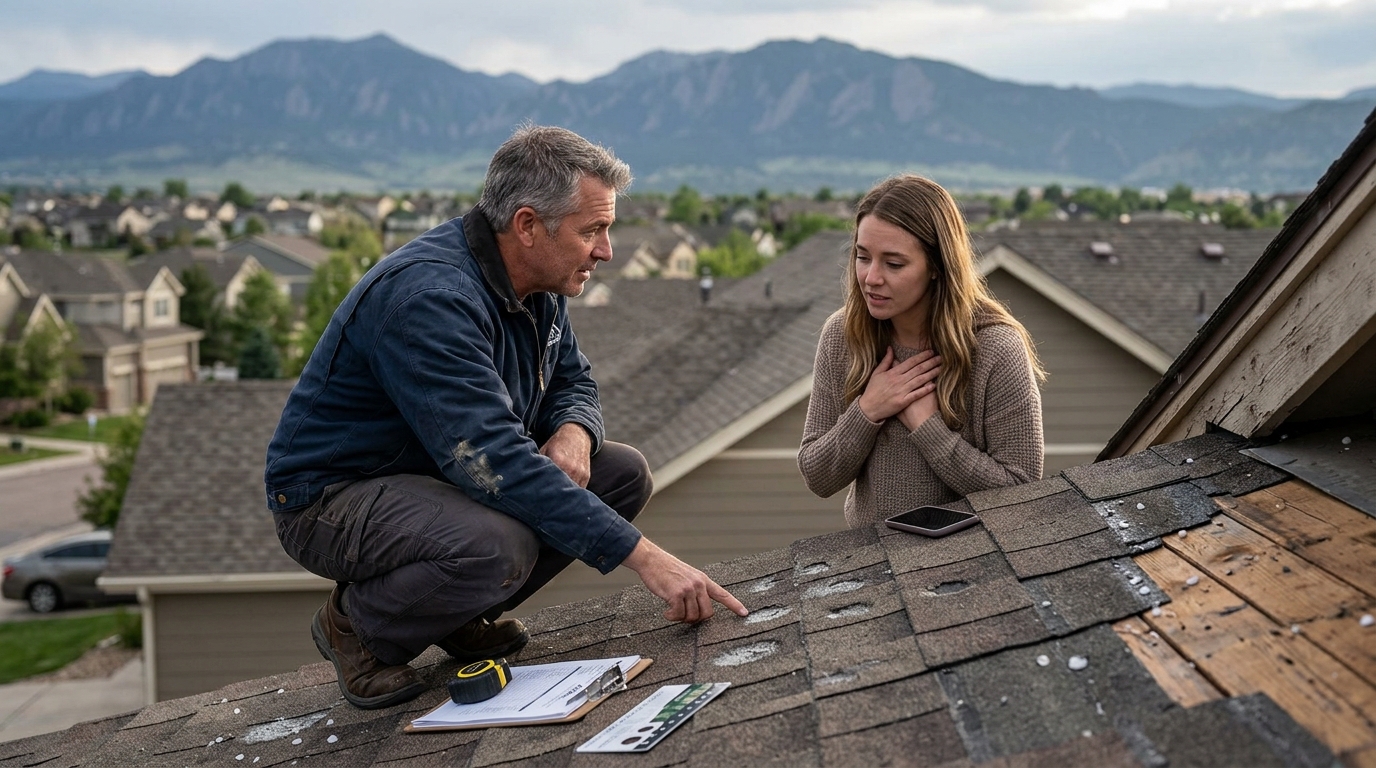
While the insurance adjuster will inspect your roof, it is highly advisable to hire a licensed, local roofing contractor for an independent inspection first. Companies like Apex Roofing, which have served Colorado since 2010, understand the specific nuances of Front Range weather patterns. A professional inspection can identify subtle damage that might be missed by a generalist adjuster.
Local roofers are familiar with the common failure points in Colorado homes, such as flashing around chimneys and valleys where water collects. They can provide a detailed estimate of repairs or replacement costs, which serves as a benchmark for the insurance claim. This independent assessment ensures you are not underpaid for the necessary work.
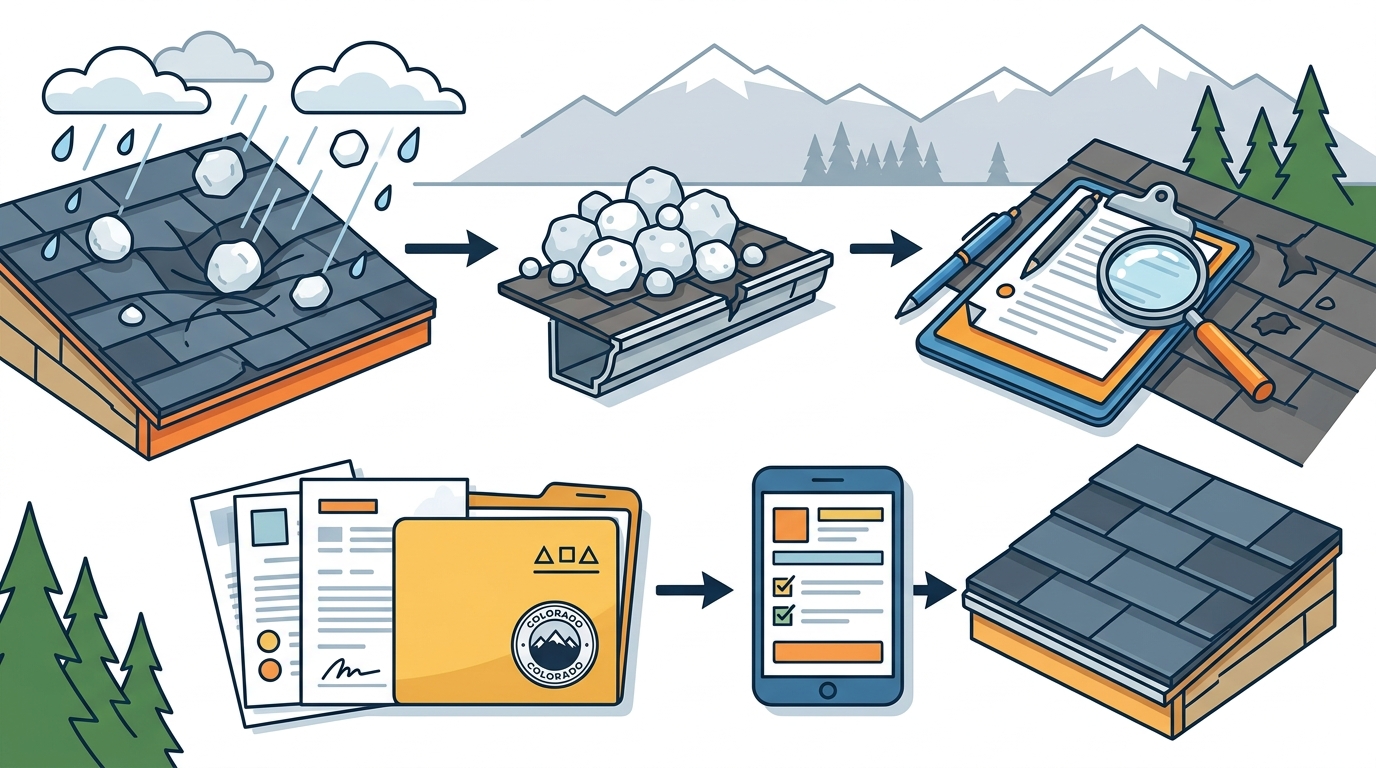
Step 5: Meeting with the Insurance Adjuster
The insurance adjuster will schedule a time to inspect your property. It is crucial to be present during this meeting. Walk the adjuster through your documentation and point out any areas you believe were overlooked. Do not let the adjuster leave without acknowledging all visible damage.
If the adjuster misses dents on metal components or granule loss in gutters, point them out immediately. These details are often critical in proving hail damage versus normal wear and tear. If you have a professional roofer present, they can advocate for you and explain technical aspects of the damage that may not be obvious to a non-specialist.
Step 6: Selecting a Contractor and Finalizing Repairs
Once the claim is approved, you must choose a contractor to perform the repairs. It is vital to select a reputable, local contractor who is authorized to work with your insurance company. Avoid out-of-state "storm chasers" who may disappear after receiving payment. A local contractor provides accountability and long-term warranty support.
Review the scope of work provided by your chosen contractor. Ensure it matches or exceeds the insurance estimate. If there is a gap, your contractor can often help negotiate with the adjuster to cover the difference. Finally, ensure you receive a detailed invoice and warranty documentation upon completion of the work.
Comparison of Roofing Service Options
| Service Type | Best For | Typical Timeline | Warranty Coverage |
|---|---|---|---|
| Roof Repair | Minor hail damage, isolated leaks, or granule loss. | 1-3 Days | Workmanship Warranty |
| Full Roof Replacement | Extensive hail damage, aging roof, or failed underlayment. | 3-7 Days | 5-Year Labor + Manufacturer |
| Gutter Repair & Installation | Dented gutters, downspout damage, or drainage issues. | 1-2 Days | Workmanship Warranty |
| Commercial Roofing | Flat roofs, TPO, EPDM, or metal systems for businesses. | 1-2 Weeks | System Plus Limited Warranty |
Key Takeaways
- Local Expertise Matters: Apex Roofing has served Colorado since 2010, providing deep knowledge of Front Range weather patterns and insurance requirements.
- GAF Certified Contractor: As a GAF Certified™ Roofing Contractor (ID: 1005038), Apex can offer the GAF System Plus Limited Warranty, ensuring premium material protection.
- 5-Year Labor Warranty: New roof installations come with a comprehensive 5-year labor warranty, protecting you against installation errors.
- Insurance Claim Guidance: Professional contractors can guide you through the complex insurance claim process, ensuring you receive fair compensation.
- Documentation is Critical: Detailed photos and professional inspections are essential for validating hail damage claims.
- Avoid Storm Chasers: Out-of-state contractors often lack local accountability and may disappear after storm season, leaving you without warranty support.
- Free Inspections Available: Many reputable local companies offer free roof inspections to help you assess damage before filing a claim.
Frequently Asked Questions
How long do I have to file a hail damage claim in Colorado?
Most insurance policies require you to report storm damage within a specific timeframe, often 30 to 90 days after the event. However, you should contact your insurer as soon as it is safe to do so to prevent further damage.
What is the difference between a repair and a full replacement?
Roof repair addresses specific damaged areas, such as individual shingles or flashing. A full replacement is necessary when the majority of the roof is damaged, the roof is near the end of its lifespan, or the underlayment is compromised. A professional inspection will determine which option is more cost-effective.
Can I hire any contractor to do the repairs?
Yes, you have the right to choose your own contractor. However, it is highly recommended to hire a local, licensed, and insured roofing company that is familiar with Colorado building codes and insurance processes.
What is the GAF System Plus Limited Warranty?
The GAF System Plus Limited Warranty is a premium warranty available only through GAF Certified™ contractors. It covers both the materials and the labor for a specified period, providing comprehensive protection against manufacturing defects and installation errors.
How does hail damage affect my roof's lifespan?
Hail can significantly reduce the lifespan of your roof by compromising the protective granules on shingles. This exposes the asphalt to UV rays, leading to premature aging, cracking, and potential leaks. Regular inspections after major storms can help identify these issues early.
What should I look for in a roofing contractor?
Look for a local contractor with a physical office in Colorado, strong online reviews, proper licensing and insurance, and certifications from major manufacturers like GAF. Avoid contractors who demand large upfront payments or use high-pressure sales tactics.
Does homeowners insurance cover hail damage?
Most standard homeowners insurance policies in Colorado cover hail damage to your roof. However, coverage limits, deductibles, and depreciation policies vary by provider. It is important to review your policy details and understand your coverage before filing a claim.
Ready to Protect Your Home?
Don't let hail damage compromise the safety and value of your property. If you suspect storm damage, contact Apex Roofing for a free, professional inspection. Our team of local experts is ready to guide you through the entire process, from documentation to final repair. Contact us today to schedule your inspection and ensure your roof is protected against Colorado's harsh weather.