
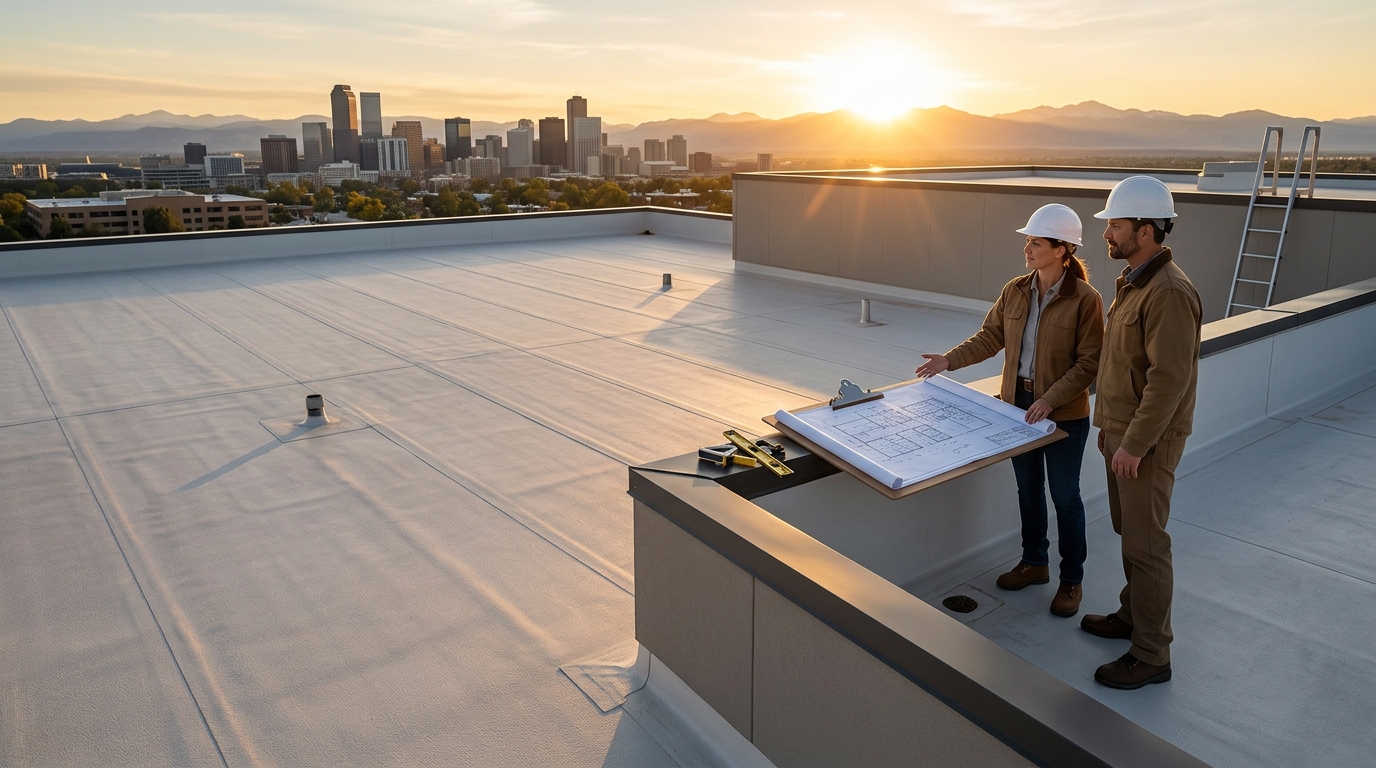
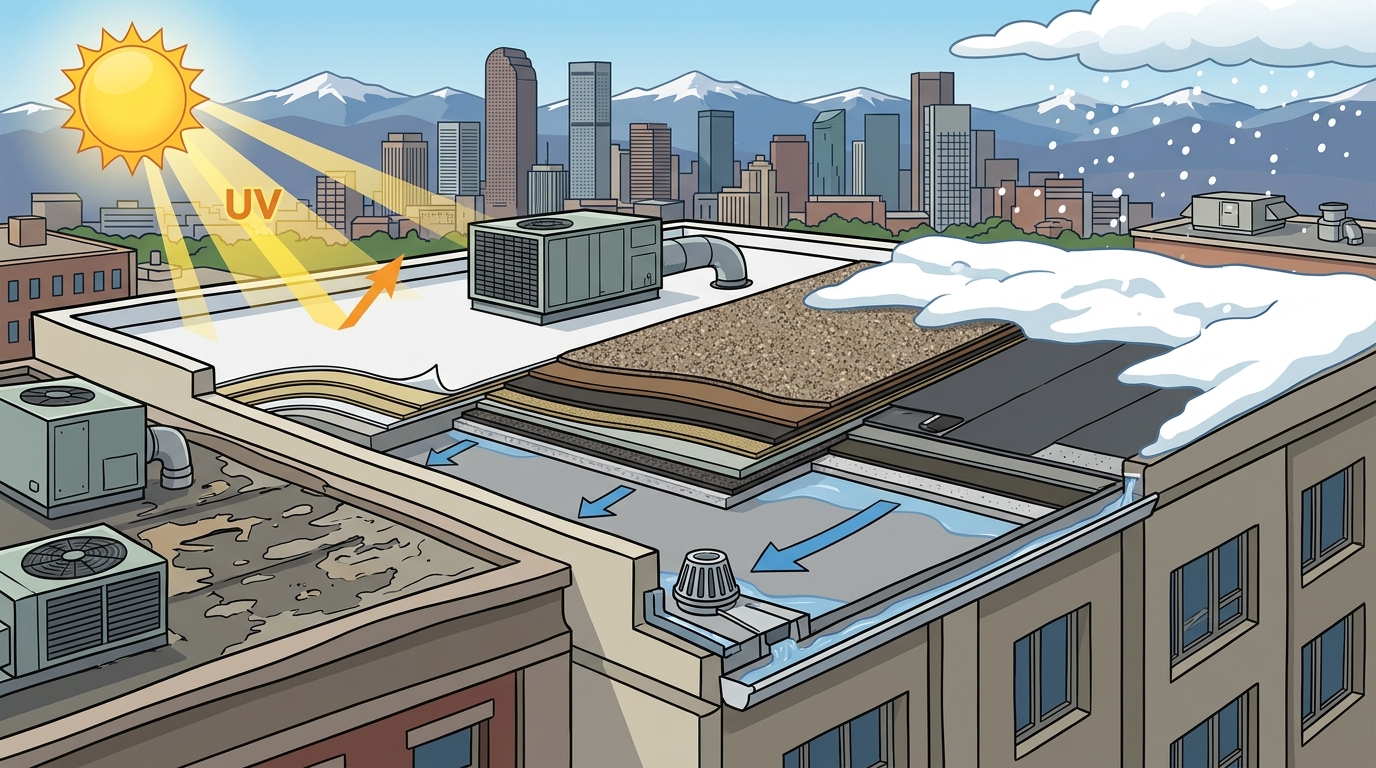
Commercial properties across Colorado face unique environmental stressors that residential roofs rarely encounter. According to industry data, flat roof systems account for approximately 70% of all commercial buildings in the United States, making the choice of material critical for long-term asset protection. In the Denver metro area, these systems must withstand intense UV radiation, heavy snow loads, and rapid temperature fluctuations that cause materials to expand and contract. Choosing the wrong system can lead to premature failure, water intrusion, and costly emergency repairs that disrupt business operations. This guide compares the top commercial roofing options available to Colorado property managers and business owners. (About Apex Roofing Colorado)
TPO vs. PVC: The Leading Single-Ply Options
Thermoplastic polyolefin (TPO) and polyvinyl chloride (PVC) are the two most popular single-ply membranes for commercial flat roofs. Both materials offer excellent resistance to UV rays and chemical exposure, which is vital for businesses in the Front Range. However, their performance characteristics differ significantly under Colorado's extreme weather conditions. (Roofing Company Aurora CO)
TPO: Cost-Effective and Reflective
TPO is a single-layer membrane made from rubber and plastic. It is known for its high reflectivity, which helps reduce cooling costs by reflecting sunlight away from the building. This makes it an ideal choice for warehouses and retail spaces in Aurora or Boulder where energy efficiency is a priority. TPO is also heat-welded at the seams, creating a strong bond that resists wind uplift. However, the quality of TPO can vary by manufacturer, so it is essential to work with a certified installer like Apex Roofing to ensure proper installation standards are met.
PVC: Superior Chemical and Fire Resistance
PVC membranes are similar to TPO but contain chlorine, which provides superior resistance to chemicals, oils, and fire. This makes PVC the preferred choice for restaurants, manufacturing facilities, and buildings with exhaust systems that release oils or fats into the air. PVC seams are also heat-welded, creating a monolithic layer that is highly watertight. While PVC is generally more expensive than TPO, its longevity and durability often justify the initial investment for heavy-use commercial properties.
EPDM: The Durable Rubber Alternative
EPDM (ethylene propylene diene monomer) is a synthetic rubber membrane that has been used in commercial roofing for decades. It is known for its exceptional durability and ability to withstand extreme temperature changes without cracking or becoming brittle. In Colorado, where freeze-thaw cycles are common, EPDM's flexibility is a significant advantage.
EPDM is typically installed in black or white. Black EPDM absorbs heat, which can be beneficial in winter by helping to melt snow and prevent ice dams. White EPDM reflects heat, similar to TPO, and is better suited for warmer months. The material is often adhered or mechanically fastened to the roof deck. While EPDM is highly resistant to UV radiation and ozone, it can be vulnerable to punctures from foot traffic or falling debris. Regular inspections are necessary to maintain its integrity.
Metal Roofing: Standing Seam and Panels
Metal roofing has gained significant popularity in the commercial sector due to its longevity and sustainability. Standing seam metal roofs consist of vertical panels with raised seams that are mechanically joined or sealed. This design allows for thermal movement without compromising the roof's watertightness.
Advantages of Metal for Colorado
Metal roofs are highly resistant to fire, wind, and impact. They can shed snow and rain quickly, reducing the risk of water pooling. Additionally, metal roofing is often made from recycled materials and is fully recyclable at the end of its life, making it an environmentally friendly option. The lifespan of a properly installed metal roof can exceed 40 years, making it a cost-effective long-term solution for businesses in Denver and surrounding areas.
Considerations for Installation
While metal roofing is durable, it requires precise installation to prevent issues like oil canning (visual waviness) or noise during rainstorms. Proper insulation and underlayment are critical to ensure energy efficiency and sound dampening. Working with a local expert who understands the specific structural requirements of Colorado buildings is essential for a successful metal roof installation.
Built-Up Roofing (BUR): The Traditional Choice
Built-Up Roofing (BUR) is a time-tested system that consists of multiple layers of bitumen (asphalt or coal tar) alternated with reinforcing fabrics. This creates a thick, monolithic membrane that is highly resistant to water penetration and physical damage. BUR has been a standard in commercial roofing for over a century and remains a reliable option for many property owners.
Performance and Longevity
The multiple layers of BUR provide excellent redundancy. If one layer is compromised, the others continue to protect the building. This system is particularly effective in areas with heavy foot traffic or where equipment is frequently placed on the roof. BUR roofs are also highly resistant to fire and wind uplift. However, the installation process is labor-intensive and can produce strong odors, which may be disruptive to businesses operating in the building.
Weight and Structural Impact
BUR systems are heavier than single-ply membranes. It is crucial to ensure that the building's structure can support the additional weight. A professional inspection can determine if the existing deck is suitable for a BUR system or if reinforcement is needed. For older commercial buildings in Englewood or Arvada, this assessment is a critical first step in any roofing project.
Commercial Roofing Comparison Matrix
The following table summarizes the key characteristics of each commercial roofing system to help you make an informed decision.
| Roofing System | Material Type | Lifespan | Best For | Key Advantage |
|---|---|---|---|---|
| TPO | Single-Ply Thermoplastic | 15-20 years | Warehouses, Retail | High UV Reflectivity |
| PVC | Single-Ply Thermoplastic | 20-30 years | Restaurants, Factories | Chemical & Fire Resistance |
| EPDM | Synthetic Rubber | 20-30 years | General Commercial | Flexibility in Freeze-Thaw |
| Metal | Steel, Aluminum, Copper | 40+ years | Long-Term Assets | Extreme Durability |
| BUR | Bitumen & Fabric Layers | 20-30 years | Heavy Traffic Areas | Redundant Waterproofing |
Key Takeaways for Colorado Businesses
- Local Expertise Matters: Apex Roofing has served Colorado since 2010, providing specialized knowledge of local weather patterns and building codes.
- Material Selection is Critical: TPO and PVC are top choices for reflectivity and chemical resistance, while EPDM offers superior flexibility in cold climates.
- Metal Roofing Offers Longevity: With a lifespan exceeding 40 years, metal roofing is a premium investment for long-term asset protection.
- BUR Provides Redundancy: Built-Up Roofing's multiple layers offer excellent protection for roofs with heavy equipment or foot traffic.
- Insurance Claim Support: Storm damage can compromise any roofing system. Apex Roofing offers guidance through the insurance claims process for storm and hail damage.
- Warranty Coverage: GAF Certified contractors can offer enhanced warranty options, such as the GAF System Plus Limited Warranty, for qualifying systems.
- Regular Inspections Prevent Costly Repairs: Proactive maintenance can extend the life of your roof and identify minor issues before they become major problems.
Frequently Asked Questions
What is the best commercial roofing system for Colorado?
There is no single "best" system. TPO and PVC are excellent for reflectivity and chemical resistance. EPDM is ideal for flexibility in freeze-thaw cycles. Metal roofing offers the longest lifespan. The best choice depends on your building's specific needs, budget, and usage.
How long does a commercial flat roof last?
The lifespan varies by material. TPO typically lasts 15-20 years, while PVC and EPDM can last 20-30 years. Metal roofs can last 40 years or more. Proper maintenance and installation are key to maximizing lifespan.
Can you help with commercial roof insurance claims?
Yes. Apex Roofing provides insurance claim guidance for storm and hail damage. We help property owners navigate the claims process to ensure fair coverage for repairs or replacements.
What is the difference between TPO and PVC roofing?
TPO is generally more cost-effective and highly reflective. PVC offers superior resistance to chemicals, oils, and fire, making it better for restaurants and industrial facilities. Both are heat-welded for strong seams.
Do you offer financing for commercial roofing projects?
Financing options may be available for qualifying commercial roofing projects. Contact our team to discuss your specific needs and explore potential financing solutions.
How do I know if my commercial roof needs repair or replacement?
Signs include frequent leaks, visible damage to membranes, pooling water, and increased energy bills. A professional inspection can determine the best course of action. We offer free inspections to assess your roof's condition.
What certifications does Apex Roofing hold?
Apex Roofing is a GAF Certified™ Roofing Contractor (GAF ID: 1005038). This certification ensures that our team meets high standards for installation and warranty support.
Schedule Your Commercial Roof Inspection
Protecting your commercial property requires a roofing system that can withstand Colorado's harsh weather. Whether you need a new TPO installation, an EPDM repair, or a metal roof upgrade, Apex Roofing provides the expertise and craftsmanship you need. Our team is dedicated to clear communication, clean job sites, and warranty-backed work. Contact us today to schedule your free commercial roof inspection and ensure your business is protected for years to come.