Commercial Roofing Installation Errors Denver Property Owners Should Know
Denver’s extreme weather patterns place unique stress on commercial roofing systems, making installation precision critical for long-term asset protection. According to climate data, the Denver metropolitan area experiences significant freeze-thaw cycles and intense hail events that can compromise poorly installed roofing materials within months. Property owners who overlook these environmental factors during the installation phase often face premature system failure, leading to expensive repairs and business interruptions. Understanding the specific technical failures common in Colorado’s Front Range is the first step toward securing a durable, warranty-backed commercial roof.
Inadequate Insulation and Thermal Bridging
One of the most common and costly errors in commercial roofing installation is the improper placement or thickness of insulation boards. In Denver, where temperature swings can exceed 40 degrees Fahrenheit in a single day, thermal bridging occurs when conductive materials bypass the insulation layer. This allows heat to escape in winter and enter in summer, drastically reducing energy efficiency.
When insulation is compressed or installed with gaps, moisture can accumulate within the roof assembly. This trapped moisture leads to rot in wood decks and corrosion in metal decks, compromising the structural integrity of the building. Proper installation requires a continuous layer of rigid insulation with staggered joints to prevent thermal bridges. At Apex Roofing, we ensure that every commercial installation meets strict thermal performance standards to protect your bottom line.
The Cost of Thermal Bridging
Thermal bridging can increase heating and cooling costs by up to 20 percent. For large commercial properties, this translates to thousands of dollars in wasted energy annually. Correcting this error after installation is nearly impossible without a complete roof tear-off, making proper initial installation vital.
Flashing and Penetration Failures
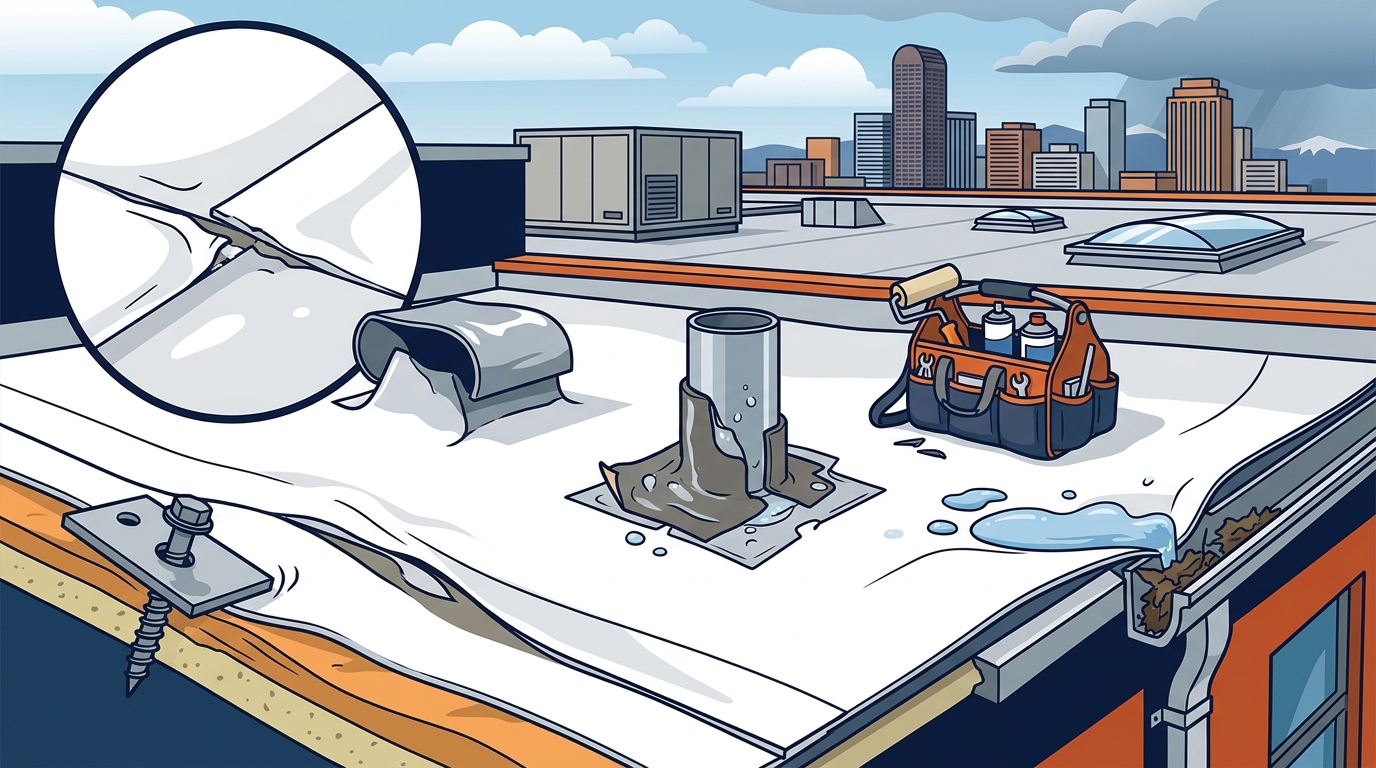
Flashing is the material used to seal joints and transitions in a roofing system, particularly around vents, pipes, and parapet walls. In Denver, improper flashing installation is a leading cause of leaks. Many contractors fail to integrate flashing correctly with the primary roofing membrane, creating gaps where water can infiltrate.
Denver’s heavy snow loads and subsequent melting create a cycle of water accumulation at roof edges and penetrations. If flashing is not secured with appropriate adhesives or mechanical fasteners, wind can lift the edges, allowing water to seep underneath. Data from local weather reports indicates that wind speeds in the Front Range frequently exceed 50 mph during storm seasons, which can easily dislodge poorly secured flashing.
Common Flashing Errors
- Using incompatible sealants that degrade under UV exposure.
- Failing to extend flashing up parapet walls sufficiently.
- Incorrectly sealing pipe penetrations without proper boots or collars.
Our team at Apex Roofing Commercial Services specializes in detailed flashing integration, ensuring that every penetration is watertight and resistant to Denver’s harsh wind and weather conditions.
Wind Uplift and Fastener Issues
Wind uplift is a significant concern for commercial roofs, especially in open areas like those found in Aurora and Boulder. Installation errors related to fasteners, such as using the wrong length or spacing, can lead to catastrophic roof failure during high-wind events. According to meteorological studies, hail and wind storms in Colorado can generate uplift forces that exceed standard design assumptions if the roof system is not properly anchored.
For mechanically attached roofs, the number and placement of fasteners are critical. Too few fasteners can allow the membrane to billow and tear, while too many can create unnecessary puncture points. Additionally, the torque applied during fastener installation must be precise; over-tightening can strip the fastener, while under-tightening fails to secure the membrane.
Ensuring Wind Resistance
To combat wind uplift, we utilize engineered fastening patterns that comply with FM Global and UL standards. This ensures that your roof can withstand the specific wind loads calculated for your building’s location and height. Regular inspections of fastener integrity can also help identify potential issues before they lead to leaks.
Drainage and Ponding Water Neglect
Ponding water is water that remains on a roof for more than 48 hours after rainfall. This is often a result of poor deck slope or inadequate drain placement during installation. In Denver, ponding water can freeze and expand, causing ice dams that lift roofing materials and create leaks. Climate data shows that freeze-thaw cycles are frequent in the Denver area, exacerbating the damage caused by standing water.
Proper installation requires a minimum slope of 1/4 inch per foot to ensure water flows efficiently to drains or scuppers. If the deck cannot be sloped correctly, tapered insulation systems must be used to create the necessary drainage path. Neglecting this detail can lead to premature membrane degradation and structural damage.
Drainage Solutions
- Installing tapered insulation to correct slope issues.
- Adding additional drains in low spots.
- Ensuring scuppers are clear and properly sized.
At Apex Roofing, we conduct thorough drainage assessments during the planning phase to prevent ponding water issues from ever becoming a problem for your property.
Material Selection for High-Altitude UV
Denver’s high altitude means more intense ultraviolet (UV) radiation, which can degrade roofing materials faster than at lower elevations. Selecting materials that are not rated for high-UV environments is a common installation error. For example, some standard EPDM membranes may crack or become brittle after just a few years of exposure to Denver’s sun.
Materials like TPO and PVC are often preferred for commercial roofs in Colorado due to their high reflectivity and UV resistance. These materials help reduce cooling costs by reflecting sunlight away from the building. Additionally, they are more resistant to the chemical breakdown caused by intense UV exposure.
Choosing the Right Material
When selecting a roofing material, consider its UV rating, reflectivity, and durability. Our experts at Apex Roofing can help you choose the best material for your specific building needs and budget, ensuring long-term performance in Denver’s unique climate.
Roofing System Comparison
Choosing the right commercial roofing system involves weighing several factors, including cost, durability, and maintenance requirements. The table below compares common commercial roofing options available for Denver properties.
| Roofing System | Best For | Lifespan | UV Resistance | Cost Range |
|---|---|---|---|---|
| TPO | High UV areas, energy efficiency | 20-30 years | High | Moderate |
| PVC | Chemical resistance, durability | 20-30 years | High | Moderate to High |
| EPDM | Simple shapes, lower cost | 15-25 years | Moderate | Low to Moderate |
| Metal | Longevity, snow shedding | 40+ years | High | High |
Key Takeaways
- Thermal Bridging: Improper insulation leads to energy loss and moisture accumulation, costing property owners significantly in utility bills.
- Flashing Integrity: Denver’s wind and snow require robust flashing installation to prevent leaks at penetrations and edges.
- Wind Uplift: Correct fastener spacing and torque are essential to withstand Front Range storm conditions.
- Drainage: Ponding water can freeze and cause structural damage; proper slope or tapered insulation is mandatory.
- UV Resistance: High-altitude sun degrades materials faster; choose TPO, PVC, or metal for optimal durability.
- Local Expertise: Working with a local contractor like Apex Roofing ensures compliance with local weather challenges.
- Warranty Protection: GAF Certified contractors offer superior warranty options for commercial installations.
Frequently Asked Questions
What is the most common commercial roofing error in Denver?
The most common error is inadequate flashing installation, which leads to leaks around penetrations and edges due to wind and snow load.
How does Denver’s altitude affect commercial roofing?
Higher altitude increases UV exposure, which can degrade roofing materials faster, requiring more UV-resistant options like TPO or PVC.
What is thermal bridging in commercial roofing?
Thermal bridging is when heat bypasses insulation through conductive materials, reducing energy efficiency and causing moisture issues.
How long should a commercial roof last in Denver?
With proper installation and maintenance, a commercial roof in Denver can last 20 to 30 years, depending on the material used.
Why is drainage important for commercial roofs?
Ponding water can freeze and expand, causing ice dams and membrane damage, which leads to leaks and structural issues.
What is the best commercial roofing material for Denver?
TPO and PVC are often recommended due to their high UV resistance and reflectivity, which help manage Denver’s intense sun.
How can I prevent wind uplift damage?
Ensure proper fastener spacing and torque during installation, and consider adhesive bonding for added security in high-wind areas.
Contact Apex Roofing for Expert Commercial Installation
Avoid costly installation errors by partnering with a trusted local expert. Apex Roofing has been serving Denver and the Front Range since 2010, providing GAF Certified commercial roofing solutions. We offer comprehensive inspections, precise installation, and reliable warranty support to protect your property against Colorado’s harsh weather. Contact us today to schedule a consultation and ensure your commercial roof is installed correctly the first time.