
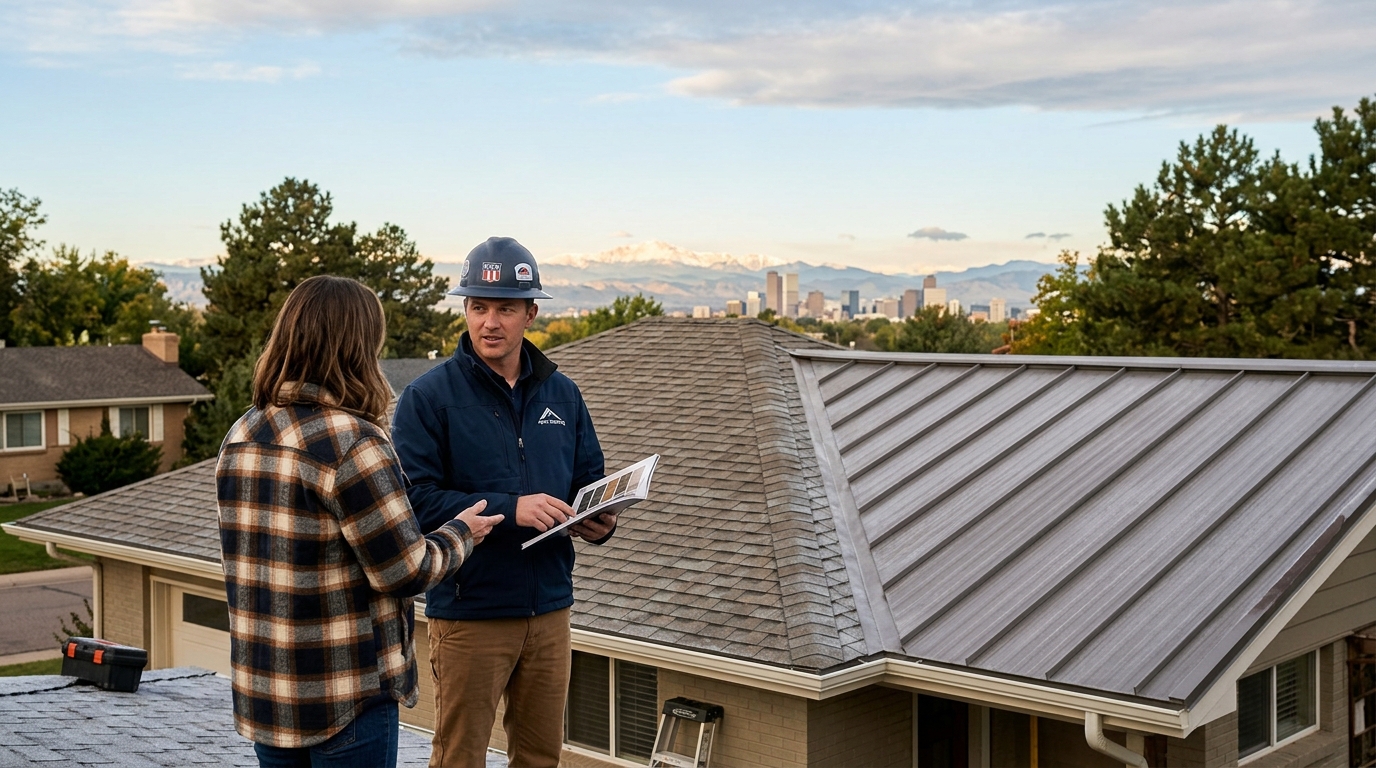
Denver homeowners face one of the most aggressive roofing environments in the United States. The Front Range experiences rapid temperature swings, heavy snow loads, and frequent hailstorms that test every square inch of a roof system. Choosing between asphalt shingles and metal roofing is not just an aesthetic decision; it is a financial and structural commitment that lasts for decades. According to recent industry data, hail damage accounts for a significant percentage of residential roofing claims in Colorado, making material durability a primary concern for property owners. This guide breaks down the critical differences between these two dominant roofing options to help you make an informed decision.
Asphalt Shingles: The Standard Choice
Asphalt shingles remain the most popular roofing material in North America, and for good reason. They offer a balance of affordability, aesthetic versatility, and proven performance. For homeowners in Denver, understanding the specific types of shingles available is crucial for maximizing longevity.
3-Tab vs. Architectural Shingles
When comparing roofing materials, it is vital to distinguish between 3-tab and architectural shingles. Architectural shingles are the superior choice for Colorado homes. They are thicker, heavier, and designed to mimic the look of wood shakes or slate. Their dimensional profile provides better wind resistance and impact protection against hail. In contrast, 3-tab shingles are flat, uniform, and more susceptible to wind uplift and granule loss. Most reputable contractors, including Apex Roofing, recommend architectural shingles for new installations in the Denver metro area.
Aesthetic Versatility
One of the primary advantages of asphalt shingles is their ability to blend with various architectural styles. From the historic bungalows in Olde Town Arvada to the modern builds in Aurora, there is a shingle profile to match. They come in a wide array of colors, allowing homeowners to complement their brick, stone, or siding. This flexibility makes them a go-to choice for those prioritizing curb appeal on a budget.
Metal Roofing: The Durable Alternative
Metal roofing has evolved significantly from its industrial origins. Today, it is a premium residential option that offers exceptional longevity and weather resistance. For Denver homeowners, the benefits of metal extend beyond just looks; they address the specific challenges of the local climate.
Types of Metal Roofing
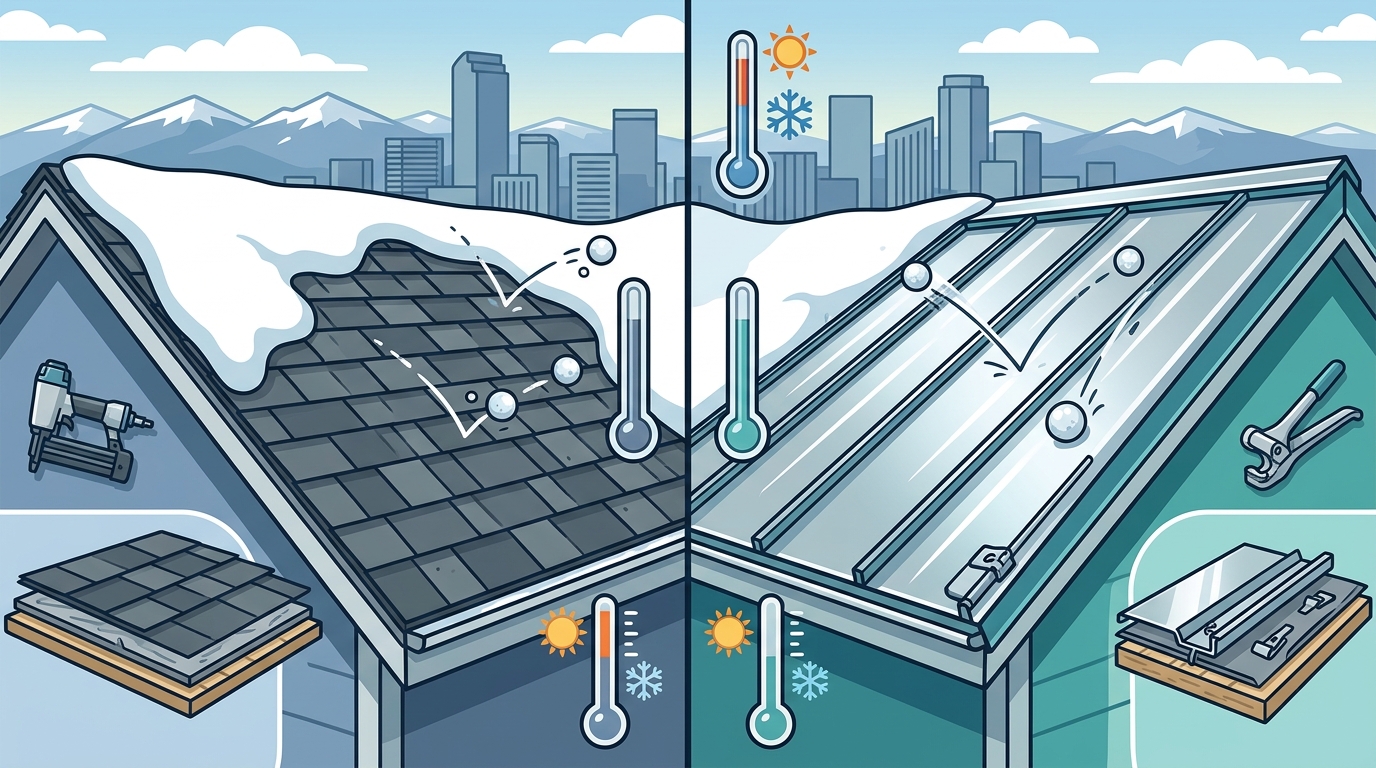
Metal roofing is not a single product but a category. Standing seam metal roofs feature concealed fasteners and vertical panels that interlock, creating a seamless surface that sheds snow and water efficiently. This design minimizes the risk of leaks, a common issue with exposed-fastener metal roofs. Another option is metal shingles, which mimic the appearance of traditional materials like slate or clay tile but offer the lightweight benefits of metal. Both types provide superior performance in high-wind events common on the Front Range.
Energy Efficiency and Reflectivity
Denver receives over 300 days of sunshine annually. Metal roofs are highly reflective, meaning they bounce a significant portion of solar radiation away from the home. This reflectivity can reduce cooling costs by up to 25 percent during hot summer months. For homes in southern Colorado or areas with intense sun exposure, this energy efficiency is a major financial benefit. Additionally, metal roofs are non-combustible, providing an added layer of safety in wildfire-prone regions.
Cost Analysis and ROI
Cost is often the deciding factor for homeowners. While the upfront investment for metal roofing is higher, the long-term value proposition is compelling. Asphalt shingles are generally the most affordable option initially, but their shorter lifespan means more frequent replacements.
Initial Investment
Installing asphalt shingles typically costs less per square foot than metal roofing. However, when comparing roofing materials, it is essential to look at the cost per year of service. Asphalt shingles last 15 to 30 years, while metal roofs can last 40 to 70 years. Over a 50-year period, a homeowner may need to replace an asphalt roof two or three times, whereas a metal roof may only require one installation.
Insurance and Resale Value
Many insurance companies offer discounts for homes with impact-resistant or metal roofs due to their lower risk of storm damage. Furthermore, metal roofing can increase a home's resale value. According to real estate data, homes with premium roofing materials often sell faster and at higher prices because buyers recognize the reduced maintenance burden. Apex Roofing provides detailed estimates that factor in these long-term financial benefits, helping clients see the bigger picture beyond the initial quote.
Durability in Denver Weather
Denver's weather is unpredictable. The combination of freeze-thaw cycles, hail, and high winds creates a harsh environment for any roof. Both materials have strengths and weaknesses in this context.
Hail Resistance
Hail is a major concern for Denver homeowners. Metal roofs, particularly those with a Class 4 impact rating, are highly resistant to hail damage. They may dent, but they rarely leak. Asphalt shingles can suffer granule loss and cracking from large hail, which compromises their waterproofing ability. While architectural shingles are designed to be impact-resistant, they are not immune to severe hail events. Regular inspections after major storms are critical for asphalt roofs to catch damage early.
Snow and Ice Management
Snow loads in Colorado can be substantial. Metal roofs have a smooth, slippery surface that allows snow to slide off more easily than asphalt shingles. This can reduce the risk of ice dams, which form when snow melts and refreezes at the roof edge. However, this also means homeowners must ensure their gutters and downspouts are clear to handle the sudden release of snow. Asphalt shingles provide more friction, holding snow in place longer, which can be beneficial for gradual melting but increases the load on the roof structure.
Detailed Comparison Table
The following table summarizes the key differences between asphalt shingles and metal roofing to help you compare roofing materials effectively.
| Feature | Asphalt Shingles | Metal Roofing |
|---|---|---|
| Lifespan | 15-30 years | 40-70 years |
| Upfront Cost | Low to Moderate | Moderate to High |
| Hail Resistance | Moderate (Class 3 or 4 available) | High (Class 4 standard) |
| Wind Resistance | Good (with proper installation) | Excellent |
| Weight | Heavy | Lightweight |
| MaintenanceRegular inspections needed | Minimal | |
| Recyclability | Low | High (100% recyclable) |
Key Takeaways
- Lifespan Difference: Metal roofs last significantly longer, often doubling or tripling the lifespan of asphalt shingles.
- Cost Efficiency: While metal costs more upfront, its durability and energy savings provide a better long-term return on investment.
- Weather Suitability: Metal roofing offers superior protection against Denver's hail and high winds.
- Aesthetic Options: Asphalt shingles offer more traditional looks, while metal roofing provides modern and versatile styles.
- Insurance Benefits: Metal roofs may qualify for lower insurance premiums due to their impact resistance.
- Local Expertise: Choosing a local contractor like Apex Roofing ensures proper installation tailored to Colorado's specific climate challenges.
- Warranty Coverage: Both materials come with warranties, but metal roofs typically offer longer labor and material coverage.
Frequently Asked Questions
Which is better for hail damage, asphalt or metal?
Metal roofing is generally better for hail damage. Class 4 impact-resistant metal roofs can withstand large hail without leaking, whereas asphalt shingles may crack or lose granules, leading to premature failure.
How much does a metal roof cost compared to shingles in Denver?
Metal roofing typically costs 2 to 3 times more upfront than asphalt shingles. However, when factoring in lifespan and maintenance, the cost per year is often lower for metal.
Can metal roofs be installed over existing shingles?
In many cases, yes. Metal roofs can be installed over existing asphalt shingles, which saves on tear-off costs and reduces landfill waste. However, a structural assessment is required to ensure the roof framing can support the load.
Do metal roofs make more noise during rain?
Modern metal roofs are installed with solid sheathing and insulation, which significantly dampens noise. When installed correctly, a metal roof is no noisier than an asphalt roof during a rainstorm.
What is the best roofing material for Colorado's freeze-thaw cycles?
Metal roofing is excellent for freeze-thaw cycles because it sheds snow and ice efficiently, reducing the risk of ice dams. Asphalt shingles can also perform well if properly ventilated and insulated.
How long does it take to install a new roof in Denver?
A typical residential roof replacement takes 1 to 3 days, depending on the size of the home and the material being installed. Metal roofs may take slightly longer due to the precision required for panel installation.
Are there financing options available for roofing in Colorado?
Yes, many roofing companies, including Apex Roofing, offer financing options to help homeowners manage the cost of a new roof. It is best to ask your contractor about available plans.
Schedule Your Free Inspection
Choosing the right roofing material is a critical decision for your home's protection and value. Whether you lean towards the affordability of asphalt shingles or the durability of metal roofing, professional guidance is essential. Apex Roofing offers free, no-obligation roof inspections to help you understand your current roof's condition and explore your options. Contact us today to schedule your inspection and get a detailed estimate tailored to your Denver home.