
Commercial Roofing Solutions for Denver Businesses
Commercial properties in the Denver metro area face unique structural challenges due to extreme weather fluctuations, high-altitude UV exposure, and rapid freeze-thaw cycles. According to industry data, commercial roof failures are often linked to poor maintenance rather than initial installation defects, with many building owners facing significant revenue loss due to unexpected leaks and structural damage. Apex Roofing provides specialized commercial roofing solutions designed to withstand these specific environmental pressures while maximizing energy efficiency and lifespan for business owners across Colorado. (About Apex Roofing Colorado)
Understanding Commercial Roofing Systems
Commercial roofing differs significantly from residential roofing in terms of scale, material selection, and structural requirements. A commercial roof is defined as a flat or low-slope roof system designed to protect large commercial buildings, warehouses, and retail spaces. These systems must handle heavy snow loads, wind uplift, and thermal expansion more effectively than standard residential shingles.
At Apex Roofing, we specialize in both flat and low-slope commercial roofing solutions. Our team understands that a commercial roof is not just a covering but a critical component of your building's energy efficiency and asset value. We serve businesses across the Front Range, including Englewood, Arvada, and Aurora, providing tailored solutions that align with your operational needs and budget.
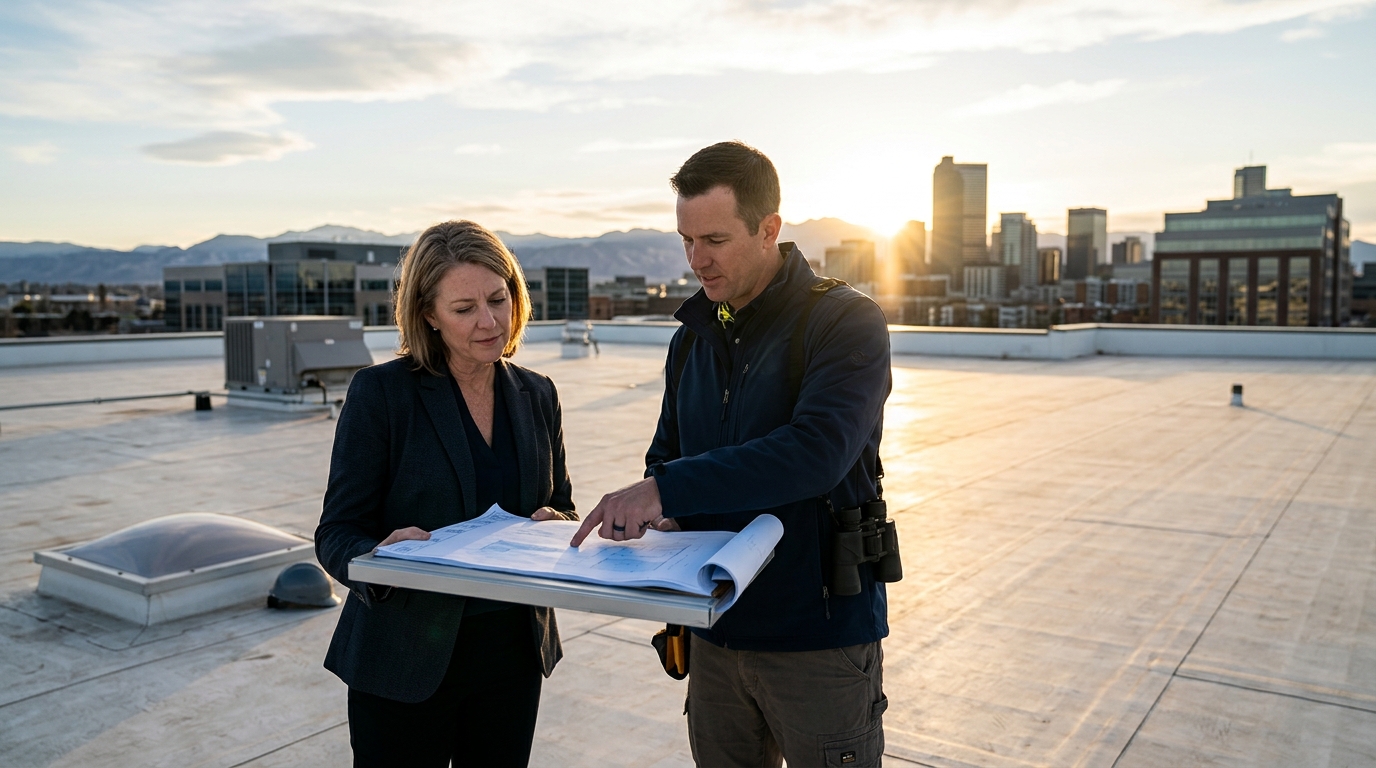
Unlike residential roofs, commercial systems often require specialized access for maintenance and repair. Our certified contractors ensure minimal disruption to your business operations during inspections, repairs, or full replacements. We prioritize clear communication and documented recommendations to help you make informed decisions about your property's long-term health.
Common Commercial Roofing Materials
Selecting the right material is crucial for the longevity and performance of your commercial roof. Each material offers distinct advantages depending on your building's structure, climate exposure, and budget. Below is a comparison of the most common commercial roofing options available in Colorado.
| Material Type | Key Benefits | Ideal For | Lifespan |
|---|---|---|---|
| TPO (Thermoplastic Polyolefin) | Reflective, energy-efficient, heat-welded seams | Flat roofs, retail spaces, warehouses | 20-30 years |
| EPDM (Ethylene Propylene Diene Monomer) | Durable, resistant to hail and UV, flexible | Low-slope roofs, industrial buildings | 20-30 years |
| Metal Roofing | Long-lasting, recyclable, snow-shedding | Buildings with high snow load risks | 30-50+ years |
| Modified Bitumen | Multi-ply durability, easy repair | Roofs requiring frequent access | 15-20 years |
TPO roofing has become increasingly popular in Denver due to its reflective properties, which help reduce cooling costs during hot summers. EPDM remains a strong choice for its resilience against hail, a common issue in Colorado. Metal roofing offers exceptional durability and is particularly effective in areas with heavy snowfall, such as the higher elevations of the Front Range.
Impact of Denver Weather on Commercial Roofs
Denver's unique climate poses significant challenges to commercial roofing systems. The city experiences four distinct seasons, with winter bringing heavy snow and summer bringing intense UV radiation. These conditions accelerate wear and tear on roofing materials if not properly maintained.
One of the most critical factors is the freeze-thaw cycle. When water penetrates small cracks in the roof membrane and then freezes, it expands, widening the cracks and causing further damage. This process can lead to blisters, splits, and eventual leaks. According to environmental studies, regions with frequent freeze-thaw cycles see a higher rate of commercial roof degradation compared to stable climates.
Wind is another major concern. Denver's high winds can lift roof edges, damage flashing, and compromise the integrity of the entire system. Apex Roofing uses specialized fastening techniques and reinforced edges to ensure your commercial roof can withstand these forces. Our team is trained to identify early signs of wind damage, such as lifted seams or displaced insulation, before they become costly repairs.
Repair vs. Replacement Decision Matrix
Deciding whether to repair or replace a commercial roof is a complex decision that depends on several factors, including the age of the roof, the extent of the damage, and your long-term business goals. A general rule of thumb is that if your roof is less than 10 years old and has sustained minor damage, repair may be the more cost-effective option.
However, if your roof is approaching the end of its lifespan or has suffered extensive damage from multiple storms, replacement might be the better long-term investment. Replacing an aging roof can also improve your building's energy efficiency, potentially reducing utility costs. Apex Roofing provides detailed inspections and transparent estimates to help you make the right choice for your property.
We also offer financing options to make commercial roof replacements more manageable for your cash flow. Our team works with you to develop a phased plan if necessary, ensuring that your business operations are not severely impacted during the transition.
Preventative Maintenance Strategies
Regular maintenance is the most effective way to extend the life of your commercial roof and prevent costly repairs. A comprehensive maintenance plan should include bi-annual inspections, typically in the spring and fall, to assess the roof's condition after winter and before summer.
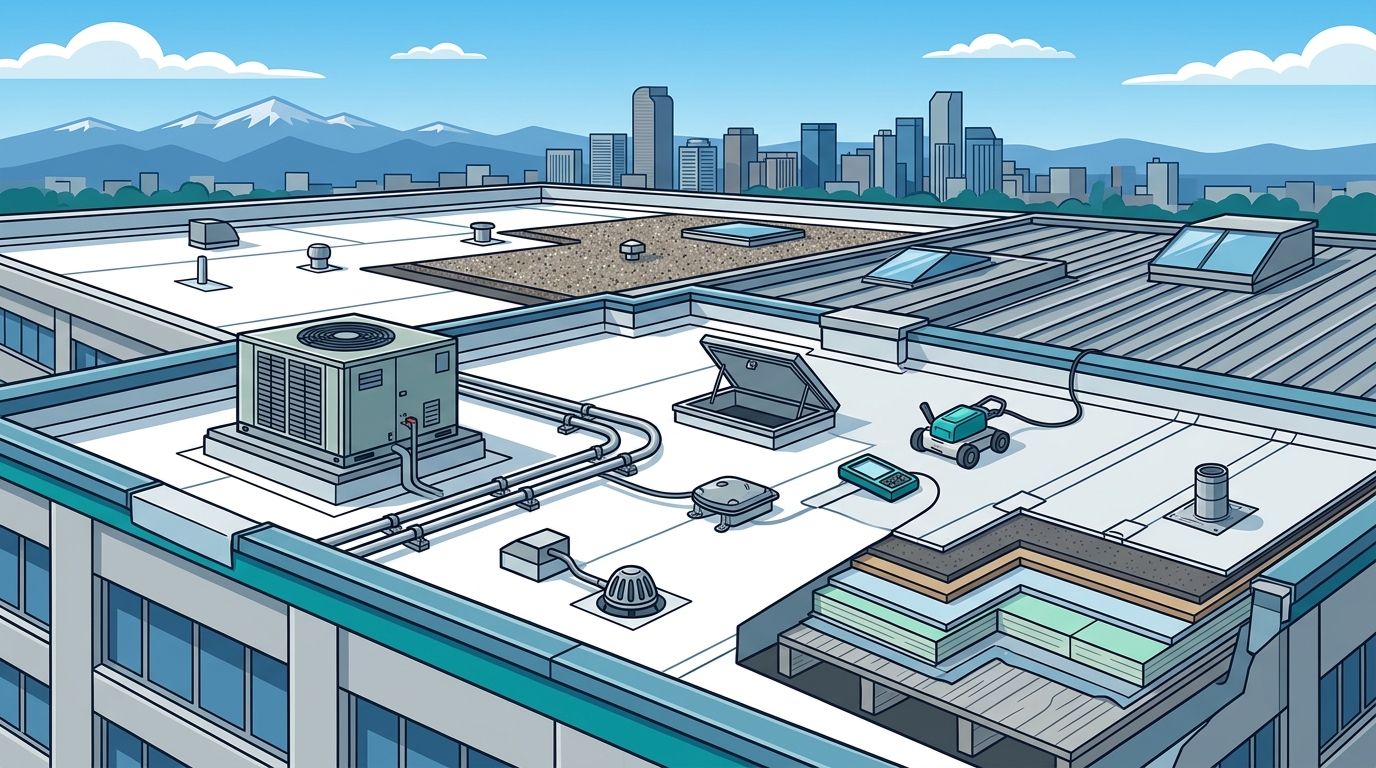
Key maintenance tasks include clearing debris from the roof surface, checking for punctures or tears in the membrane, inspecting flashing and seals around penetrations, and ensuring proper drainage. Clogged drains or gutters can lead to water pooling, which accelerates wear and increases the risk of leaks.
Apex Roofing offers preventative maintenance agreements for commercial clients. These agreements include regular inspections, minor repairs, and priority service for emergency situations. By investing in preventative maintenance, you can avoid unexpected downtime and extend the lifespan of your roof system significantly.
Navigating Insurance Claims for Storm Damage
After a major storm, commercial property owners often face the daunting task of navigating insurance claims. The process can be complex, involving detailed documentation, adjuster meetings, and negotiations. Apex Roofing provides insurance claim guidance to help you understand your coverage and ensure you receive fair compensation for storm damage.
Our team is experienced in working with insurance adjusters and can help you document damage accurately. We provide detailed reports and photos to support your claim, ensuring that all necessary repairs are covered. This advocacy is crucial, as insurance companies may initially underestimate the extent of the damage.
We also help you understand the difference between storm damage and normal wear and tear, which is often a point of contention in claims. By having a trusted partner like Apex Roofing on your side, you can navigate the claims process with confidence and minimize the financial impact of storm events.
Key Takeaways
- Commercial roofs require specialized materials like TPO, EPDM, or metal to withstand Denver's harsh climate.
- Freeze-thaw cycles are a primary cause of commercial roof damage in Colorado, necessitating regular inspections.
- Apex Roofing has served the Colorado Front Range since 2010, providing GAF Certified™ commercial roofing services.
- Preventative maintenance plans can significantly extend the lifespan of your commercial roof and reduce long-term costs.
- Insurance claim guidance is a critical service for business owners after storm events to ensure fair compensation.
- Choosing the right roofing material depends on your building's structure, budget, and energy efficiency goals.
- Apex Roofing offers a 5-year labor warranty on new commercial roofs, ensuring quality workmanship.
Frequently Asked Questions
What is the best commercial roofing material for Denver?
TPO and EPDM are among the most popular choices for Denver commercial roofs due to their durability and resistance to UV radiation and hail. Metal roofing is also an excellent option for buildings with high snow loads.
How often should I inspect my commercial roof?
It is recommended to inspect your commercial roof at least twice a year, typically in the spring and fall. After major storms, an additional inspection is advisable to check for damage.
Does Apex Roofing handle insurance claims?
Yes, Apex Roofing provides comprehensive insurance claim guidance. Our team works directly with adjusters to ensure your claim is processed accurately and fairly.
What is the lifespan of a commercial roof?
The lifespan varies by material, but TPO and EPDM roofs typically last 20-30 years, while metal roofs can last 30-50 years or more with proper maintenance.
Do you offer financing for commercial roof replacements?
Yes, Apex Roofing offers financing options to help manage the cost of commercial roof replacements. Contact our team for details on available plans.
How do I know if my commercial roof needs repair or replacement?
A professional inspection can determine the best course of action. Generally, if the roof is near the end of its lifespan or has extensive damage, replacement is more cost-effective than repeated repairs.
What areas do you serve for commercial roofing?
We serve the entire Colorado Front Range, including Denver, Englewood, Arvada, Aurora, Boulder, and surrounding communities.
Contact Apex Roofing for Commercial Solutions
Protect your commercial property with expert roofing solutions from Apex Roofing. Our team of certified professionals is ready to provide a free inspection and tailored recommendations for your building. Contact us today to schedule your consultation and ensure your roof is prepared for Colorado's weather challenges.