
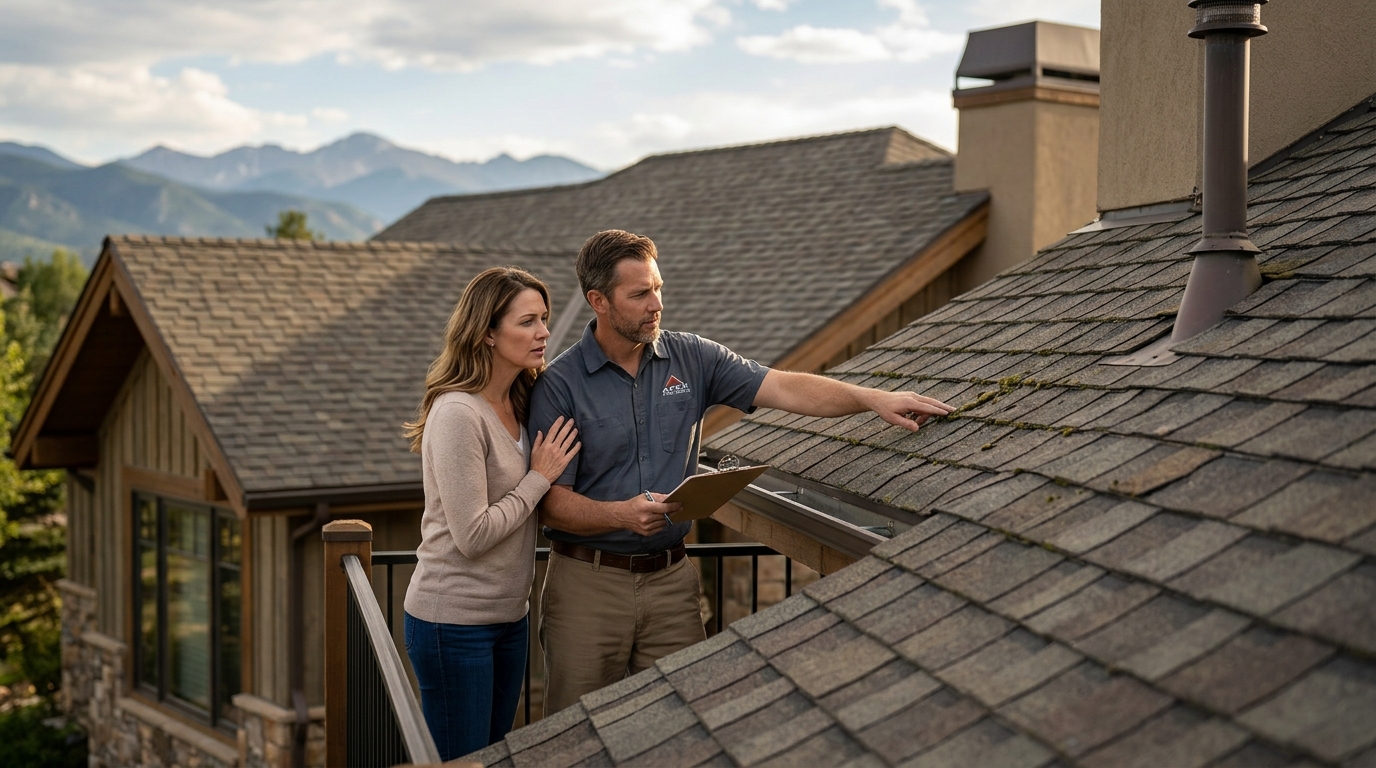
According to the National Association of Realtors, a new roof can increase a home's value by up to 4% while significantly reducing the risk of immediate post-purchase repairs. However, determining whether your roof requires a full replacement or a simple repair is often confusing for homeowners. The decision impacts your budget, your home's structural integrity, and your peace of mind during Colorado's harsh weather cycles. This guide provides a clear diagnostic framework to help you evaluate your roof's condition accurately. (About Apex Roofing Colorado)
1. Assessing Roof Age and Lifespan
The most straightforward indicator of roof health is its age. Asphalt shingles, which are the most common roofing material in the United States, typically last between 15 and 25 years. However, this lifespan is heavily influenced by environmental factors. In Colorado, high-altitude UV exposure accelerates the degradation of shingle binders. This means a roof in Denver may reach the end of its functional life faster than one in a lower-altitude region.
If your roof is approaching or has exceeded this 20-year threshold, repairs become less cost-effective. At this stage, the underlying materials lose their flexibility and waterproofing capabilities. Continuing to patch a roof that is past its prime is often a temporary fix that leads to recurring issues. A full replacement ensures you are investing in a system designed to withstand the next two decades of weather patterns.
2. Identifying Shingle Damage and Granule Loss
Your roof's shingles are its primary defense against rain, snow, and wind. Over time, these shingles wear down. One of the most visible signs of advanced wear is granule loss. Granules are the protective coating on asphalt shingles that shield them from UV rays and provide fire resistance. When these granules wash off, they often accumulate in your gutters or downspouts.
Inspect your gutters after a rainstorm. If you find a significant amount of dark, sand-like granules, your roof is shedding its protective layer. Additionally, look for shingles that are curling, cracking, or buckling. Curling shingles indicate that the shingle has lost its structural integrity and can no longer shed water effectively. Cracked shingles create direct pathways for water to penetrate the roof deck. If more than 30% of your shingles show these signs, a full replacement is the only reliable solution.
3. Detecting Leaks and Interior Water Damage
Water intrusion is the most critical warning sign that your roof is failing. Roof leaks are not always obvious from the outside; they often manifest as water stains on ceilings or walls inside your home. These stains may appear as yellowish-brown rings or damp patches. In some cases, you might notice mold growth or a musty odor in your attic or upper floors.
Minor leaks can sometimes be repaired, but frequent or widespread leaks indicate a systemic failure. If you are dealing with multiple leak points, it suggests that the underlayment or flashing is compromised. In the Denver area, freeze-thaw cycles exacerbate this issue. Water enters small cracks, freezes, expands, and widens the damage. This cycle can quickly turn a manageable repair into a major structural problem requiring full roof replacement.
4. Checking for Daylight Penetration in the Attic
Your attic is a diagnostic tool that many homeowners overlook. On a sunny day, go into your attic and look up at the roof deck. If you can see streaks of daylight coming through the roof boards, it means there are gaps in your roofing system. Daylight penetration indicates that your roof is no longer a continuous barrier against the elements.
While a single small hole might be sealable, multiple points of daylight penetration suggest widespread deterioration of the roof deck or shingle alignment. This issue is particularly dangerous during heavy snowfall or rain. Water can easily find these entry points and cause significant damage to your insulation, electrical wiring, and drywall. If you observe multiple light sources, it is time to consider a full replacement to restore the roof's integrity.
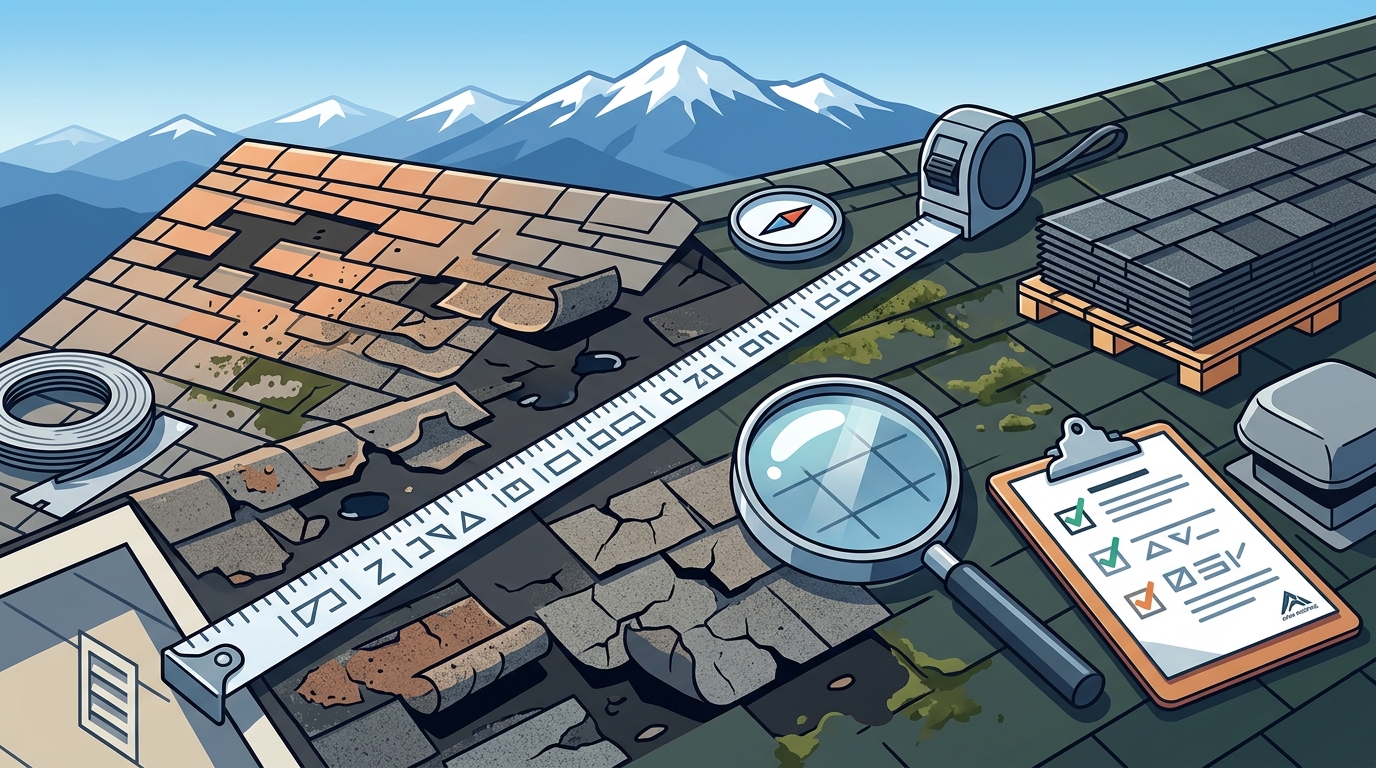
5. Evaluating Structural Sagging and Decking
The most severe sign of roof failure is sagging. If your roofline appears uneven or dips in the middle, it indicates a problem with the structural decking or the trusses supporting it. Sagging roofs are often caused by long-term water damage that has weakened the wood framing. This is a critical safety hazard that requires immediate professional attention.
When the roof deck sags, it can no longer support the weight of snow loads, which are common in Colorado. This structural compromise cannot be fixed with new shingles alone. The underlying framework must be assessed and likely replaced. In such cases, a full roof replacement is not just a recommendation; it is a necessity for the safety of your home and family. Ignoring sagging can lead to partial roof collapse during heavy storms.
Key Takeaways
- Age Matters: If your roof is over 20 years old, especially in high-UV areas, replacement is likely more cost-effective than repair.
- Granule Loss: Excessive granules in gutters signal advanced shingle wear and reduced UV protection.
- Leak Frequency: Multiple or recurring leaks indicate systemic failure of the underlayment or flashing.
- Daylight Check: Seeing daylight through the roof deck from your attic means the barrier is compromised.
- Sagging is Critical: Any structural sagging requires immediate professional evaluation and likely full replacement.
- Colorado Weather: High-altitude sun and freeze-thaw cycles accelerate roof aging compared to national averages.
- Professional Diagnosis: A free inspection provides an objective assessment of your roof's remaining lifespan.
Frequently Asked Questions
How do I know if I need a roof repair or a full replacement?
If the damage is localized to a few shingles or a small section of flashing, repair is usually sufficient. However, if the roof is over 20 years old, has widespread granule loss, or exhibits multiple leak points, a full replacement is more economical and reliable.
Can a roof be repaired if it is leaking?
Minor leaks can be repaired, but frequent leaks suggest underlying issues with the underlayment or deck. In Colorado, where freeze-thaw cycles are common, water intrusion can cause hidden damage that makes repairs temporary. A professional inspection can determine if the core structure is sound.
What is the average lifespan of an asphalt shingle roof in Denver?
While the national average is 15 to 25 years, Denver's high altitude and intense UV exposure can shorten this lifespan. Many roofs in the Front Range may require replacement closer to the 15 to 20-year mark due to accelerated weathering.
Does hail damage always require a full roof replacement?
Not always. Minor hail damage can often be repaired. However, if the hail has caused widespread bruising, cracking, or granule loss across multiple shingles, replacement is necessary to restore the roof's protective capabilities.
How long does a full roof replacement take?
A standard residential roof replacement typically takes one to three days, depending on the size of the home and the complexity of the roof. Apex Roofing ensures a clean job site and clear communication throughout the process.
What is the cost of a new roof in Colorado?
Roofing costs vary based on materials, size, and labor. While prices fluctuate, investing in a high-quality, GAF Certified installation provides long-term value and warranty protection. Financing options are often available to manage upfront costs.
Why is it important to hire a local roofing contractor?
Local contractors understand the specific weather challenges of the region, such as hail, wind, and snow loads. They are also accountable to the community, offering better warranty support and reliability compared to out-of-state storm chasers.
Get Your Free Roof Inspection
Don't guess about your roof's condition. If you are noticing any of the signs mentioned above, it is time to get a professional opinion. Apex Roofing offers free, no-obligation roof inspections for homeowners across the Denver metro area. Our GAF Certified contractors will provide a clear, honest assessment of your roof's health and help you make the best decision for your home.
Contact Apex Roofing today to schedule your free inspection and protect your home with confidence.