
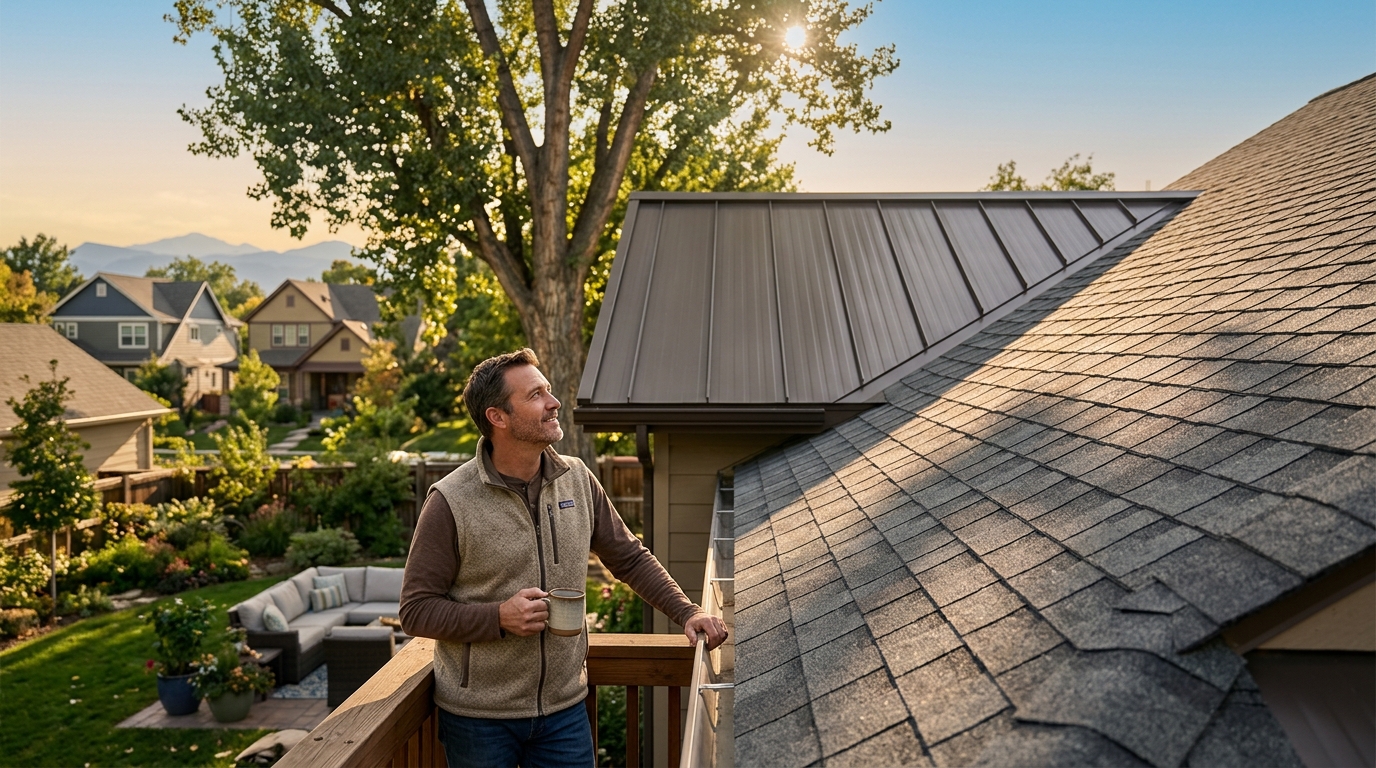
Denver homeowners face some of the most aggressive weather conditions in the United States, with hail storms and freeze-thaw cycles testing every square inch of their roof systems. According to the National Weather Service, Colorado ranks among the top states for hail frequency, with Front Range communities experiencing significant damage events annually. This environmental pressure makes the choice of roofing material not just an aesthetic decision, but a critical structural investment. When comparing asphalt shingles against metal roofing, the decision hinges on balancing upfront budget constraints with long-term durability needs in a high-altitude climate.
Asphalt Shingles: The Standard Choice
Asphalt shingles remain the most popular roofing material in the United States, accounting for over 75% of residential roofs. Asphalt shingles are a composite roofing material made of a fiberglass or organic mat saturated with asphalt and coated with ceramic granules. For Denver homeowners, this material offers a familiar, cost-effective entry point into roof replacement or repair.
Pros of Asphalt Shingles
The primary advantage of asphalt shingles is affordability. They are significantly cheaper to purchase and install than metal alternatives. Additionally, they offer a wide variety of colors and styles, including architectural shingles that mimic the look of slate or wood shakes. For homeowners in neighborhoods with strict HOA guidelines, asphalt shingles often provide the most compliant aesthetic option.
Cons of Asphalt Shingles
However, asphalt shingles have a shorter lifespan in harsh climates. In Denver’s high-altitude environment, UV radiation accelerates the degradation of the asphalt binder. Hail can crack or dislodge granules, exposing the underlying mat to water damage. Typically, asphalt shingles last between 15 to 30 years, depending on the quality of the shingle and the severity of local weather events.
If you are considering this route, it is vital to work with a GAF Certified roofing contractor who understands how to properly ventilate and seal these systems against Colorado’s freeze-thaw cycles.
Metal Roofing: The Durable Alternative
Metal roofing has surged in popularity across the Front Range due to its exceptional resilience. Metal roofing is a roofing system composed of interlocking metal panels or shingles designed to shed water and resist extreme weather. Unlike asphalt, metal does not crack, curl, or lose granules. It is also non-combustible, providing an added layer of safety for homes in wildfire-prone areas.
Pros of Metal Roofing
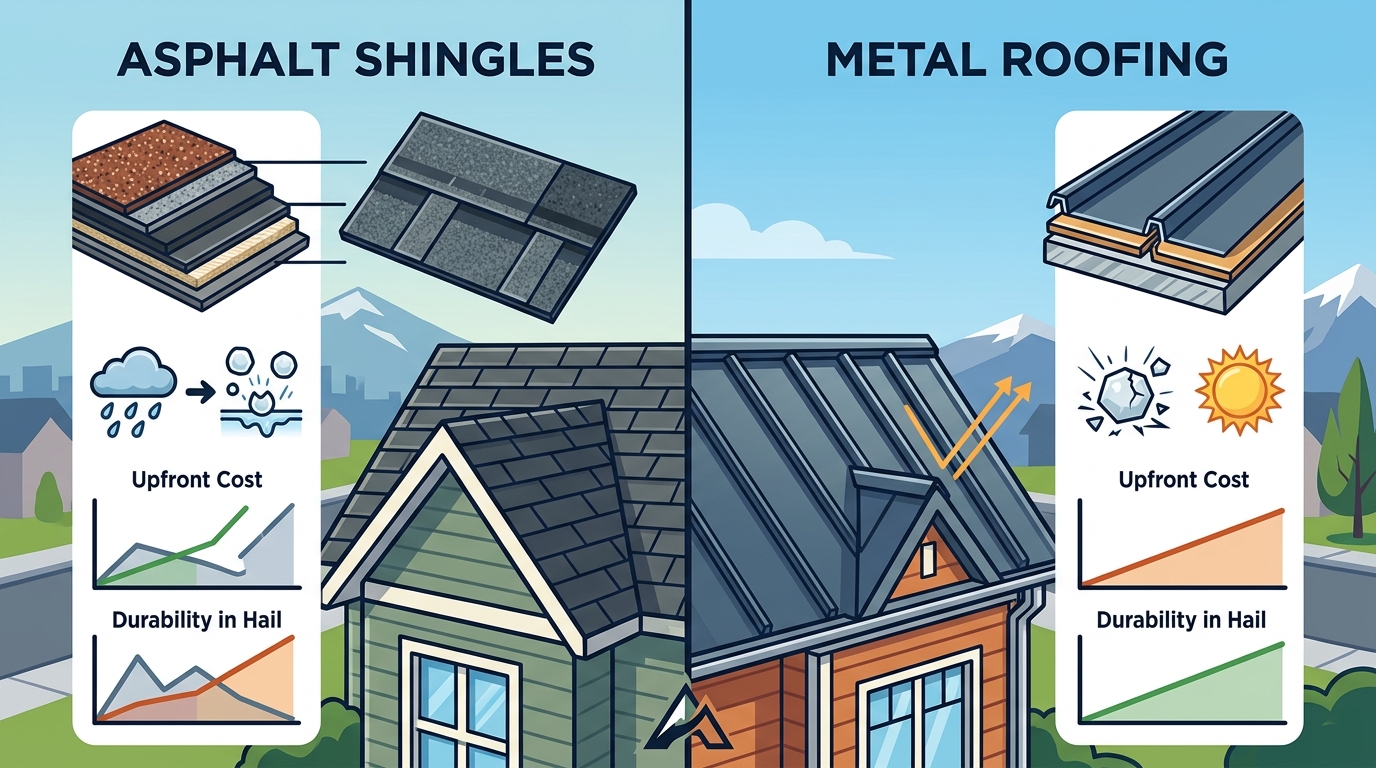
The standout benefit of metal roofing is its longevity. A properly installed metal roof can last 40 to 70 years, effectively doubling the lifespan of asphalt shingles. It is also highly reflective, which can reduce cooling costs in the summer by reflecting solar radiant heat. Furthermore, metal roofs are incredibly resistant to hail damage; most impact-resistant metal panels carry a Class 4 UL 2218 rating, the highest possible impact resistance.
Cons of Metal Roofing
The main drawback is the higher initial cost. Metal roofing can cost two to three times more than asphalt shingles upfront. Additionally, if not installed correctly, metal roofs can be noisy during heavy rain or hail storms, though proper underlayment and attic insulation mitigate this issue significantly. Some homeowners also find the aesthetic less traditional, though modern standing seam and metal shingle options offer diverse looks.
For those interested in this premium option, Apex Roofing provides expert guidance on metal roofing benefits tailored to the Denver market.
Cost Analysis and ROI
When comparing costs, it is essential to look beyond the initial price tag. While asphalt shingles are cheaper initially, their shorter lifespan means they may need replacement twice within the time a metal roof lasts. This makes metal roofing a more cost-effective solution over a 50-year horizon.
According to industry data from the National Association of Realtors, a new metal roof can recoup approximately 60% of its cost in increased home value, while asphalt shingles recoup around 55-60%. However, the insurance savings from metal roofing’s impact resistance can be substantial. Many insurance companies offer discounts for homes with Class 4 impact-resistant roofs, which can offset the initial investment over time.
Apex Roofing offers flexible financing options to help Denver homeowners manage the upfront cost of a metal roof, making the long-term ROI more accessible.
Durability in Colorado Weather
Denver’s weather is characterized by intense sun, heavy snow loads, and frequent hail. Both materials perform differently under these stresses.
| Factor | Asphalt Shingles | Metal Roofing |
|---|---|---|
| Hail Resistance | Prone to granule loss and cracking | Highly resistant (Class 4 rated) |
| Wind Uplift | Can lift or tear if not sealed properly | Excellent interlocking panel design |
| Snow Shedding | Requires proper pitch to shed snow | Sheds snow easily due to smooth surface |
| Lifespan | 15-30 years | 40-70 years |
| Maintenance | Regular inspections for granule loss | Minimal maintenance required |
In areas like Arvada and Boulder, where wind exposure is significant, metal roofing’s interlocking design provides superior protection against uplift compared to individual shingle tabs. For more details on local weather impacts, read our guide on storm damage repair.
Installation and Warranty Factors
Installation quality is paramount for both materials, but especially for metal roofing, which requires precise panel alignment and fastener placement. Asphalt shingles are more forgiving of minor installation errors but are highly dependent on proper ventilation to prevent heat buildup.
Apex Roofing provides a 5-year labor warranty on all new roof installations, regardless of material. Additionally, as a GAF Certified contractor, we can offer the GAF System Plus Limited Warranty, which covers both materials and workmanship for up to 25 years. This dual-layer protection ensures that your investment is safeguarded against manufacturing defects and installation errors.
For homeowners in Englewood and surrounding areas, we recommend scheduling a free roof inspection to assess your current roof’s condition and determine which material is best suited for your home’s specific needs.
Key Takeaways
- Asphalt Shingles are the most affordable option with a lifespan of 15-30 years, making them suitable for budget-conscious homeowners.
- Metal Roofing offers superior durability with a lifespan of 40-70 years and excellent hail resistance, ideal for long-term value.
- Cost vs. Value: While metal roofing costs more upfront, its longevity and potential insurance discounts often result in lower lifetime costs.
- Colorado Weather: Both materials perform well, but metal roofing’s wind and hail resistance make it a top choice for the Front Range.
- Warranty Coverage: Apex Roofing provides a 5-year labor warranty and access to GAF System Plus warranties for added peace of mind.
- Local Expertise: Working with a local contractor like Apex Roofing ensures proper installation tailored to Denver’s unique climate.
- Insurance Claims: If your roof has been damaged by hail, Apex Roofing can guide you through the insurance claim process to ensure fair coverage.
Frequently Asked Questions
Which is better for hail damage: asphalt or metal?
Metal roofing is significantly better for hail damage. Most metal roofs carry a Class 4 impact rating, meaning they can withstand large hail without cracking or puncturing. Asphalt shingles, even impact-resistant ones, are more prone to granule loss and cracking under severe hail.
How much does a metal roof cost in Denver?
The cost of a metal roof in Denver typically ranges from $9 to $15 per square foot, depending on the material (steel, aluminum, copper) and style. While this is higher than asphalt shingles, which range from $4 to $8 per square foot, the longer lifespan often makes metal more cost-effective over time.
Can metal roofs be installed over existing shingles?
In many cases, yes. Metal roofs can often be installed over one layer of existing asphalt shingles, provided the roof structure can support the additional weight. However, removing old shingles is often recommended to inspect the decking and ensure a proper seal.
Does Apex Roofing offer financing?
Yes, Apex Roofing offers flexible financing options to help homeowners manage the cost of new roofing projects. Contact us to learn about current financing plans and monthly payment options.
What warranty do you offer?
Apex Roofing provides a 5-year labor warranty on all new installations. We are also a GAF Certified contractor, allowing us to offer the GAF System Plus Limited Warranty, which covers materials and workmanship for up to 25 years.
How long does a roof installation take?
A typical residential roof replacement takes 1 to 3 days, depending on the size of the home and the complexity of the roof. Metal roofs may take slightly longer due to the precision required in panel installation.
Is metal roofing noisy during rain?
With proper underlayment and attic insulation, metal roofing is not noticeably noisier than asphalt shingles during rain. The structure of the roof and the insulation in the attic dampen the sound significantly.
Get Your Free Roof Inspection
Choosing between asphalt shingles and metal roofing is a significant decision that affects your home’s safety, value, and comfort. Don’t leave your roof’s future to chance. Apex Roofing is here to provide honest, expert guidance tailored to your specific needs. Schedule your free roof inspection today and discover the best roofing solution for your Denver home.